



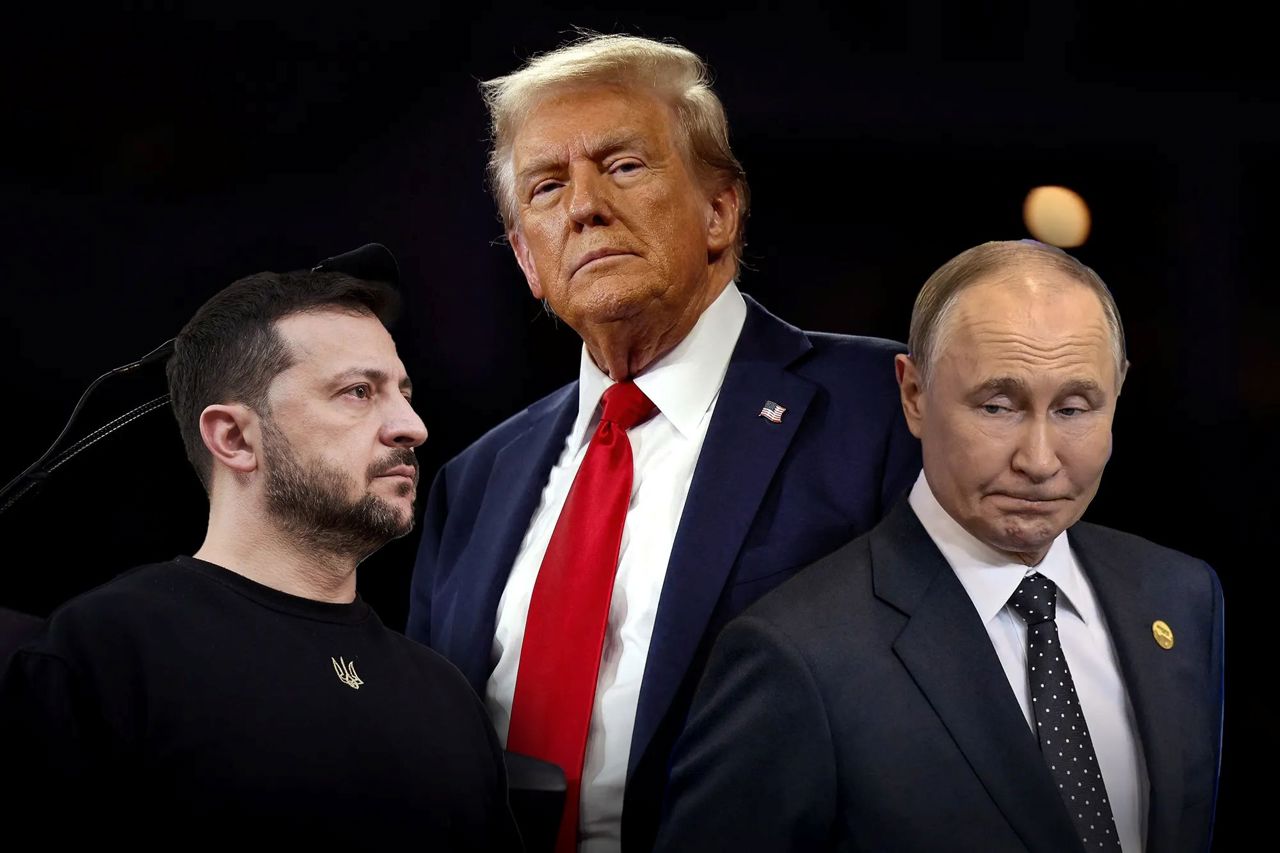
In a matter of just a few days, President Trump met with both Russian President Vladimir Putin and Ukrainian President Volodymyr Zelensky to discuss the possibility of an end to the Russia-Ukraine war—both meeting with him on US soil.
Putin met with Trump in Alaska on Friday for a short summit. Then, on Monday, Zelensky and seven European leaders headed to Washington to meet with Trump, an unprecedentedly quick gathering of world leaders.
The two meetings, held almost back to back, led to a plethora of speculation about what they meant. Had Trump kowtowed to Putin in Alaska? Had he taken a harder line in DC and promised security guarantees to Ukraine? Parsing President Trump’s views on the conflict and his decisions about what step to take next has been difficult, with many of his actions and statements opaque.
There were signs that he had been growing more frustrated with Putin and readier to take harsh action against Russia to end the war. Trump announced an August 8 deadline for Russia to institute a ceasefire in Ukraine or face harsh economic punishments. But the deadline came and went without the sanctions he had promised.
The summit in Alaska left observers uncertain, as well. Trump and Putin didn’t seem at odds during their public appearances. But the meeting seemed to end abruptly, with a planned luncheon (the details of which were left in a photo copier by a sloppy State Department employee) canceled at the last minute. Trump and Putin didn’t take questions from reporters at a joint meeting afterward. And Trump seemed to soften his stance on Russia afterward, deciding that a ceasefire was no longer a precondition for negotiations between Russia and Ukraine.
The meeting with Zelensky and the world leaders, however, seemed to show a different side of Trump. In contrast with the previous meeting with Zelensky in the Oval Office, which turned into a chaotic yelling match, the two presidents chatted cordially and joked together.
(This time around, Zelensky did indeed wear a suit, and he maintained his composure and complimented Trump throughout, suggesting he learned some lessons from the previous visit.)
Then, during a meeting of all of the European leaders in the East Room of the White House with Trump and Zelensky, Trump made comments that seemed to indicate that the US would go to bat for Ukraine even on the battlefield. Several European leaders said that they were envisioning Article-5-like security guarantees for Ukraine—referring to the NATO pact, and suggesting that even without joining NATO, they would fight for Ukraine as if it had.
Trump didn’t go that far, but he did say that the US would help the Europeans keep the peace for Ukraine. “They are the first line of defense because they’re there,” Trump said. “But we’re going to help them. And also we’ll be involved.”
After the meeting, President Trump wrote online about the discussion of security guarantees for Ukraine and said that he was beginning the preparations for a meeting between Putin and Zelensky. After that, he wrote, he would meet with the two of them for a trilateral meeting.
What do these meetings really mean? To understand, I spoke with Ambassador John E. Herbst, the senior director of the Atlantic Council’s Eurasia Center, who served for 31 years as a foreign service officer at the US State Department, including in posts in Israel, Moscow and Saudi Arabia. Ambassador Herbst served as US ambassador to Uzbekistan from 2000 through 2003 and then as ambassador to Ukraine from 2003 through 2006, during the tumultuous period of the Orange Revolution. He has studied the war between Ukraine and Russia and is a frequent commentator on it.
What’s your reading on what’s happening in Washington, DC, as we speak.
First, it’s an absolutely unprecedented, even extraordinary, series of events. What we’re seeing today is something that I don’t think has ever happened. Eight European leaders showed up for a meeting with the president on two days’ notice. Of course, it’s justified by the weight of the issue that’s on the table, and it demonstrates that Europe was slow to understand how dangerous Russian revisionism under Putin is to them. It seems—and this is interesting and even ironic—that President Trump’s idiosyncratic approach to security in Europe is the principal reason for their newfound realism and resolve, all of which is very important and positive.
At the same time, their resolve is encouraging President Trump to move in the right direction and to recognize how dangerous Putin’s policies are, not just to Ukraine and Europe but to the United States, as well.
That answer is very loaded, and I’d like to break it down a little bit. Let’s start with what you said about the Europeans rushing to Washington, DC. Perhaps they rushed there because they were concerned that the president would put undue pressure on Zelensky. Is it possible that they did this because they don’t trust Trump?
You have put into very concrete terms the point that I was making. The Europeans want a certain outcome to Russia’s aggression in Ukraine. They want to make sure that Putin will fail in his effort, to use my somewhat convoluted phrase, “to take effective political control of the country,” or to use President Trump’s direct phrase, “to take all of Ukraine.” It’s interesting and important that Trump has used that phrase several times in the last week or so.
They understand Putin’s objectives somewhat the same way as President Trump and I understand them, and they want to make sure that Putin’s efforts fail. You’re right that they think that President Trump might not act decisively on his own insights regarding Putin’s objectives. That is another way of explaining why they’re here.
To read more, subscribe to Ami