




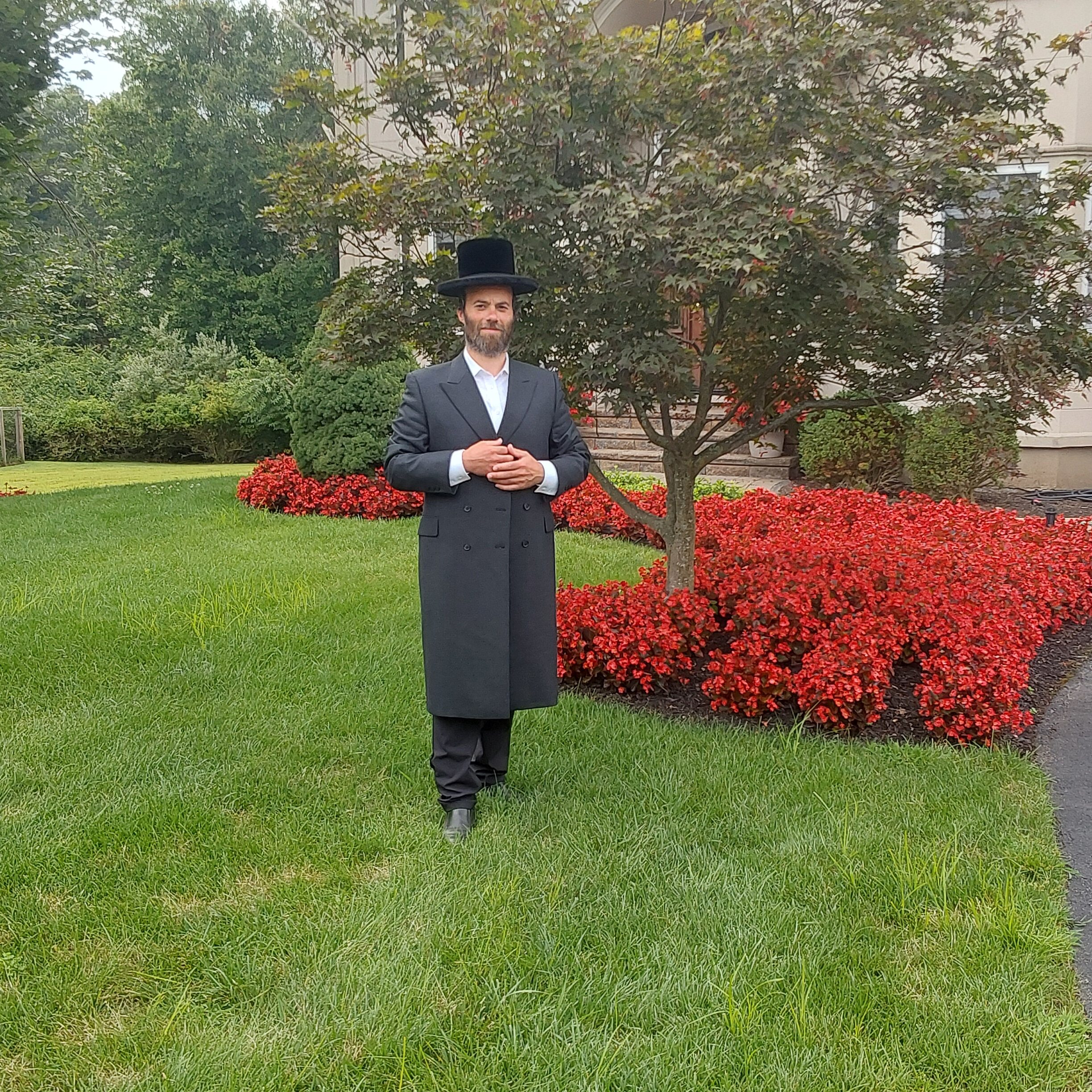
If you live in Rockland County, you’ve probably seen the work of Sruli Rottenberg’s company, Evergreen Landscaping. What you might not know is the story behind the business. Sruli’s path is far from the usual business school track. He began in kollel, managed a girls’ school, and even helped open a yeshivah.
His first attempt at landscaping ended when he walked away from a partner who cut corners instead of grass. Undeterred, he started over with just a used mower in the trunk of his Toyota Camry. He went from house to house, building a name one lawn at a time. Today, with 40 employees and a focus on new construction, Sruli has become a leader in the industry. He builds properties to last, and his work speaks for itself.
In this interview, we talked about the industry, how he grew his company from scratch, and the secret to better business communication. Enjoy!
—Nesanel
I grew up in Boro Park and went to Satmar cheder and yeshivah. My father is the rav of the Kossoner Shul on Ninth Avenue in Boro Park. I actually took care of the shul as a child, and it taught me how to deal with people. They were like my customers. Everybody had different requests.
“I grew up with a lot of love in a very solid, stable home, and my mother always encouraged me. I’m the youngest of eight children, and I have an identical twin brother, Mendy, who is the administrator of Ditmas Park Nursing facilities. So if you see me on the street and I don’t greet you, don’t be offended: it’s probably because it’s not me, it’s my brother. We are good friends and are very close.
“I had some entrepreneurial experience as a teenager, but I didn’t work for pay. My yeshivah was in Fleischmanns, New York, and the rosh yeshivah, Rav Chaim Yaakov Rubin, asked me to run a canteen there to raise money for the keren chasanim. There were constant, nonstop problems from the get-go. None of the vendors delivered to Fleischmanns, since it’s out of the Catskills area, so we had to order everything in the city and rent a truck to bring it upstate. Of course, the truck had issues. Still, the rosh yeshivah must have seen something in me, because he told me then that I had a knack for business.
“I got married, learned in kollel for a while, and also spent time learning with bachurim.
“Not long after, I was walking down the street when my good friend Avraham Moshe Schwartz pulled up in his car. He rolled down the window and said, ‘What are you doing these days?’ I told him I was learning with bachurim. He said, ‘Do me a favor; I need you in the school.’ He had just opened Bas Melech, a girls’ school with 12 students in one class. I joined to handle the office work and some fundraising. By the time I left, we had 300 girls. A few years before that, the school was bought out by the Nikolsberg chasidus. While I worked under them, we opened a yeshivah, a talmud Torah and a kollel. I stayed there just under ten years, and it was an interesting ride.
“During this time, I opened my first landscaping company. Working in landscaping had been a dream of mine since I was a kid. I’ve always loved the outdoors and nature. You don’t see much grass in Boro Park, but I loved plants and gardening.
“Obviously, liking nature doesn’t automatically mean you open a landscaping company. But for me, it’s about beautifying Hashem’s world. That’s what I love doing, and landscaping was a way to express that. Even when I was working at the school, I took care of the landscaping myself. I bought a machine, cut the grass on Sundays, and my kids helped me every week. The school property I was managing was about seven acres, with two acres of grass.
“There was a guy who worked for a landscaping company during the day and then cleaned the school building after hours. He would come with his wife and kids—the whole family—and they’d clean together. One day, I saw him crying. I asked him what happened, and he told me he’d been fired from his job and didn’t know why. I said, ‘You know what? Let’s open a landscaping company.’ He had the expertise; I felt I could find the customers and provide the financing.
“He had a pickup truck, so we bought a used open trailer for about $2,000, along with a few pieces of equipment. I took a few dollars of my own, bought some machines and went out to get customers. But we split almost right away because he wasn’t honest with me. He tried to save a buck in ways I didn’t like. For example, he would dump garbage from a job site onto an abandoned property—something a lot of cheap companies do. I didn’t like that way of doing business, and he had no vision. The final straw was when a customer told me she had paid him, and he claimed she hadn’t. That’s when I knew it wasn’t going to work. So we parted ways.
To read more, subscribe to Ami