


The summer has come. Tens of thousands of people have traded the concrete jungle for the camps and bungalow colonies of the Catskills, where they can spend the season surrounded by trees and mountains rather than asphalt and apartment buildings.
Those mountains north of New York City have been a retreat for Jews for over 100 years. Beginning in the 1920s, city dwellers flocked to the Jewish-owned farms, hotels and resorts upstate for a true breath of fresh air—a commodity almost unknown to most urban children of that era. The lodgings varied from luxurious hotels providing top-tier entertainers and abundant, almost constant meals, to dilapidated bungalows where the grounds were the big attraction and you made your own fun. This “Borscht Belt” period peaked in the 1950s, then declined through the 1970s, when the great Jewish hotels began to disappear, leaving behind a different landscape—one in which frum vacationers, including many Holocaust survivors, had become the primary architects of the Catskills summer tradition.
Today, the Catskills aren’t just a relaxing destination that urban Jews visit for a short season. They are the permanent home to numerous Jewish communities—some established for decades, others founded more recently. During the warm months, these communities benefit from the influx of the “summer people”—or in some cases, simply tolerate it—but for most of the year, they thrive largely on their own.
To understand what it’s like to live in the country all year long, I traveled upstate several times to meet with members of the five largest full-time Catskills communities: South Fallsburg, Liberty, Gibber’s (also known as Kiamesha), Monticello and Bloomingburg. My trips took place before the deluge of summer visitors, allowing me to get a feel for the true character, growth and tempo of life in these enclaves.
A number of smaller communities have developed in places like White Lake and Swan Lake—where a new Skverer community is underway—and others, such as a new Satmar community near Monticello, are in the planning stages; I couldn’t make it to all of them. Yet, even a partial picture through the lens of the largest communities may help shed light on what life is like for those who stay on in the mountains after most of the Jewish world has gone home.
South Fallsburg
Tucked away in the mountain woods is a yeshivah surrounded by a close-knit community that lives entirely in its orbit.
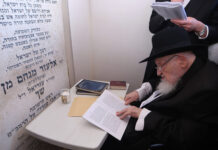
South Fallsburg, founded in 1969, has the longest continuous history of any major frum community in the Catskills. It also stands out as the only Litvish one. Anchored by Yeshivas Zichron Moshe—better known as Yeshiva of South Fallsburg—and its rosh yeshivah, Rav Elya Ber Wachtfogel, the community has a strong, distinct character. It maintains a deliberately cautious, skeptical view of expansion, even as it has grown.
The community comprises around 120 families. All the residences are on Laurel Park Road—the heavily wooded artery that runs past the yeshivah campus—or along its quiet, intersecting side streets. Summer visitors who may be familiar with the town’s main shopping area, lined with pizza shops, grocery stores and paper goods outlets, may have never even had a glimpse of the yeshivah community. Although this “downtown” is only five minutes by car from Laurel Park Road and the yeshivah enclave, to many residents, the two areas are worlds apart.
When I asked a maggid shiur in the yeshivah who has lived in the town for 30 years about the local shopping options during the winter months, he responded, “Oh, in town?” referring to a distance that, in other contexts, is negligible.
The reason for this separation is obvious to anyone who has spent even a short while in the yeshivah community. Life there revolves around Torah learning, nearly all of which takes place within the small wooded area surrounding the yeshivah, just as it has for decades. The intensity of that learning is most evident in the yeshivah’s beis midrash, but its influence extends throughout the neighborhood. Even grocery shopping takes place within that small stretch of the woods, at Yagdil, the grocery store run by Rabbi Chaim Gluck.
To its residents, this small sanctuary is South Fallsburg, and their world rarely needs to extend beyond its borders.
Growing a community
That doesn’t mean the community hasn’t grown. South Fallsburg’s kollel has been directed by Rav Dovid Breslauer for several decades. Last Pesach, with the approval of Rav Elya Ber, a second kollel, Kollel Toras Chesed, was established under the leadership of Rav Menachem Knopfler and Rav Benzion Rudnicki, former talmidim of the yeshivah’s kollel.
The new kollel was formed with seven yungeleit from Zichron Moshe’s kollel, and over the course of the year an additional six members joined. That transition made room for new members to enter the original kollel, which now numbers close to 30 yungeleit. The two kollelim follow different limudim, with Kollel Toras Chesed focusing exclusively on masechtos outside Nashim and Nezikin.
The new kollel has also strengthened interaction between the permanent residents and the transient summer visitors. Yungeleit from Toras Chesed offer a number of different services to the bungalow colony communities, including regular shiurim, chavrusas, a beis horaah and help with safrus issues.
Kollel Toras Chesed is located in Beis Midrash Zichron Elimelech Gavriel, on the grounds of a bungalow colony just five minutes away from Laurel Park Road and the yeshivah. The beis midrash is named after Elimelech “Mike” Tress, whose family owns the colony and invited the kollel to use the premises. The kollel’s yungeleit do not daven there on Shabbos, partly because the walk is too long. Nearly all of the community’s Shabbos minyanim are held at the yeshivah, another force that helps unite the community.
Prior to the opening of Kollel Toras Chesed, the yeshivah’s primary beis midrash was the only one open all year long. This second location offers rebbeim from other mosdos and other residents a place to learn without worrying that they are taking bachurim’s seats or interrupting the yeshivah’s schedule. In doing so, it has expanded the community’s physical space for Torah learning beyond the yeshivah itself.
To read more, subscribe to Ami