



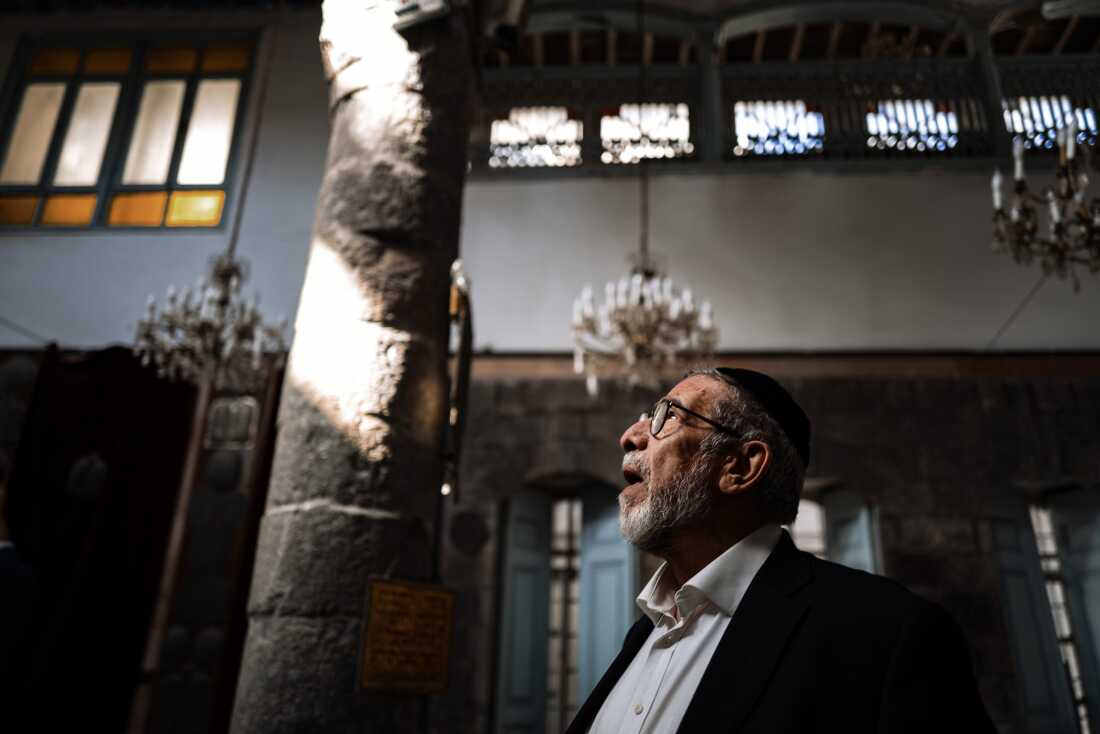
Rabbi Yosef Hamra discusses his visit with Syrian President al-Sharaa
It was a scene few could have imagined just a few years ago: former Syrian Rabbi Yosef Hamra blessing former rebel commander, now Syrian president, Ahmad al-Sharaa. The encounter symbolized not only the dramatic transformation underway in Damascus but the cautious optimism that the renewed Syria is projecting.
A year ago, a dramatic change took place in Syria. After many years of brutal rule, the cruel regime of President Bashar al-Assad and the dynasty that began with the presidency of his father, Hafez al-Assad, collapsed. Opposition forces completed their takeover of Syria’s major cities, including the capital, Damascus, in a surprise offensive that lasted just 11 days. The dictator fled, and in his place Ahmad al-Sharaa, the leader of Hayat Tahrir al-Sham, rose to power.
In honor of the new president, a special event was held in Washington, DC—a gathering of the Syrian diaspora from all denominations and religions across the United States. Rabbi Yosef Hamra, the son of one of the last rabbis in Damascus and currently a rabbi in the Syrian community in New York, took the stage.
Holding the president’s hand, he recited the traditional blessing said upon seeing a non-Jewish king: “Blessed is He Who has given of His glory to flesh and blood.”
The rabbi warmly thanked the president for his actions and positive approach toward the remnants of the Jewish community in Syria.
Many people wanted to speak with President al-Sharaa at the Washington event, but he requested that only Rabbi Hamra be allowed to come up on the stage. This was not their first encounter. The rabbi and the president had met previously in Manhattan, about a month ago, when Al-Sharaa came to the UN. “We spoke briefly,” Rabbi Hamra said, “and the president seemed somewhat apprehensive. This was different.”
Last year, Rabbi Hamra led a special delegation to Damascus with the intention of connecting the next generation to their roots and examining the condition of the Jewish heritage sites left behind. They met with the Syrian deputy foreign minister at the Foreign Ministry in Damascus, which was then being run by temporary authorities appointed by the Islamic rebels. The delegation was received with great respect, and the new government pledged to cooperate on matters relating to the restitution of Jewish property and the restoration of citizenship for those who wish to return.
Since the president and the new government came to power, Rabbi Hamra says he has seen a shift in how the needs of the Jews are addressed, which he feels must be encouraged. “The president told us that his extremism belongs to the past; it is behind him. We also spoke with Tom Barrack, Trump’s envoy to Lebanon and Syria, who is conducting talks with the new regime to integrate them into the West. President al-Sharaa is very optimistic about the situation. His interest now is in rebuilding Syria—that’s what matters to him. I trust him, and I also trust the Trump administration.”
Foremost among the issues Rabbi Hamra brought up is the well-being and security of the Jews still in Syria, which includes their shuls.
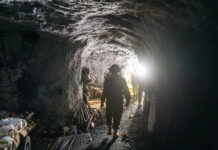
“There are seven Jews left in Damascus. They have neighbors who are Muslim, Shiite and Palestinian, some of them were refugees whom Assad had placed in homes abandoned by Jews, but when we were there, they treated us with warmth and great respect. We are in continuous contact with them, and we are committed to looking after them,” Rabbi Hamra said. “Beyond that, we are also deeply concerned about the fate of the remnants of Jewish heritage sites and batei knesset that belonged to the Jewish community in Syria. The government has said it will help us with the restoration and renovation of the Eliyahu Hanavi Synagogue in Jobar, east of Damascus, the most important Jewish site for Syrian Jews. It may even be the oldest beit knesset in the world. According to our very ancient tradition, there is a cave attached to the shul in which Eliyahu Hanavi hid from Achav, and where he anointed his disciple Elisha to succeed him. During the Syrian civil war, the shul was attacked twice—first during Pesach of 2013/5773, and then again the following year, when it was demolished and almost all its contents destroyed. Yet some items, including sefarim that are over 800 years old, are in the hands of the authorities for safekeeping, and there are remnants of the structure, so restoring the beit knesset is not unrealistic.”
Rabbi Hamra felt a very personal connection to the shul. “It was very painful for me to see the terrible condition it is in. I remember it from my childhood. On Shabbat and Yamim Tovim, we would walk to the beit knesset from the Jewish neighborhood in which we lived, about four kilometers away. At that time, there was a custom that if a child was sick, they would bring him to the cave, place him there and pray for his recovery. I myself was sick once, and they brought me there to sleep, and I was healed.”
To read more, subscribe to Ami