



A 31-year-old Israeli man who languished in a Kurdistan prison faced the ultimate sentence: death. Convicted of murder, his fate seemed sealed—until an extraordinary group of Jewish activists stepped in. Through tireless negotiations and legal maneuvers, they succeeded in annulling his sentence. This is the story of how determination and moral courage saved a life.
Let’s go back to the very beginning of this case. When did it start?
About ten or 11 years ago. Ben Chasin, who has Kurdish Jewish heritage and was living in Israel, went back to Kurdistan to visit his parents. Kurds and Jews have lived together for hundreds of years in the region, maintaining very good relations. Even after relations with the broader Muslim world deteriorated, some Kurdish Jews, including Ben’s grandparents, remained.
While he was there, Ben was in a taxi, and the circumstances of what happened next remain unclear. There are different versions of the incident. Ben ultimately shot the taxi driver, who later died of the gunshot wounds. Some claim it was self-defense; others say that Ben was heard speaking in Hebrew in the backseat, which infuriated the driver so they got into an argument. I don’t know which is true, and frankly it’s not my concern.
The mission to secure Ben’s release wasn’t related to his innocence or guilt; it was about helping a Jew imprisoned in a foreign, predominantly Muslim country and particularly in Kurdistan, which still operates under the federal authority of the Iraqi government in Baghdad even though it has been semiautonomous since the 1990s.
How did you get involved?
I had worked for the Israeli Ministry of Foreign Affairs for many years in a department that deals with Israelis who find themselves in distress abroad. In 2016 or 2017, I was asked by the head of this department to explore what could be done to get Ben out of prison. My involvement began after he was tried and convicted. He had been arrested in Sulaymaniyah, a city in the eastern part of the region close to the Iranian border.
Was ISIS in that part of the country?
No. ISIS was in the western part of Iraq. Let me describe the geography briefly. If you look at a map of Iraq, Baghdad is in the south, and in the far north is a belt known as the Kurdish region, or Kurdistan. It stretches from the east, near the Iranian border, to the west, near the Turkish border. Its regional capital, Erbil, is in the west, but Sulaymaniyah is on the eastern side, where Iran has significant influence. The Kurdish region is divided between two clans. The region around Erbil is controlled by the Barzani clan, while the area near the Iranian border is controlled by the Talabani clan. The two clans are opposed to each other, but we happen to know both clans well. While we have better relations with the Barzanis, this case took place in the Talabani section.
How harsh is the Sulaymaniyah prison where Ben was incarcerated?
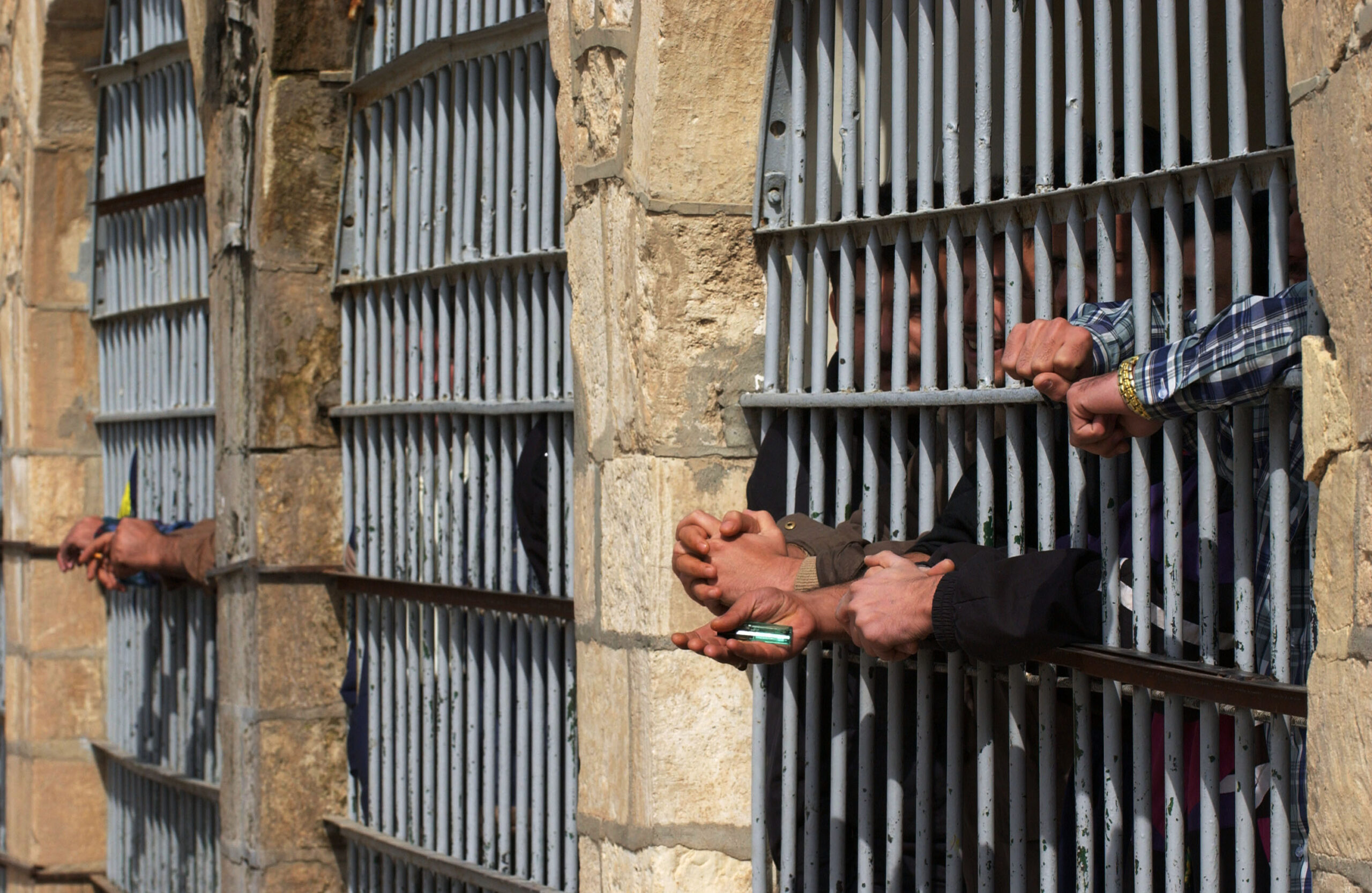
It isn’t harsh in the sense of being a place of torture or savagery. But the conditions are certainly not good. He could have 14 or 16 people in his cell at a time. Truth be told, conditions aren’t good in any prison.
And there were no anti-Semitic attacks against him?
As far as I know, there weren’t any specific issues directed at him. I’m not trying to be careful; I’m just telling you how things were. The conditions were bad, but it wasn’t because he was Jewish or from Israel. His health was deteriorating and he was losing a lot of weight. He developed several medical problems as a result of malnutrition. His eyesight was affected, along with other health issues caused by being in that environment. He’s only 31 years old.
Why would someone that young have so many medical issues?
Because there’s no proper medical care, and without adequate heat, clothing and nourishment, it inevitably takes a toll on the body.
When was the first time you met him?
Either 2017 or 2018—I don’t remember exactly—but it was shortly after his conviction.
You visited him as a private American citizen, not on behalf of the Israeli government?
Correct. I’m an American; I’m not Israeli. Israel isn’t allowed to be officially involved for several reasons, mainly because there are no diplomatic relations between Israel and Iraq, so everything has to be kept low profile.
Who assisted you?
While I was in Kurdistan, someone who works with us there and happens to be Jewish—we will call him Aharon—helped me. He speaks fluent Hebrew and had lived in Israel as a child. His family left Kurdistan for Israel but then returned when he was still young because his father wanted to bring over the rest of the family. It turned out that they couldn’t go back to Israel, but that’s a separate story. Aharon is a wonderful tzaddik. He is 40 years old, has a wife and two children, and has been completely dedicated to helping Ben.
You said that he had already been convicted when you first met him. Was he also sentenced?
No. Not yet. He was sentenced to death three years ago. Apparently, the court process is very slow.
Baruch Hashem for that. But up until recently he was on death row.
Yes. Without knowing when they would try to carry it out.
Where was his family in all this?
His parents are divorced. The father lives in Israel and the mother is in Canada. His grandmother and aunt also live in Canada; they came as refugees from Kurdistan. The mother and her family have been very involved. The father has been problematic because he tried to handle things on his own.
One of the reasons I was asked to get involved was through ZAKA. Generally, and rightfully, ZAKA doesn’t raise money for other causes, but when they heard about Ben they reached out to the Israeli Ministry of Foreign Affairs. They were approached because the father had asked them to raise money to arrange a sulha with the family.
To read more, subscribe to Ami