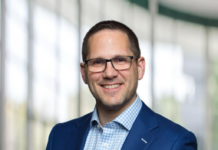




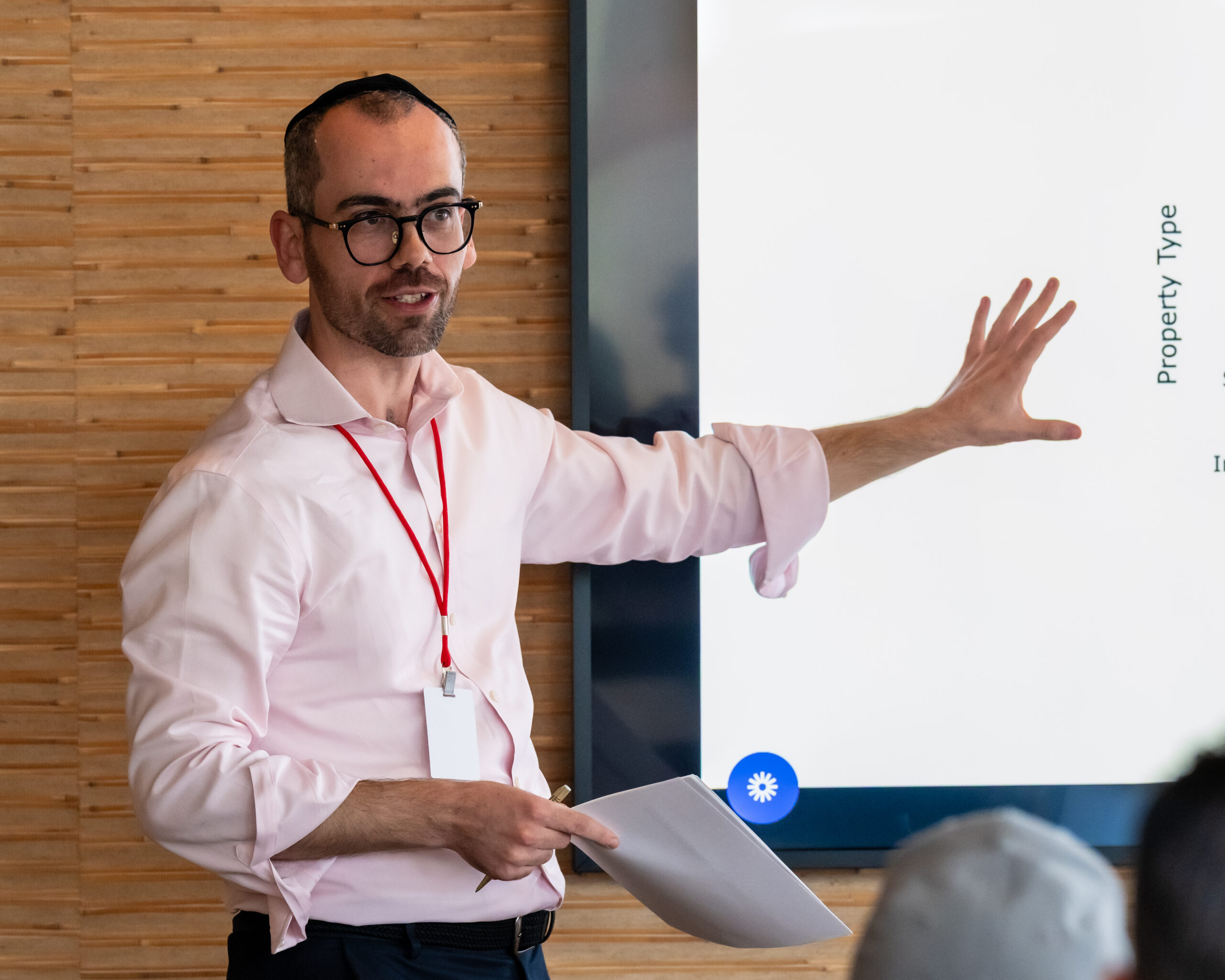
After reading what Aleksey Chernobelskiy does for a living, the first thing people might ask themselves is, ‘He doesn’t charge for that? What?’
After a career at a publicly traded real estate company, Aleksey started GPLPmatch.com, a website where GPs (general partners) can post real estate deals and LPs (limited partners) can search deals to invest in. To date, he has sent over $4 billion in real estate deals to thousands of LPs and hasn’t charged a penny for it. Why? How does he make money? Read on.
On paper, his career sounds pretty simple. He studied finance, math, accounting and economics at the University of Arizona. He worked at a hedge fund in Israel. He had a few corporate roles in investing and distressed debt. Then he landed at STORE Capital, a public REIT, where, in his early 30s, he was running underwriting and portfolio management for a $10 billion portfolio and managing a team of 20 people.
But behind that is a very different story. Parents who opened a Lego club for local kids when their English was barely good enough to fill out the forms. A Russian kid who played table tennis professionally, turned down Cambridge to go to yeshivah, and then reviewed his first perek of Gemara 101 times in his father’s memory.
Today Aleksey’s company shares several deals per day with thousands of LPs, and the platform is able to help both GPs and LPs through software.
We spoke about his journey from Moscow to Machon Yaakov, the decision to walk away from a cushy corporate job, what he is seeing today in the GP/LP market, why so many investors are losing money in ‘good’ deals, and what real due diligence should look like.
Enjoy!
—Nesanel
I was born in Moscow. We came to America as refugees from Russia, and my family had a choice between New York, Texas and Arizona. I wasn’t part of the decision making because I was only 11, but my parents chose Tucson. My great-grandparents had been religious and some of my grandparents escaped the Holocaust, but by the time we emigrated no one in the family was really observant. I didn’t even know what Shabbos was when I got to college.
“Jewish-wise, what I remember most about Russia is that everything was hidden. You could not practice anything publicly. Many shuls and anything Jewish were behind closed doors. I went to a Jewish school for a year, but my parents had to pull me out because it was very far, and then I went to public school. When we came to the US, I went to public school here and really did not touch Judaism in any meaningful way until I got to campus at the University of Arizona.
“I have one older brother, and he is also observant today. My mother is too. Both my parents were engineers in Russia. The first real venture my parents had in America was actually a nonprofit. My father started a Lego club for kids who needed something safe to do after school, and we got grants for it. We never had a fancy life; it was humble. They had a tough landing in the US. None of us knew English.
“Eventually, my father became a math professor. That was only a few years before he passed away, when I was in college. He woke up one day not feeling well, and within a week or two he was gone at the age of 55. It was a very rare case of stage four stomach cancer. My mother was mostly a homemaker, and she was the glue that held the family together.
“As a teenager I was entrepreneurial in my own way. I played table tennis—in America you call it ping pong—professionally for a long time. I coached individuals and also ran pretty large camps in the summers. I took it quite seriously. From around age 13 to 17 that was my life, and it was my touch of entrepreneurship.
“When I turned 17 and graduated high school, I had to decide whether to pursue table tennis more seriously or go to college. I decided to go to college. I started in engineering and then switched to finance, and I ended up graduating with four degrees: finance, math, accounting and economics. The first thing I did with all that was to go into corporate life, and at the time I was pretty happy with it.
“My first job out of college was at a hedge fund in Israel, near Ramat Gan, in Migdal Moshe Aviv. The plan was to work in Israel for a few months before going to Cambridge for graduate studies. But instead of going to Cambridge, I ended up going to yeshivah in Israel. I worked at the hedge fund full time for about seven months and then continued part time for a bit.
“I was first introduced to Jewish concepts in college. I actually have a funny story about that. A very common kiruv tactic in college is that the rabbi approaches you and says, ‘Come for a Friday night meal.’ At the University of Arizona, the most common response was, ‘I have a party, I can’t come, I have other plans.’ So the rabbi would answer, ‘Come and eat first and then go to the party.’ Now, I usually spent Friday nights at the library. Rabbi Michael Deutsch was the rabbi at the University at that time, and when he invited me, I told him I could not come. He gave the usual line about going to the party afterward, and I said, ‘Actually, I have to go to the library to study.’ He really didn’t know what to say to that.
“I learned slowly. I had a lot of misconceptions about Judaism and Orthodoxy, and I started peeling the onion, trying to really understand it. In Israel, I was fortunate to meet many special people, both rabbis and lay individuals I looked up to. That led me to Machon Yaakov, a yeshivah for baalei teshuvah. I went from basically not knowing what Shabbos was to being fully frum within a few years. I stayed in yeshivah for two years. This was when I was in my early 20s.
To read more, subscribe to Ami