



I am standing—uncomfortably close—to one
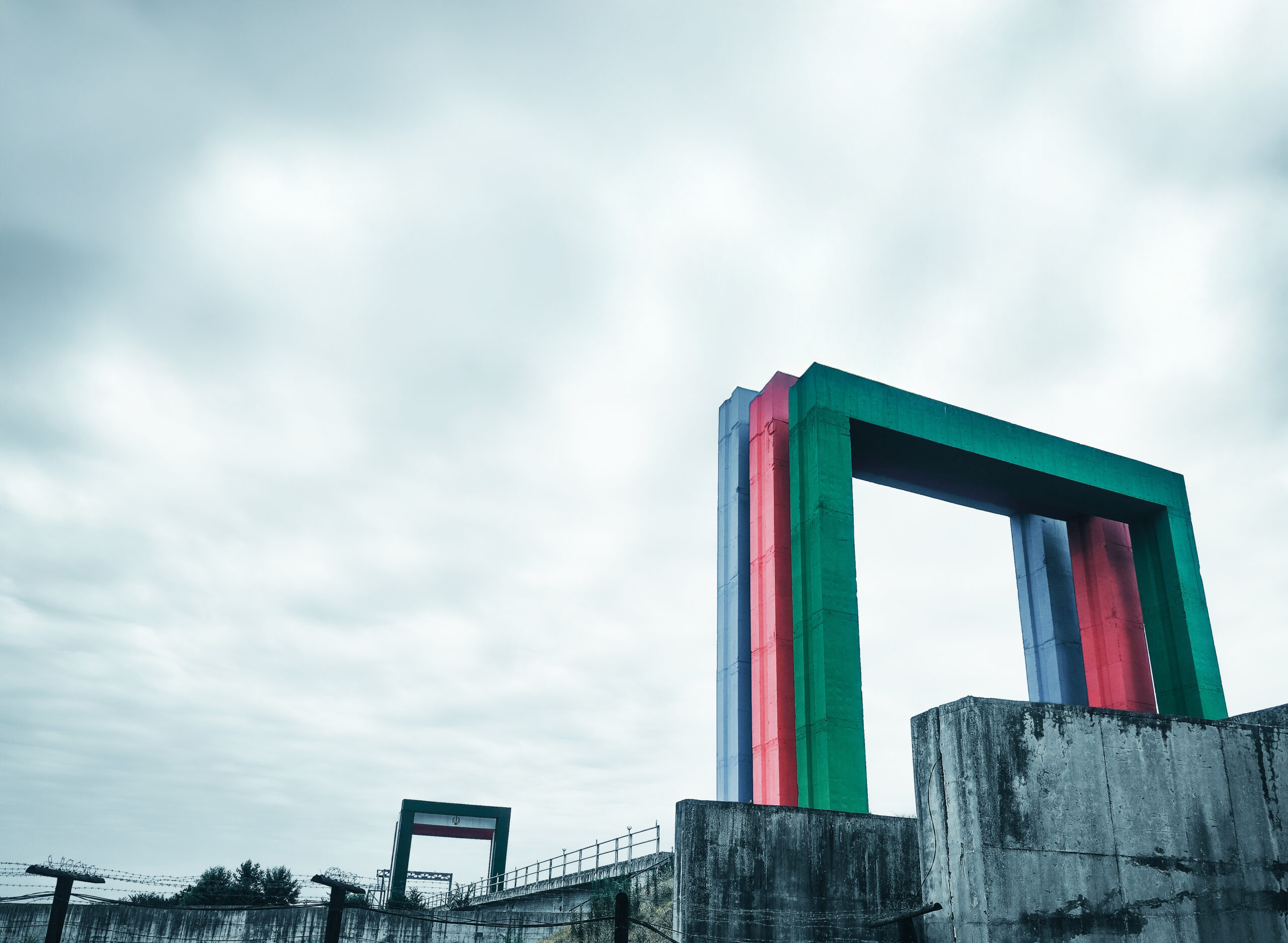
of the few border crossings between Azerbaijan and Iran. It seems that nothing is stopping trade here. A long line of trucks waits patiently for their turn to enter Iran. While most of the shipments on these trucks are probably innocent, everyday essential products, this particular crossing has allegedly been used by Israeli spy agencies to transfer equipment designed for Iran’s underground networks.
Our journey began two days earlier with our descent into Baku, the capital of Azerbaijan. The glistening lights of the towering modern buildings that dot its skyline along the Caspian Sea welcomed us as we neared touchdown.
Nestled between Russia, Turkey and Iran, Azerbaijan is at the crossroad of civilizations. This small country, with a population of over ten million, is one of only three Shiite Muslim majority countries in the world—Iran and Iraq being the other two. Yet, although it shares a border and religion with Iran, it maintains warm relations with Israel, both politically and through military cooperation. And, years of Soviet occupation and internal conflicts notwithstanding, Azerbaijan is a thriving and rich country.
Azerbaijan has one of the largest oil and natural gas reserves in the world. Despite its small geographical size, it produces over 800,000 barrels of oil per day. Azerbaijan extracts its energy resources from its oil and gas fields both on land and in the Caspian Sea. In recent years, the Azerbaijani government has invested heavily in infrastructure, especially in Baku, home to many architecturally noteworthy skyscrapers. But not everything is rosy in this Caucasian country. Azerbaijan has had two bloody wars with its neighbor Armenia, in 1988 and in 2020, over the Nagorno-Karabakh region.
A firm handshake in the White House on August 8, 2025, between Azerbaijan’s President Ilham Aliyev and Armenian Prime Minister Nikol Pashinyan, signaled the end of a nearly 40-year conflict. President Trump now has another peace deal under his belt, and the whispers of a Nobel Peace Prize for him are growing louder.
I have been traveling around the world for nearly two decades. In recent years, following the Abraham Accords and reduced tensions in the Middle East, things looked promising for tourism in the region, in particular for a visibly Jewish traveler such as myself. Then came the tragedy of October 7, which changed everything.
Amid the rising global anti-Semitism, Azerbaijan seemed to steer clear of anti-Israel sentiments that many of its neighbors espoused. In fact, thousands of Israelis continue to flock to Azerbaijan for business and tourism. Even after Israel attacked neighboring Iran, and with Iran accusing Azerbaijan of aiding Israel, things remain relatively peaceful in Azerbaijan.
I wanted to find out more about the Azerbaijani Jewish communities and the issues they are facing. Join me on my three-day journey to the fascinating country of Azerbaijan.
Heydar Aliyev International Airport
We arrived Sunday evening at Baku’s modern international airport. The airport is named after its third president, Heydar Aliyev, as are many other things here, it seems: Aliyev’s name and portrait appear everywhere, from airports to train stations and from boulevards to museums. While Azerbaijan appears to be a vibrant democracy, they are very good at hiding the true nature of their authoritarian governance. Heydar Aliyev was a KGB official who became the leader of the country in 1993, following a military coup. Just before he died in 2003, his son, Ilham Aliyev, was elected president in a controversial election. He has been ruling the country ever since.
To enter Azerbaijan, we had to apply for e-visas prior to leaving England—a fairly easy process. I was traveling with a group of four friends. On one of the applications, we filled in the wrong month for the date of birth by mistake. When we arrived at the border, my friend was denied entry over this small typo. He was told to reapply for the e-visa, which, they advised, would be approved in three hours and five minutes. Meanwhile, he had to wait in the terminal with other people who also made small mistakes and were told to reapply. This was the first instance of many to follow where we felt the archaic bureaucracy of Azerbaijan; despite its modern trappings, the USSR never fully left.
While our friend was stuck at the border, we went to gather our suitcases and pick up our car rental before the desk closed. To our dismay, the suitcase holding all our kosher food never arrived. We flew to Baku on Lufthansa, with a connecting flight in Frankfurt, but the suitcase never left Frankfurt. The desk at the airport had no update on our luggage, nor could they tell me when it was to be expected.
To read more, subscribe to Ami