



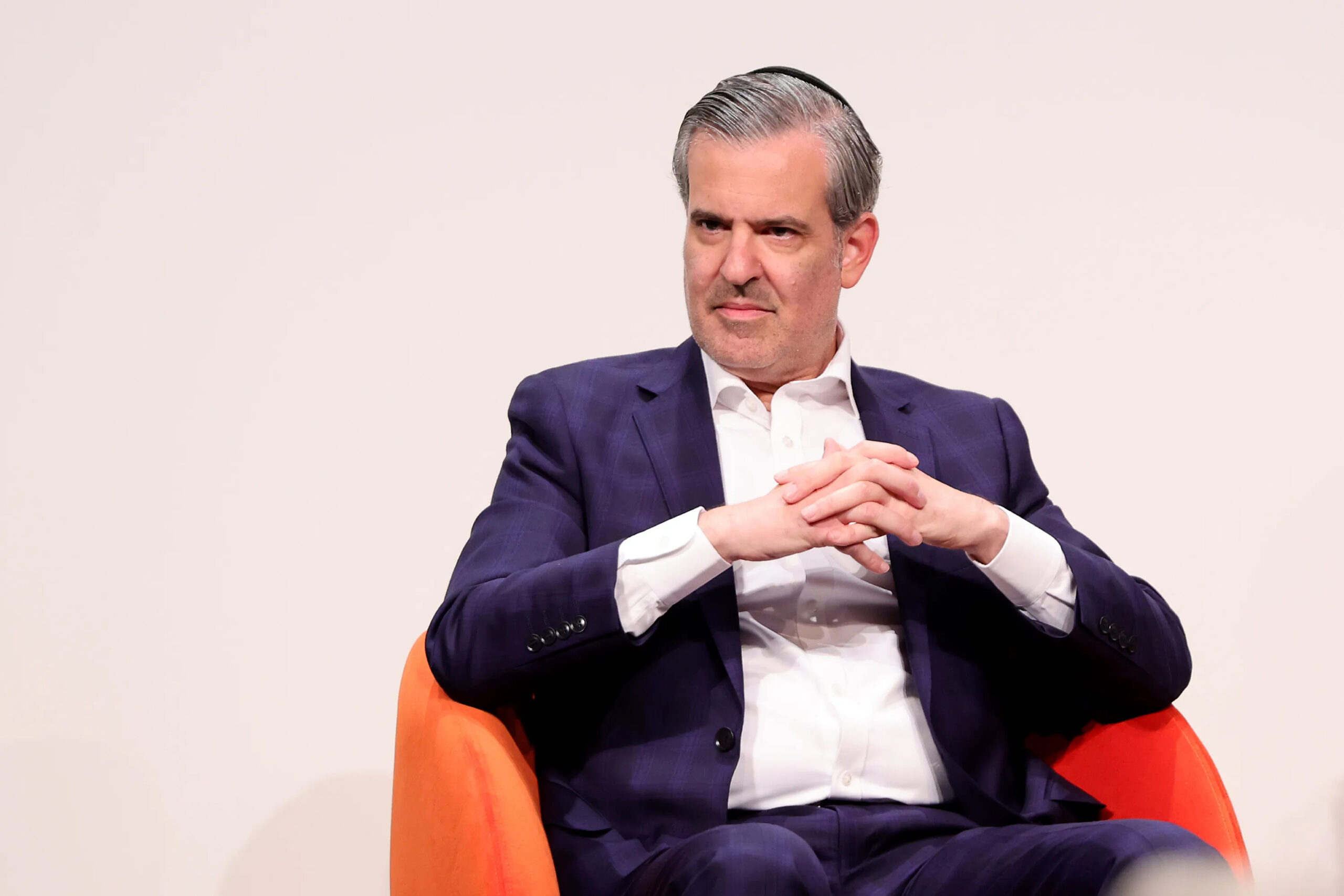
Miami Beach may be small in population, but under Mayor Steven Meiner’s leadership it makes a big impact: locally, nationally and internationally. Reelected this month, Mayor Meiner is a respected and popular figure, known for his hands-on approach to governance. From addressing local challenges like crime and homelessness to promoting Miami Beach on the global stage, he combines practical direction with a deep commitment to his constituents.
You are returning from a trip to Israel, correct?
Yes. I just got home about 15 minutes ago, and soon I’ll be heading back to the airport to meet with the released hostages, baruch Hashem.
Are they coming as a surprise? If you had known they were arriving, you could have waited at the airport.
I found out last night. They asked me to help with some of the arrangements, including security. But I wanted to go home first and change and then go back refreshed.
Was your trip to Israel for personal reasons or in connection with your duties as mayor?
The American Jewish Congress hosts an international mayors’ conference every year, although in recent years it has unfortunately been interrupted, first by Covid and then by the war. It’s an extraordinary program. In addition to meeting with the Israeli prime minister, the president and the speaker of the Knesset, participants visit several significant sites, including Yad Vashem. They asked me to recite Kaddish there, which was very moving.
We also visited a kibbutz where 64 neshamos were lost, and we traveled to Sderot to see some of the locations impacted by the events of October 7.
What makes this conference especially meaningful is the diversity of its participants. There were mayors from every continent, including representatives from several African countries, South America and Europe. You could see the transformation in their eyes. They arrived with impressions shaped by media narratives, and they left having witnessed a very different reality, one that was right in front of them.
I guess that most of the mayors weren’t Jewish.
Correct. There were about 33 mayors, and only five were Jewish.
Why invite mayors rather than other politicians?
The conference has been led for years by Jack Rosen and his son Dan. Their whole approach—reflected across the 34 conferences they’ve organized—is rooted in the belief that local leadership can have an enormous impact. In the United States so much attention goes to the federal level, and while that’s important, local communities need focus as well, and that happens through mayors. Their goal is to help people truly understand what Israel is and what it does. This year’s conference placed a strong emphasis on technology and AI, highlighting Israel’s innovations in those areas.
I even asked the organizers, “Why did you pick me? You already have me. I loved the trip, but you don’t need to convince me. Miami Beach is already at the forefront of supporting Israel and fighting anti-Semitism.” They replied, “We’re bringing all these people whom we are trying to educate, but we also want people like you so they can see what real support looks like.”
Did your city have the smallest population among the municipalities represented at the conference?
There were other mayors from small cities, but you’re right: by comparison, Miami Beach is quite small. One of the attendees was the mayor of Entebbe, Uganda, which has a population close to a million. Another was the mayor of a city in Liberia with over a million residents. At 80,000, we’re definitely on the smaller side.
But one thing I noticed was that whenever I introduced myself, people would smile and mention places they had visited in Miami Beach. It’s clearly known internationally. Despite our size, it’s a name that everyone recognizes.
One of the things Miami Beach has in common with Israel is that its impact and influence are far greater than its physical size.
I would add l’havdil, but that’s absolutely correct.
The first time I visited Miami Beach was to see my parents, who were vacationing there. It made me wonder, “Why isn’t everyone coming to live in this beautiful place? It attracts so few residents.”
That’s true, but it’s also a very large hospitality city. Our hotel rooms had the highest average rates for the first six months of the year because of high demand. It’s a bustling and vibrant city, with events happening all the time. We have only 80,000 permanent residents, but that belies how active it is at every moment.
Correct me if I’m wrong, but there’s an older Jewish population in Miami Beach, and at the same time, a lot of young Israelis. Is that right?
The Israelis are mostly in Miami, although they’re also spread out in other parts of South Florida, like Aventura and other cities.
How long have you been mayor?
I was elected in 2023 after serving as a city commissioner from 2019 to 2023. I was just reelected two weeks ago; the mayoral term here is only two years.
I understand it was a pretty close election.
Yes. I got 51.2%, which translated into 358 more votes.
Are you a Democrat or Republican?
Our election is nonpartisan, so by law you cannot run as a candidate for any party. While you can be registered with a party, I am registered as NPA—no party affiliation.
So everyone runs as an independent.
Yes, although this time the state Democratic Party got involved in support of my opponent. They were trying very hard to get her elected, which I think helped her and made it somewhat close. But thank G-d we prevailed.
To read more, subscribe to Ami