



The last time I recall seeing the “Nuremberg Defense” mentioned in the news was back in 1970, when I was in high school.
It was in the context of the trial of First Lieutenant William Calley Jr., who, two years earlier, killed hundreds of unarmed Vietnamese civilians, including infants, children, women and elderly men in what was known as the My Lai Massacre. He sought to blame his superior, Captain Ernest L. Medina, whose order, he claimed, he was following.
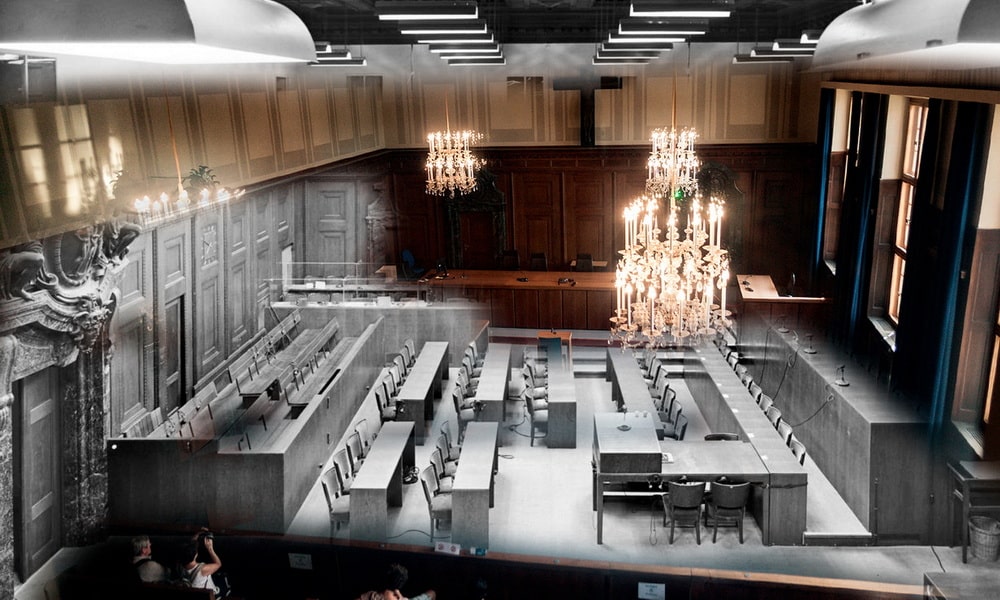
That defense was rejected; Calley was convicted of murdering civilians and sentenced to life in prison (a sentence later reduced). The “I was just following orders” excuse most famously figured in the Nuremberg Trials of Nazi leaders, officers and propagandists in 1945-1946, hence its name.
It has come up today in the context of a slick 90-second video in which six Democratic Senators and Representatives, all of whom served in the army or CIA, take turns addressing those in the military.
In tandem, they say:
“Like us, you all swore an oath to protect and defend this Constitution. Right now, the threats coming to our Constitution aren’t just coming from abroad but from right here at home.
“Our laws are clear: You can refuse illegal orders… You must refuse illegal orders. No one has to carry out orders that violate the law or our Constitution. Don’t give up the ship.”
Two days after the video was posted, President Trump responded on his social media platform:
“SEDITIOUS BEHAVIOR AT THE HIGHEST LEVEL. Each one of these traitors to our Country should be ARRESTED AND PUT ON TRIAL. Their words cannot be allowed to stand—We won’t have a Country anymore!!! An example MUST BE SET.”
And in another post, after “SEDITIOUS BEHAVIOR,” he added, “punishable by DEATH!”
(One has to feel for House Speaker Mike Johnson, who has had to clean up after the president’s…unguarded tweets. Challenged to comment, he said, “The words that the president chose are not the ones that I would use,” but that Mr. Trump was simply “defining the crime of sedition.” Nice try, Mike.)
For the record, US law refers only to “seditious conspiracy,” which requires proof of an active conspiracy and steps toward a violent action against the government. And it carries only prison, not capital, punishment.
The Uniform Code of Military Justice, however, holds military members to a higher standard and does allow for the death penalty.
The Pentagon is investigating one of the lawmakers who appeared in the video, Senator Mark Kelly of Arizona, over potential violations of military law. And the other Congresspeople in the video have said that the FBI has contacted them to schedule interviews with them.
After bipartisan criticism of the “DEATH” outburst, the president tried to walk it back, contending that he was “not threatening death,” although he offered no further explanation of his all-caps… non-threat.
Also unexplained, though, was what pushed the legislators to deliver their message. Likely candidates are the president’s sending of National Guard troops to various cities and his ordering the bombing of boats (21 at this writing, killing some 83) in the Caribbean Sea and Eastern Pacific Ocean that he claims are running narcotics.
Whether the president’s sending of National Guard troops to cities whose governors don’t want them is legal or not remains, for now, unresolved. And while many international and constitutional legal experts, and some US allies, consider the boat attacks to be illegal extrajudicial killings, the administration says it has a classified opinion from the Justice Department permitting the attacks.
So, yes, American servicemen have the right and even obligation to refuse illegal orders.
The Nuremberg Defense is no defense. But if anyone in the military chain of command sincerely feels that following an order to deploy to a city or to bomb a narco-boat is illegal, until the issues at hand are conclusively resolved, he will be risking a court martial.
And so, while the legislators on the video were stating a truth, they were also encouraging soldiers to use their right and take that risk.
The right is, indeed, a right. The encouragement, though, was a wrong.
To read more, subscribe to Ami