



The devastating blow struck by Israel against Hezbollah last year has kept the group quiet and licking its wounds. But the assurances that the Lebanese government gave at the time that it would demilitarize Hezbollah and any other groups outside the Lebanese Army have not been fulfilled. As a result, this Sunday, Israel struck Beirut for the first time since June to further weaken Hezbollah, because Lebanon’s government seems unable or unwilling to.
The strike on Beirut killed one of the last senior officials in Hezbollah who survived the war, the group’s chief of staff, Haytham Ali Tabatabai, along with four other operatives. Tabatabai’s long-term role in Hezbollah had been to manage special operations and militia forces in Syria and Yemen who would carry out terrorist attacks. Some have said that he was also in charge of the Radwan Force, a special operations group designed to attack Israel across the Lebanese border. The US had placed a $5 million bounty on Tabatabai’s head and deemed him a “specially designated global terrorist.”
In the aftermath of the war with Hezbollah, the Lebanese government and army put forth a disarmament plan that described first getting rid of weapons controlled by any groups other than the Lebanese Armed Forces south of the Litani River and then moving on to those north of the Litani River after January 1, 2026. But analysts and both American and Israeli politicians noted a hesitancy of the Lebanese government to move ahead with entirely clearing out Hezbollah weapons even to the south.
At the United Nations General Assembly in September, both Israeli Prime Minister Benjamin Netanyahu and Lebanese President Joseph Aoun discussed the possibility of peace. Aoun had previously talked about the need for negotiations between Israel and Lebanon.
But Aoun has also started changing his rhetoric about Hezbollah, talking about “containment” of their weapons rather than elimination. That may have been in response to threats by Hezbollah leader Naim Qassem in August to restart the Lebanese civil war if the government attempted to confiscate its weapons. Those threats are real, and Lebanese soldiers have already been killed by apparent booby traps laid by Hezbollah. But an excuse that the process would be hard isn’t something that Israel would or should accept, and they are already showing their impatience in the form of missiles aimed at Hezbollah targets in the Lebanese capital.
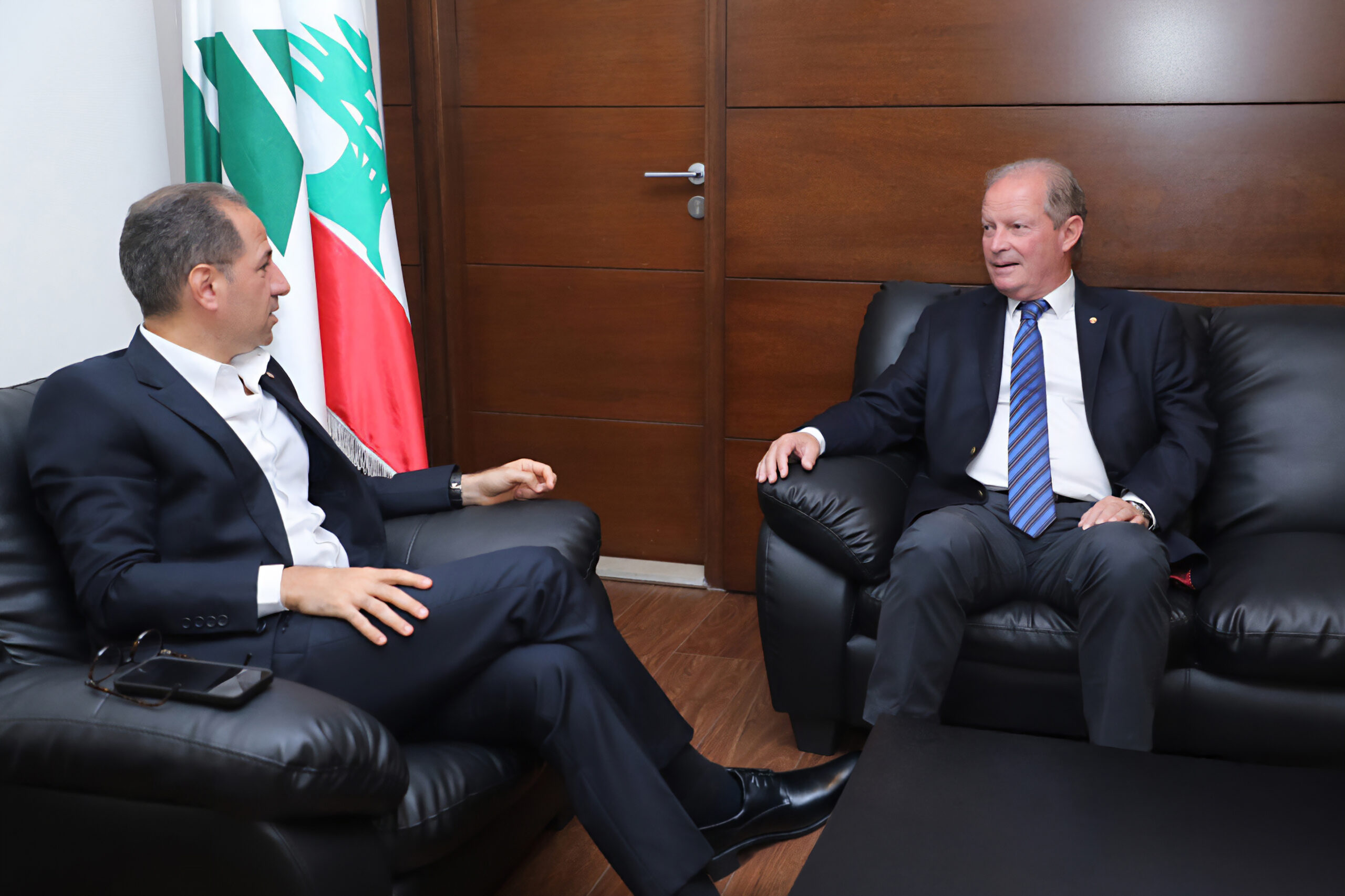
To understand the danger that Hezbollah represents not just to Israel but to Lebanon as well, we spoke with Lebanese politician Camille Dory Chamoun, who knows personally, from his family’s history and his own, what damage Hezbollah has wreaked on his country.
Camille Dory Chamoun is not just another Lebanese politician. He is one of the most prominent Maronite figures in the country today, head of the National Liberal Party, a member of parliament, and heir to a storied dynasty that has shaped Lebanon’s destiny for over a century.
The Chamoun name carries a political weight few others can match. His grandfather, Camille Chamoun, was not only president of Lebanon from 1952 to 1958 but also one of the nation’s founding giants, a statesman whose decisions helped define Lebanon’s fragile independence after the French Mandate. Known as the “Lion of Deir al-Qamar,” he steered the country through years of turbulence, resisting both Nasser’s pan-Arabism and Syrian attempts to subsume Lebanon into a greater Arab state. Fiercely independent, he survived repeated assassination attempts and left a legacy as the champion of a sovereign, pluralistic Lebanon.
His son, Dory Chamoun, carried that mission forward, heading the National Liberal Party through the long years of Syrian domination and serving as one of the most consistent voices for Lebanese independence.
At present, facing another historic turning point, Camille Dory Chamoun wears that mantle. As head of the National Liberal Party, he speaks for a significant segment of Lebanon’s Maronite community and stands at the forefront of the camp demanding Hezbollah’s disarmament and the restoration of full state sovereignty. Lebanon, he warns, is once again at a crossroads: Either it breaks free from sectarian militias and foreign influence, or it slides deeper into collapse.
It was against this backdrop that I sat down with Mr. Chamoun in his Beirut office to hear about his vision for Lebanon’s future, his reflections on his grandfather’s enduring legacy, and his hopes for peace and reconciliation in a fractured nation.
To read more, subscribe to Ami