




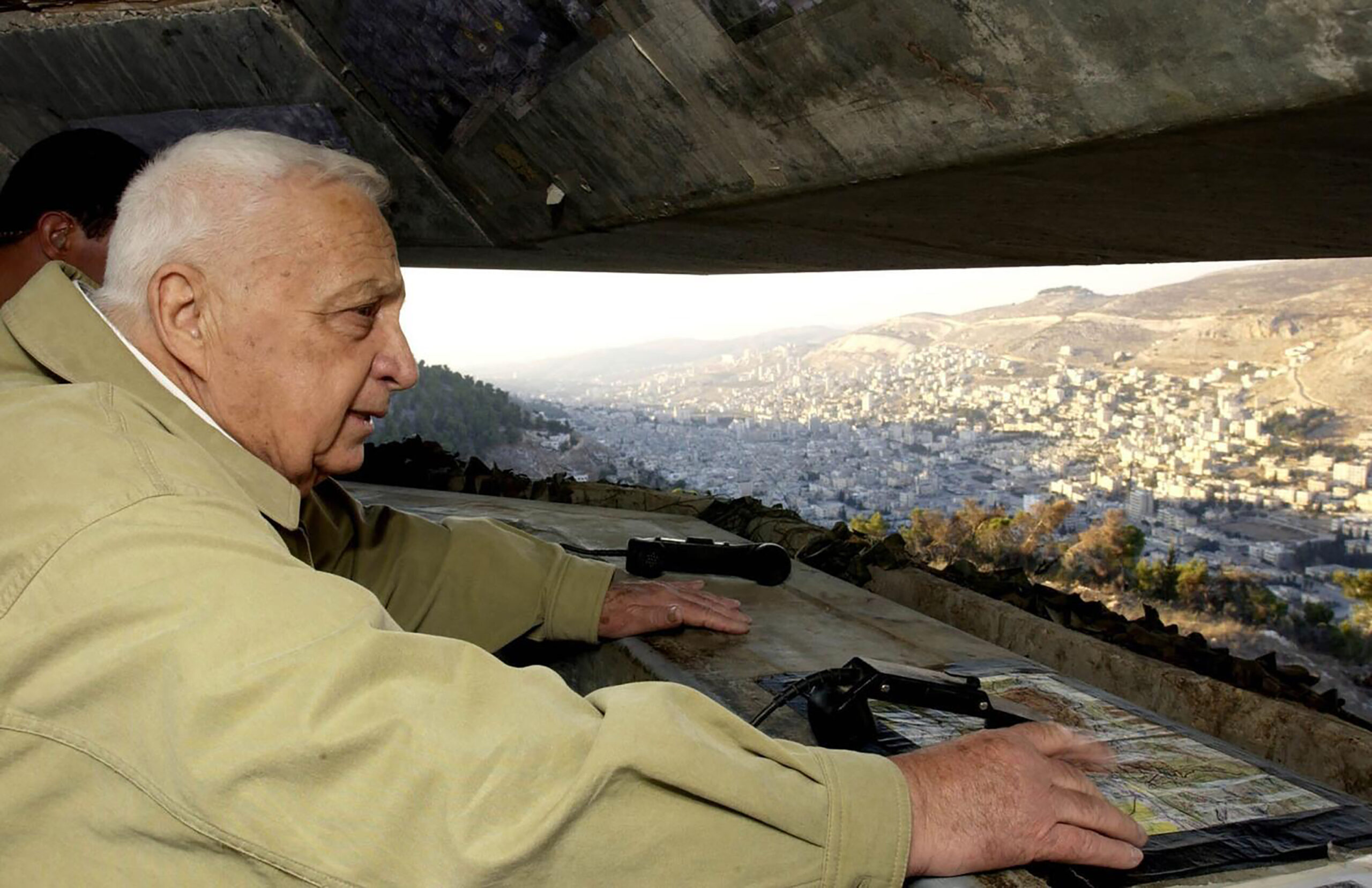
General Ariel Sharon fought famous battles against Arab armies in the wars of 1956, 1967 and 1973. But when he entered New York City’s Federal District Courthouse in the autumn of 1984, he was ready for a different kind of fight: a lawsuit against Time magazine for libeling him about the Lebanon War. Robert S. Rifkind, a Jewish attorney who represented Time in that legal struggle, passed away earlier this year, drawing fresh attention to one of the first, and most important, battles against anti-Israel bias in the American news media.
The road that led to Ariel Sharon’s 1984 libel suit against Time was long and complex. Its roots reached back to the late 1960s, when PLO terrorists based in Jordan began launching attacks on Israel, resulting in Israeli counter-terror strikes into Jordanian territory.
By 1970, Jordan’s King Hussein became convinced that the PLO intended not only to terrorize Israel but to overthrow him and make Jordan part of a Palestinian state. Hussein drove PLO chief Yasir Arafat and thousands of his fellow terrorists across the border into Syria. Finding themselves unwelcome in Syria, the PLO forces settled in neighboring Lebanon. There the PLO joined with Lebanon’s Muslim extremists to launch a civil war against the country’s large Christian community.
At the same time, the PLO set up numerous bases in southern Lebanon and carried out attacks across the border into Israel. The terrorists who hijacked a bus on the Tel Aviv coastal highway in March 1978 and murdered 37 of the passengers came from southern Lebanon.
After years of PLO attacks, Israel finally struck back in 1982. Led by Defense Minister Sharon, Israeli forces pursued the terrorists all the way to Beirut. At the same time, Lebanese Christian militias finally gained the upper hand against the PLO and Muslim forces that had been ravaging the country.
In mid-September, Israeli forces on the outskirts of Beirut found themselves under heavy attack from rocket-propelled grenades fired by PLO terrorists in the neighborhoods of Sabra and Shatilla. The Israeli military leadership authorized several hundred Lebanese Christian militiamen to enter the area. The events that followed would become the centerpiece of Sharon’s lawsuit.
Sabra and Shatilla
On September 16, the Christian fighters entered Sabra and Shatilla. There were gun battles between the Christian militiamen and PLO forces, as well as some executions by the Christians of noncombatant prisoners. When the Lebanese police arrived two days later, they found 460 bodies. Of that number, 425 were military-age men; the other 35 were women and children. The men included Iranians, Syrians, Algerians and Pakistanis along with Palestinian Arabs, indicating that Sabra and Shatilla were being used by the PLO as training bases for their international allies and mercenaries.
The Palestine Red Crescent, an arm of the PLO, claimed that more than 2,000 civilians were killed in Sabra and Shatilla. The United Nations blamed Israel for the killings and declared that “genocide” had taken place.
An independent Israeli commission of inquiry, headed by Supreme Court President Yitzchak Kahan, examined the events. In early 1983, the commission concluded that Sharon and several Israeli generals bore some measure of “indirect responsibility” for what happened, because they did not foresee that the Christian militiamen might kill some prisoners.
Time magazine, which during the pre-internet era was one of America’s leading news publications, had a long history of treating Israel harshly. It was especially hostile to Prime Minister Menachem Begin. When Begin was first elected in 1977, Time explained to its readers how to pronounce his name by telling them it “rhymes with Fagin,” a Jewish villain in Charles Dickens’ Oliver Twist. Protesters outside Time’s headquarters carried signs proclaiming, “Time—Rhymes with ‘Slime.’”
So perhaps it was no surprise that Time was at the center of the controversy over Begin’s defense minister. On February 21, 1983, Time devoted its cover story to the Kahan Commission report, emphasizing the aspects that were the most critical of Begin and Sharon.
A key passage in Time’s article claimed that there was a secret appendix to the Kahan report that said Sharon encouraged the Christians to kill residents of Sabra and Shatilla. According to Time, Sharon discussed with Lebanese Christian leaders the fact that Muslims had assassinated a top Christian leader, and therefore there was a “need for [them] to take revenge” in Sabra and Shatilla.
Sharon responded that Time’s allegation was false and defamatory, and he filed a $50 million libel suit against the magazine.
To read more, subscribe to Ami