



Over the past decade, there has been an uptick in the desire for more natural products, across many markets, brought about by a combination of scientists’ revelations regarding the dangers lurking behind the chemicals used in common products as well as an overall trend to be more health conscious.
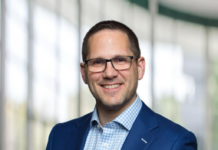
When I heard of Viking Pure, a company that offers a natural product for cleaning and disinfecting properties, I was unaware of how different and truly natural and pure their product is: salt, water and electricity.
Before focusing on Viking Pure, its founder, Joshua Schwartz, ran several multi-million dollar companies in the health-related space. After realizing the damage traditional cleaning products were doing not only to the facilities they were used in but to the patients housed there, Joshua and his partner sought a solution.
Today, Viking Pure offers machines that produce the cleanest cleaners and disinfectants available, made on-site at the client’s office or facility. You simply add the salt and the machine does the rest, producing cleaning and disinfecting solutions simultaneously.
While the process is intriguing, Joshua’s journey is compelling. It’s fascinating how a single concept can turn into a successful business. Enjoy!
—Nesanel
My great-grandparents were immigrants from Russia and Poland. I grew up in Westchester, New York. We were three siblings, me, my older sister and a younger brother. We were raised Conservative. We had a Passover Seder, lit Chanukah candles, fasted on Yom Kippur—traditional stuff like that. I went to Scarsdale High School but also to Hebrew school, and I had a bar mitzvah.
“My father was an entrepreneur who focused on market research. He helped grow a couple of small businesses into larger businesses. My mother, a clinical psychologist, is still in private practice. Much of my independence in my career was influenced by seeing both my parents work hard. They instilled in us strong values and a work ethic, and they are very supportive.
“In college, I got involved in several organizations at the ground level. I was one of the founders of Chabad at Yale. There were a couple of Chabad rabbinical students who were studying in New Haven, and I met them during holidays. We would get together in apartment 3M, cooking Shabbos dinners, inviting people over to share them, telling stories and saying some prayers. For a few years we were called the ‘3M’ group.
“Today Chabad of Yale is a major Jewish organization on campus with a multimillion dollar building and hundreds of students coming to Friday night dinner and other events. I support it and am still in touch with several of the other cofounders and rabbis who created it. I visit whenever I’m in New Haven.
“Through Yale Hillel I got a grant to do an independent research project in Eastern Europe on contemporary anti-Semitism, traveling to six countries and interviewing local rabbis and Jewish community leaders.
“I knew I wanted to go into business, so I majored in economics. The markets always interested me; in high school I opened a small online trading account. It didn’t make me rich, but it kept me engaged. Every summer in college I had internships on different parts of Wall Street. In my sophomore year, I interned at a small asset management firm, and in my junior year I interned at Morgan Stanley in sales and trading. I realized that working on a traditional trading floor, advising people and buying and selling stocks and bonds, wasn’t what I wanted to do. I was more drawn to long-term analysis, valuation and advising companies on raising money in public or private markets. That fit my personality as a patient, long-term analytical thinker, so investment banking made more sense, and by senior year I was applying almost exclusively to investment banking jobs.
“My first job after college was with Citigroup in Tribeca, in a standard analyst program for recent grads. In that kind of program, you work a hundred hours a week and learn a tremendous amount. It gave me the hard skills and exposure I needed.
“I was in the consumer and retail investment banking group, working with big retailers and consumer and food brands. Most of the work was M&A and capital-raising advice.
“I became interested in private equity, working for firms that raise money from institutional investors, family offices and wealthy individuals for investments. It was prestigious, paid well and theoretically offered a better work-life balance. I joined a mega fund, Apollo, one of the top five private equity firms in the country. My role was to analyze investment opportunities. I was at Apollo for a few years. It was an interesting time because it overlapped with the financial crisis. When I started, they were raising a lot of money and buying entire companies. As the crisis hit, the strategy shifted more to buying the debt of companies or investing in distressed situations.
“The people there were very smart and I learned a lot, but there’s a herd mentality around it. I realized I didn’t want my whole career to be at giant corporations like Citigroup or Apollo. I wanted a larger role in operations and decisions and more control over my life.
“I was around 25 and single when I left, so I had some flexibility. I met with smaller private equity funds, startups and hedge funds and explored a lot of the more typical opportunities, but I decided to do something very different. My father introduced me to Bob Slingsby, a former healthcare lawyer who had gone into real estate development when he was in his 50s.
“I spent a few days touring Bob’s properties, hearing his business model and playing golf. It was clear he was brilliant and a true entrepreneur, but he was also a bit disorganized and not as focused on execution and detailed analysis as he could have been. We got along, and I decided to work with him to try to grow his business.
“I wasn’t coming in as an employee but as an equity partner. We complemented each other. Bob was the big-picture entrepreneur while I worked on the operational and analytical side, helping to raise capital and oversee development and expansion. I brought experience from my prior jobs in projections, business analysis and financial return models. I became a ground-level partner in any new businesses and real estate deals. I also invested my own money with him, and we raised capital from outside investors.
To read more, subscribe to Ami