




Ever since I was appointed Ami’s senior White House correspondent, Washington, DC, has become like a second home to me. Walking the halls of power is a privilege I never take for granted; I still find myself pinching my arm, wondering if it’s real.
What continues to surprise me are the people I meet and the enormous influence they wield, not just on America but on the world. One such individual is Karoline Leavitt, the president’s press secretary. Not only is she the youngest person ever to hold the position, but she performs it with the confidence and composure of a seasoned veteran.
The job of a press secretary is anything but simple. It’s one of the most high-pressure roles in any administration, demanding a sharp mind, lightning-quick thinking, and a near-encyclopedic grasp of policy, politics and media strategy. It’s not just about standing at a podium and answering questions; it’s about shaping narratives, defending decisions and often going toe-to-toe with some of the most relentless reporters in the world.
The role demands a mastery of language, precision in messaging, and the ability to navigate complex legal and political landscapes. Every word the press secretary utters is scrutinized and analyzed, every statement is dissected, and a single misstep can dominate headlines for days. The job demands not only intelligence but wisdom: knowing what to say, how to say it, and sometimes what not to say.
As the face of the administration who is regularly held accountable by the media, the preparation for this role both in theory and practice fascinates me, and I know that it will fascinate many of our readers. That’s why I turned to someone who knows about these things from the inside out: Sean Spicer, President Trump’s first press secretary. He’s certainly been in the hot seat, handled the pressure and understands what it means to be the voice of the presidency.
There’s a perception that press secretaries have to defend things they might not agree with personally. Was that something you ever experienced?
The job of a press secretary is to speak on behalf of the person he or she represents. A lot of people misunderstand that; they think it’s about the press secretary as an individual. But it’s not about my opinions or priorities. It’s about what the president thinks. In any profession, unless you own the business, you’re there to represent someone else. You might work in a retail store and not love all the products or prices, but that’s still your job. As a spokesperson, you’re taking on the responsibility of being a representative voice.
Sure, but at some point doesn’t everyone have a line he’s not willing to cross? A moment where you say, “I just can’t defend this”?
You have to make that decision for yourself. As a journalist, you might feel conflicted about something your publication prints. If and when that ever happens, you’ll have to make your own choice about whether to stay. It’s the same thing.
Based on what you’re saying, it sounds as if that moment never came for you during your time as press secretary.
That’s fair.
Was there was ever a time when you felt that everyone was against you and you couldn’t control the narrative?
I wouldn’t say that. It’s more that at one point a certain narrative takes hold, and then it becomes a distraction. My job was to speak for the president, but toward the end it became increasingly difficult not to become part of the story, which is a problem.
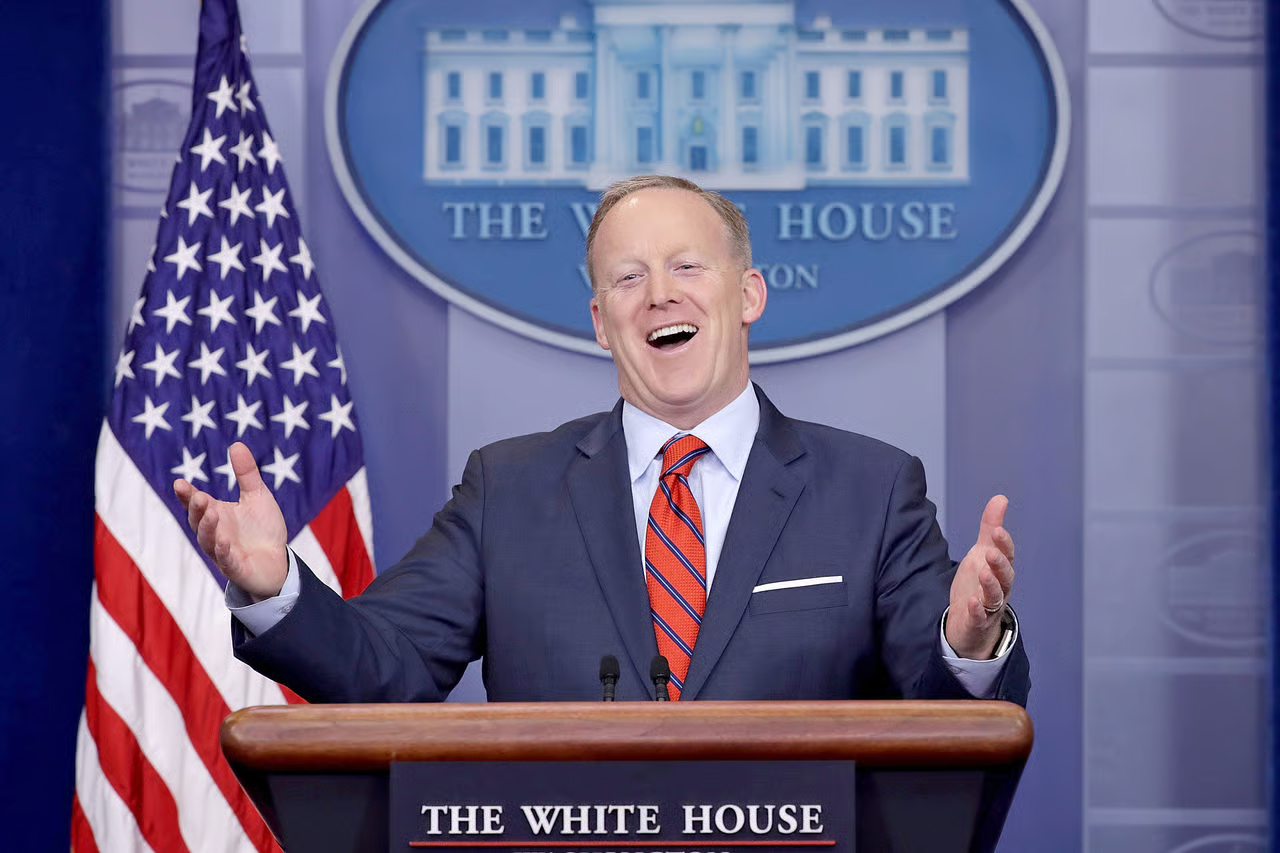
That seems to be a larger concern. Many people feel that the White House Briefing Room has become more about political theater than actual messaging, not just in this administration but in recent years in general. Would you agree?
Sometimes, yes. But I also think we need to ask who’s responsible for that shift. There’s a big difference between the White House press secretary and a typical spokesperson. The White House operates on a global stage and under constant scrutiny. Most press secretaries have background conversations with reporters. It’s not the same as standing on live television every day with the entire world watching.
During your tenure, did you feel that the majority of the reporters were trying to paint you in a negative light, a positive one, or were they mostly neutral?
Honestly, most people in that room were trying to get a clip or a click. We saw that with several reporters who ended up getting TV contracts based on how they performed in the Briefing Room. And I use the word “performance” intentionally. It really did start to feel like a form of acting at times.
To read more, subscribe to Ami