




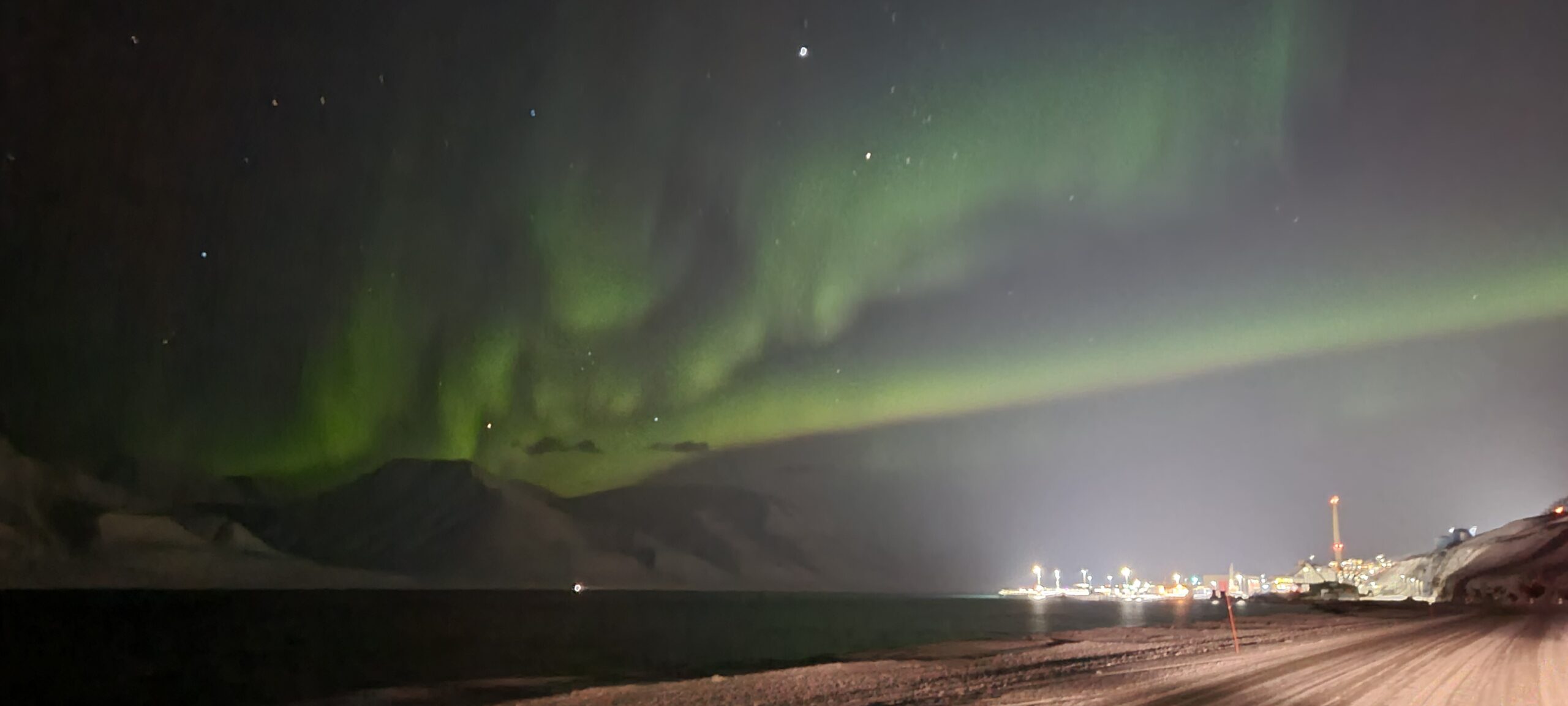
For a long time, I had wanted to visit this remote archipelago, to see its natural wonders and learn about it unusual laws and traditions. Here, the seasons change drastically from endless days with no night in the summer, to endless nights with no daylight in the winter. My plan was to come during a time when the day was so short that Shacharis, Minchah and Maariv can only be davened all together within a single hour. I wanted to experience the challenges of a Jewish traveler to this isolated place on the globe.
However, I miscalculated when I booked my tickets. I had scheduled my trip in January, too early in the season, during a time that is known as the polar nights, when there is no daylight at all. Once the sun sets in November, there is no sunrise until February. This posed a challenge for Shacharis and Minchah; if there was no day, when was I supposed to daven?
Svalbard, an archipelago consisting of nine islands, is the northernmost inhabited place on earth. The territory was claimed by both Norway and Russia over the years due to whaling and coal mining interests, and both countries set up their respective settlements.
The post-World War I Svalbard Treaty of 1925 ratified Norway’s administrative role in controlling the islands. However, it stipulated that Svalbard must never be used for military or warfare purposes. Remarkably, it is one of the only Versailles treaties that still have practical bearings. These days, Svalbard is run by an elected governor who acts as the representative of the Kingdom of Norway.
The treaty also allows its 48 signatories unimpeded access to utilize the territory’s resources, including fishing, mining and rights to its minerals. At present only Russia and Norway operate coal mines, but Norway is shutting down its last remaining mine at the end of this year, citing environmental concerns.
The citizens of signatory countries may reside and work—without a visa and indefinitely—on the archipelago. In reality, though, people of any nationality can work and live in Svalbard without a visa. The population of just over 2,000 residents is made up of citizens from over 50 countries. Svalbard is probably the only place in the world that is still encouraging immigration.
Despite some friction over the years, the Svalbard Treaty was mostly adhered to. But the war in Ukraine and tensions between Russia and the West have now reached a boiling point over these remote islands. The Russian Foreign Ministry recently summoned Norwegian Ambassador Robert Kvile to admonish him over what they see as the increasing militarization of the Arctic islands. Svalbard may become an area of contention should Russia increase its presence in the Arctic Sea and threaten Northern Europe.
My flight departed on Sunday morning from London to Oslo. From there, I took a connecting flight to Longyearbyen, the northernmost city in the world and the largest settlement in Svalbard. In truth, Svalbard can claim the title of “northernmost” of almost anything, including the northernmost supermarket, brewery, hotel, gas station and post office. Svalbardians sometimes even roll their eyes as they say it, knowing how often the term is used.
The three-hour flight from Oslo to Longyearbyen goes from the 59th to the 78th latitude north. (The Arctic Circle starts at 66 degrees). As the plane got closer to the North Pole, the sun was slowly setting, even though it was still midday. It would be my last sunset for the next few days.
My arrival on Monday eliminated any issues with Shabbos. Since there is no sunlight, Shabbos is a halachic complexity. It is not definitively known when or if the days change during the polar night season from a halachic perspective. But the issue of Shacharis and Minchah still remained.
After consulting with experts in zmanim and daas Torah*, a special luach was calculated for me according to the coordinates of Svalbard. It turns out that even during the polar nights the sun does rise slightly and reaches 11 degrees from the horizon, which is zman misheyakir (when there is enough light to recognize an acquaintance), the earliest time for tallis and tefillin. It was paskened that I could daven Shacharis at that time. (Sunrise, neitz, is when the sun reaches the horizon to varying degrees, depending on location.)
To read more, subscribe to Ami