




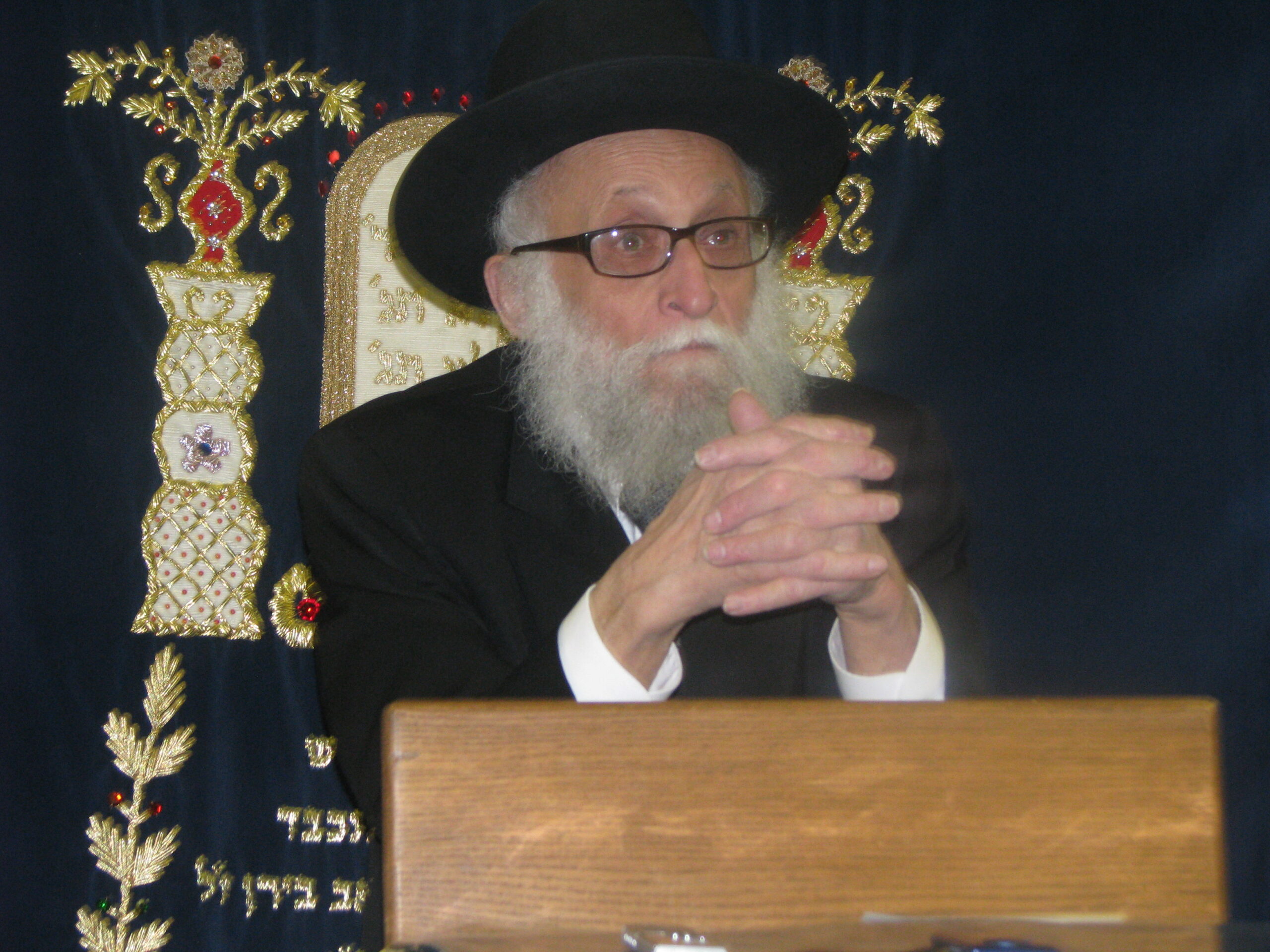
A Life of Learning Torah and Giving It Over
By Rabbi Meir Riber
Rabbi Meir Riber is a kehillah rav and rosh yeshivah in northeast Philadelphia.
In October of 1933, a baby boy, Yisroel Meir, was born to Rav Yehudah Leib and Rebbetzin Devorah Kagan. Rav Yehudah Leib was serving at the time as a well-respected rav of one of the more prominent kehillos in Antwerp. The war broke out, borders began to constrict and then close. The Kagan family made rapid plans to escape, initially setting their hopes on securing safe flight to Eretz Yisrael.
Through a series of tumultuous twists and turns, the hand of hashgachah guided them to France just before the isolation of Belgium, and then onto an evacuation boat barely one step ahead of the Nazi closure of the ports. The Ribbono Shel Olam had other destinations in mind for Rav Yehudah Leib and his family, and they ended up in New York.
* * *
Upon his arrival in America, Rav Yehudah Leib took a series of positions, first serving as a rosh yeshivah in Yeshivas RJJ, then in Chicago for a time, then returning to take a position as senior menahel in RJJ. Young Yisroel Meir was reared in the nascent state of Torah in America, with an exposure at an early age to Rav Shlomo Heiman, Rav Zelig Epstein, and their shiurim.
The family says that Rav Yisroel Meir and his chaveirim, Rav Meir Hershkowitz, zt”l, among them, used to sit on Shabbos afternoon in the Torah Vodaath Beis Medrash, located at the time right next to the printing press of a secular Jewish newspaper that unfortunately operated on Shabbos. They would attend the shiur of Rav Zelig Epstein but could not hear him over the din coming from the adjacent building and its machinery, and they needed to close all the windows.
In his later years, Rav Yisroel Meir would remark, “At the time, we took that as an ominous sign of what lay ahead for America. The kol Torah of a few young bachurim was drowned out by the deafening noise of chillul Shabbos. Little did we know that we would all go on to become roshei yeshivah, and that Torah in America was very much here to stay…”
His father did not rely exclusively on the mechanchim at that time in the States to develop his son, even with Rav Yisroel Meir’s access to the gedolim on hand. Rav Yehudah Leib maintained an active role in his son’s learning. I heard Rav Yisroel Meir recount on occasion how he remembered his father giving him permission to go outside and join his friends in a game of stickball, but only after they finished the shtikel Ketzos they were learning together.
The time came when a decision had to be made. Rav Yisroel Meir and his chaburah were at a crossroads, debating if they should go to Bais Medrash Elyon, the elite satellite of Torah Vodaath, or enroll in Bais Medrash Govoha and learn by Rav Aharon Kotler. Rav Yisroel Meir, his family says, decided he would sit by Rav Aharon for a year. He duly found his way to Lakewood, New Jersey, and the rest is history.
Rav Yisroel Meir’s single year by Rav Aharon Kotler swiftly became 14 in which, like Yehoshua and Moshe Rabbeinu, he did not deviate from the rosh yeshivah’s side. He absorbed not only Rav Aharon’s mehalech halimud but his mehalech hachayim as well. Rav Aharon’s signature sterling middos and meticulous regard for those around him were all to be found by Rav YisroelMeir, as was his approach to life itself. He was wont to say, when thorny situations arose that required the most careful of navigation, “What would the Rosh Yeshivah have done? What would the Rosh Yeshivah have done?”
Following the petirah of Rav Aharon, Rav Yisroel Meir remained in Lakewood, learning several more years by Rav Shneur. Then destiny arrived in the form of a mandate from the Lakewood Rosh Yeshivah: Together with, yblcht”a, Rav Yitzchok Wasserman, they would have to spread the fire of Rav Aharon’s legacy west of the Mississippi. They had to create a makom Torah in Denver, Colorado.
All these years later, I still remember my initial visceral impressions of the yeshivah. Elul zman kicked off with the Rosh Yeshivah’s Orchos Chaim recitation at the end of davening, line by line. With a methodical niggun that was powerful, melancholy, sincere and urgent all at the same time, a portal opened up in the beis midrash and one was transported into another era. The transition from a naive eighth grader to a member of the timeless society of yeshivah bachurim was instantaneous, facilitated by the daily Orchos Chaim l’haRosh of Rav Yisroel Meir. And the transformative Elul was capped off with his pre- and post-tekios pesukim, thundering their way throughout the room and setting the tone for an epic Musaf, every year, without fail. To this day, I still hear the reverberations of the Rosh Yeshivah’s rousing cry when the shofar pesukim come around on Rosh Hashanah.
To read more, subscribe to Ami