




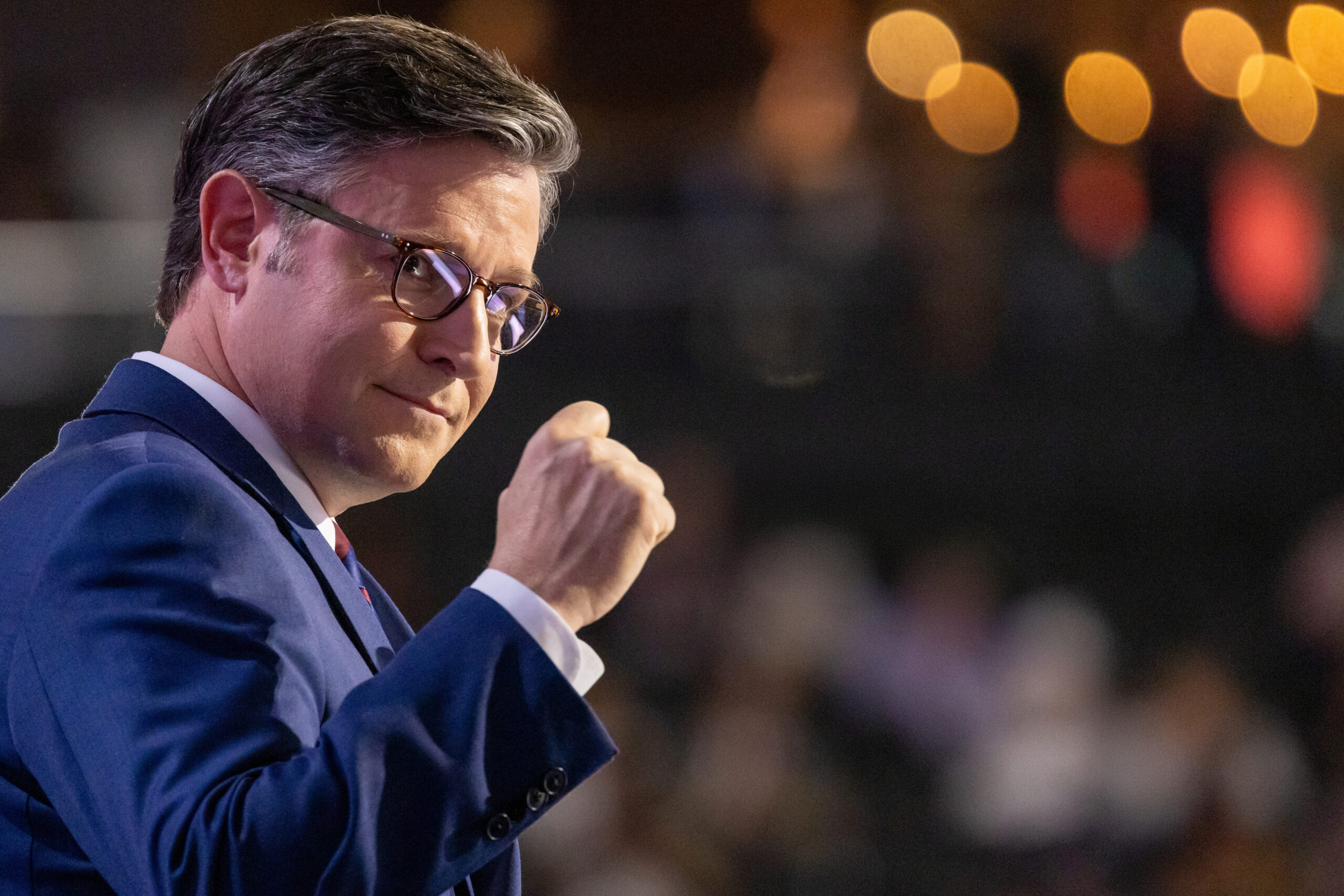
Mike Johnson, the 56th speaker of the United States House of Representatives, is one of the most influential figures in Washington and a central player in the Republican Party’s efforts to retain control of Congress. A former constitutional attorney and Louisiana state legislator, Johnson was first elected to Congress in 2016 and rose to the speakership in October 2023, following a contentious leadership battle triggered by the ouster of his predecessor, Kevin McCarthy. Since then, he has faced the formidable challenge of holding together a deeply divided Republican majority while advancing President Trump’s legislative agenda. His leadership has drawn praise from two former Republican speakers, Newt Gingrich and John Boehner, both of whom have expressed admiration for his ability to navigate the divisions within his party.
With the November midterm elections fast approaching and polls raising concerns about the Republican Party’s prospects, Johnson faces one of the most consequential tests of his political career. In this exclusive interview with Ami, he discusses the electoral landscape, the stakes for President Trump’s agenda and the challenges confronting the country.
Thank you very much for the opportunity. The elections are just days away, and I’m sure that you’re very busy. You’ve been traveling around the country campaigning for the Republican candidates. What are you seeing on the ground that gives you confidence?
I’m very confident about this election. I’ve been sounding the alarm that all the polling should be ignored right now. The fact is that over the last ten days, two polling organizations, Wedgewood Polls and SoCal Strategies, have been outed as distributing completely fake data. But even the most prominent organizations, outlets like the Pew Research Center and even CNN, are now openly acknowledging that there’s a problem out there, and the polls are underestimating Republican support. They’ve created a term for it; they call it partisan non-response bias. But what it means is that Republicans are simply no longer participating in the polls because they don’t trust the people who are calling for their information.
I’m traveling nonstop. I was in 39 of our battleground congressional districts across 21 states over the last three weeks, and we’ll be doing that all the way until the elections. I remain convinced that Republicans across the country are far more enthusiastic and engaged than the mainstream media wants everyone to believe. I believe we’re going to have a good night, and I believe we’re going to win and hold the majority.
Historically, though, the party occupying the White House tends to lose seats in the midterms, so besides the polls we’re also talking about bucking history, which is another challenge.
We are, and we acknowledge that. We know the challenge. But I think there are a couple of factors that make this a midterm unlike any we’ve ever seen before. We have a stark contrast between the two parties. We refer to this as a contrast election between common sense and crazy, and I think people around the country recognize that this is not our fathers’ Democrat Party any longer. They are being overtaken and overrun by an insurgent left that includes socialists, communists, Marxists, the anti-Semites—all of these movements that have just overtaken the party.
We have a strong contrast between the Republicans and the Democrats on the ballots. We have far superior candidates than they do; we have common sense candidates who are true leaders. We have a historic record to run on from the current Congress, and we have phenomenal grassroots energy around the country. When you put all that together, I think we will defy the historic trend.
It has only happened twice in 90 years that a sitting president has picked up seats for his party, but there are two primary motivating factors in a midterm election that spurs along the turnout. One is anger. Normally, when a president wins the White House, the other party is upset about it, so they send out their grassroots and take House seats away from him. But the other motivating factor is fear. What I’ve seen from my own observation from coast to coast as I campaign in the toughest districts is a real fear element out there. People understand that they fear this rise of the Marxist and anti-Semitic left that is now being referred to as the red-green alliance, where the Islamists are combining with the movement. People are fearful about that, and I think it’s going to motivate a big bump on our side.
There was a time when support for Israel was overwhelmingly bipartisan, but today it has become a divisive issue, particularly within the Democrat Party. Do you believe that bipartisan support for Israel can still be restored?
I pray that it can be. Obviously, the president and Republicans understand the importance of supporting our ally, Israel, and we’re deeply committed to maintaining it for all the reasons we know that it’s so important. But I really am afraid that the Democrat Party, in its next platform for the next election cycle in 2028, will be openly and expressly anti-Israel. I hope that’s not the case. I hope there can be some turn of events. But I believe this is becoming a completely divisive issue because that’s what the Democrats are making it. You’re going to have Republicans standing with Israel, and you’re going to have Democrats on the other side. I hope I’m wrong about that, but I’m afraid of where this trend leads us if it isn’t stopped.
The Orthodox Jewish community has become among the Republican Party’s staunchest constituents. What do you believe accounts for that alignment, other than support for Israel, and what obligation does the Republican Party have toward the community?
I think you can look at the record over the rhetoric and see that Republicans are not just in word but in deed standing with Israel and with our Jewish friends, both Jewish Americans and Jewish Israelis. We do that in terms of our public policy for the practical things of bringing down the cost of living and trying to make life more affordable for New Yorkers.
By way of example, in this Congress we passed the Working Families Tax Cuts, also known as the Big Beautiful Bill, and Congressman Mike Lawler, for example, was a huge leader in getting that done. But this is what it means practically for Jewish residents and all residents of New York: The average taxpayer in New York has $4,079 more in their pocket—that’s the average tax cut in New York that they didn’t have to send to Washington. Real household wages have been increased by an average of $8,000 just because Republicans are in charge and we did the right thing. 3.3 million seniors in New York are no longer paying taxes on Social Security, and of course Mike Lawler was the leader to increase the SALT cap deduction from $10,000 to $40,000. He’s done big things for people. He also brought back a lot of community project funding to New York—$64 million just since he’s been in Congress, and he’s working hard every day.
But with regards specifically to Jewish Americans, when Columbia University was at the height of its protests and the anti-Semitism was burning like a hot fire, and there were massive violent protests and Jewish students were instructed not to return to campus for fear of their safety, there were four members of Congress who went right into the middle of that, told the president of Columbia to resign and then went to face the angry mob. Mike Lawler and I were two of those. We stood there and spoke with moral clarity, conviction and consistency about what is wrong, what is good versus evil and that they must stop.
At that time, Mike and I talked and wondered out loud, “Where is Chuck Schumer? Where is Hakeem Jefferies? Where are the leaders from New York and America on the Democrat side who should be here standing with us?” They were absent.
So I think not only in our legislation and stalwart support of Israel in terms of resolutions we passed, our hard stance against Iran and the sponsors of terrorism, but even domestically and even in the court of public opinion, you see Republicans as champions of the Jewish people, and you see the exact opposite from Democrats. I think people take notice of that. I’m saddened by that trend, because I would much prefer that support for Israel and the Jewish community be a bipartisan concern, but I’m afraid it no longer is.
You’ve developed an unusually close working relationship with President Trump. How much of the Republican Party’s future do you believe is tied to his personal popularity?
I think people look beyond personalities in elections like this. People have to understand, and I think they’ve seen this visibly displayed in New York as much as anywhere: When you vote for someone on the ballot, you’re not just voting for a personality, you’re voting for a set of policies and principles that come along with that person. In races for Congress, for example, there’s a glaring distinction between Mike Lawler, the incumbent, and his challenger. She’s a radical, out-of-touch, far leftist endorsed by AOC. She would take the side of the red-green alliance in Congress that is forming, and that’s a big thing.
In the next presidential cycle, I think people will be looking very carefully at the policies that will be advanced and the stark difference now between the platforms of the two parties and what they will be advancing in Congress from the White House. I think that’s a very important factor for people. Again, you have to look at the record and not the rhetoric. Increasingly, in serious times like these, I think people will look to that, and it will benefit our side completely.
You became a speaker under extraordinary circumstances, and you have managed to survive and prosper. You’ve been getting great scores from some of your predecessors. What has been the most difficult aspect of the job?
I’ve had to manage one of the smallest majorities in history, and most times I’ve had only a one- or two-vote margin. Former Speaker Newt Gingrich said that my speakership is the most challenging one since the Civil War, more than 160 years ago. In spite of that, we’ve been able to keep steady hands at the wheel and apply common sense to deliver for the American people. This Congress, of course, followed the Biden-Harris administration, which was an absolute disaster in every metric of public policy, and we had to navigate through repairing all of that with one of the smallest margins in history.
I’m grateful to G-d that we’ve been able to do it. It takes a lot of patience and effort, but we’re going to keep delivering and keep steady hands at the wheel during these dangerous times in which we live.
Do you think the foreign policy obligations that President Trump has undertaken and the domestic issues that are confronting us, such as the economy, are in conflict, or do you feel that they can somehow work together?
There is a rise of people who have almost a total isolationist perspective with regard to foreign affairs, but we understand that in order to maintain our superiority as the greatest, strongest, most powerful nation on the planet, we have to maintain peace through strength. That was a Ronald Reagan principle, and President Trump believes in that as well. That does not mean that we should act as the world’s policeman or be engaged in conflicts around the globe all the time, but it does mean that our enemies and our allies need to perceive us as strong and capable of defeating an enemy at any time.
There’s a balance that must be struck there. We don’t want needless wars and ongoing conflicts around the world. We seek peace. But the way to do that is to be prepared and strong, and that’s the policy that governs the heart of the Republican Party. I think that’s going to be an important principle for us to advance going forward. We have to do both things simultaneously.
We are in a direct contest right now with a rising bear that is China. They’re moving very aggressively around the globe, and we must make sure that China, Russia, Iran, North Korea and any other adversaries understand that America is the great superpower, and we have to maintain that status.
I’d like to ask for a final message before Election Day.
Every voter in America has to ask themselves one question: Which candidate on the ballot is better for me and my family, for our safety, our security, our opportunity, and our liberty? If you compare and contrast in a race like Mike Lawler’s, for example, it’s a very easy decision. It’s a decision for common sense and a decision for delivering on our promises. What’s better for you and your family, for your aging parents and your children? The answer is very clear. You can’t vote for the insurgent left, far-left, radical Democrats who have taken over that party. You have to vote for common sense, and I think Republicans are going to have a good night because of that. ●