



This Lunchbreak is a little different from the usual. For the first time, I’m featuring someone I personally mentored and watched grow up. I’ve known Yossi Eliav since he was 13. As an energetic young bachur, he helped me run several Yad L’Achim events. He spoke with the confidence and maturity of someone far older, and I remember telling his father that I would give Yossi a contract on the spot to work for me whenever he was ready, such was my faith in his abilities. I knew he would succeed, and I wanted to be part of his journey. Eventually, we did work together for several years until he branched out into real estate and began building his own path to success.
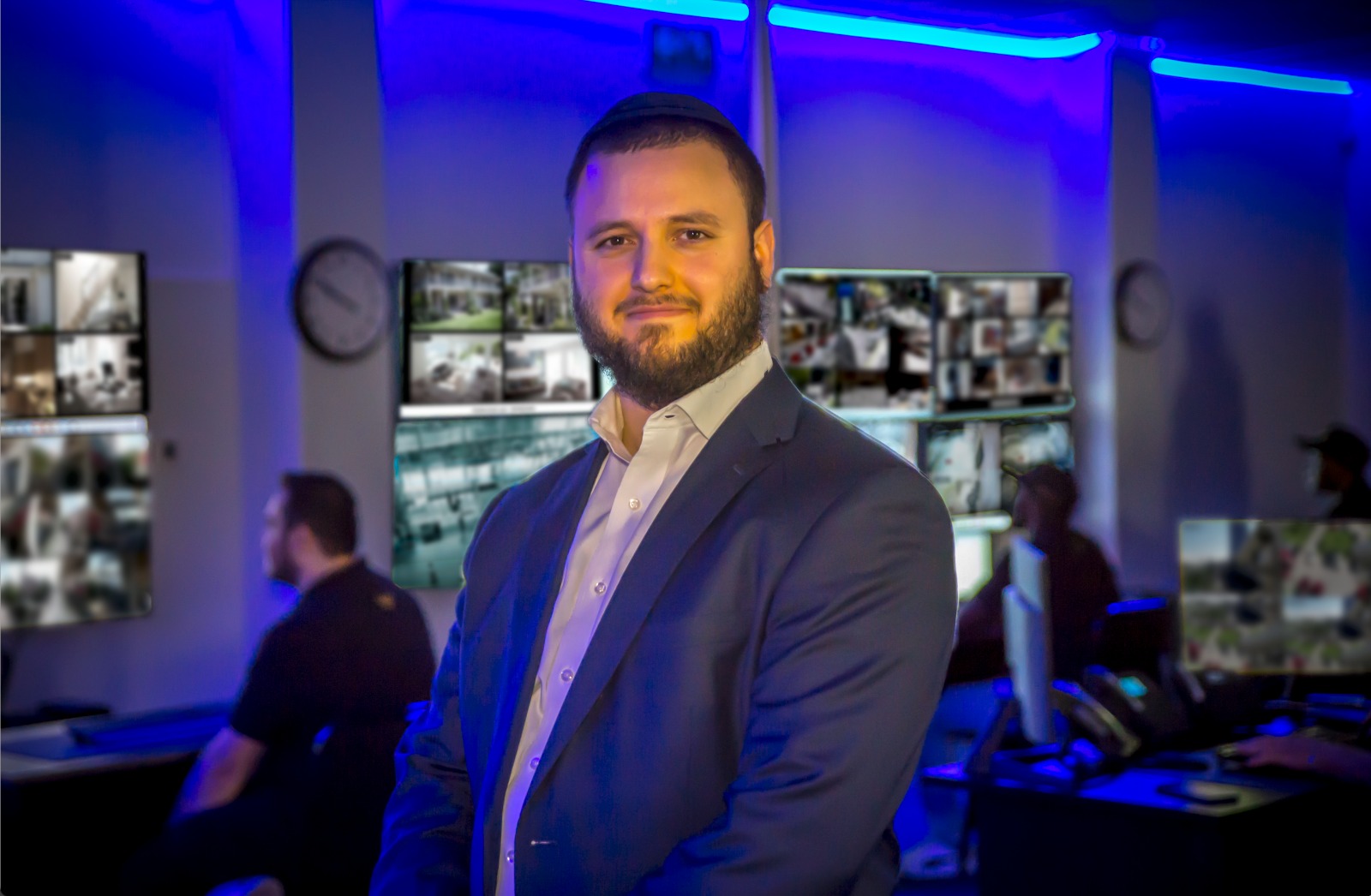
Today, Rabbi Yossi Eliav runs Chabad of Clinton Hill & Pratt, and he’s also a thriving real estate investor and the founder of US Virtual Guard, a fast-growing remote monitoring company. After seeing the urgent need for remote camera monitoring following October 7, Yossi launched his company, performing the initial tests on his own properties. Using proprietary technology and a unique approach to monitoring, he has grown USVG to serve hundreds of clients across the United States. His clients span industries from large office buildings and multi-family complexes to nursing homes, construction sites, luxury homes and diverse businesses.
In this conversation, we spoke about his journey building USVG, the challenge of balancing life as a rabbi and a businessman, and his vision for the future of security.
Enjoy!
—Nesanel
I was born in Manhattan and lived on the Upper West Side for a few years while my parents were on shlichus there. For the first three years after their marriage, my father served as the rabbi for Israelis in that neighborhood. The shul he started there is still active today.
“My father worked hard, doing everything from catering to driving professionally. Today, he learns in kollel and dedicates himself fully to chesed. My mother is a midwife and has had the zechus of delivering thousands of Jewish babies, both in hospitals and homes. She currently works at NYU; just last week, she delivered six babies.
“I am the oldest of six children. We moved from Manhattan to Crown Heights, and I went to Oholei Torah until eighth grade. After that I went to a few different yeshivos; I was a bachur with a lot of energy. I spent a few months in a yeshivah in Israel, then I went to a yeshivah in Queens. Starting in 11th grade, I went to a beis midrash in the Poconos.
“Rabbi Mendy Majeski was rosh yeshivah then; the menahel of the mosad was and is Rabbi Mendy Hendel. They were very kind to me and kept me busy. The beis midrash was on a new property, so I became the menahel gashmi, taking care of the grounds, building things and helping with various jobs. I have a lot of hakaras hatov to that yeshivah, because it allowed me to develop my talents and energy while I was learning.
“After two years, I went to beis midrash in Brunoy, France, and then I spent a very meaningful year in
Tzfas.
“The following year, I called you from Eretz Yisrael for advice about a job offer, and you suggested I work for you at Yad L’Achim. I remember where I was standing when I made that call! When I got back to New York, we met at Cafe K, discussed the job, and I worked for Yad L’Achim until I got married.
“I helped oversee fundraising events. When we would bring a rescued woman to America to tell her story, for example, I would arrange everything: locations, travel, accommodations. Baruch Hashem, I was able to coordinate over 100 events. I still receive calls from people who want to know if I can arrange an event in their shul.
“It was a Yad L’Achim event that led to my shidduch and eventually my becoming a shliach as well. I was redt to the daughter of Rabbi Aaron L. Raskin, the rav of Congregation B’nai Avraham and Chabad of Brooklyn Heights, but they didn’t pursue it. Then I arranged a Yad L’Achim event in their shul, and after meeting me they decided to go ahead with the shidduch. Five years and five daughters later, I’m thankful to Hashem for how it all worked out.
“I got smichah after I got married. It’s signed by several rabbanim, including Rav Gavriel Tzinner, Rav Yosef Yeshaya Braun, and Rav Dovid Schochet of Toronto, who was recently niftar.
“I’m the type who jumps first and figures it out later. I was always interested in real estate, so I started asking around for good deals. It was shortly after I was married, and with a few dollars we had saved up, I invested in a deal. After observing the relationship between the manager of the properties and the limited partners and how that works, I felt confident enough to make a deal of my own.
“I found a building in Clinton Hill, on the outskirts of Williamsburg. All the chasidim knew about it, but no one wanted to go near it. Being new to the market, I thought I was the genius who could handle it. I did, and I made money on it, but it was seriously challenging. Hashem did miracles for me to succeed in that deal. I don’t think I would take that kind of risk again. Today I would look for a different deal.
“I originally brought in a partner, but it was my name on the contract. We were going to go 50-50 and take out a loan together. He had a condition about the type of loan he wanted to take out. I had put down my portion of the money, he had put down his, and then the bank backed out on us right before closing. The second the bank backed out, he essentially backed out as well. I suddenly had only half the money for the building. By then I was already in a hard contract.
“This was New York, where there is no due diligence period, no backing out, no option. If I didn’t close, I would lose my deposit. I needed to come up with a lot of money in a short time.
“I borrowed it. That money wasn’t free; I had to pay people with a heter iska. But I did what I had to in order to close. In the end, I’m grateful it happened that way, because now I’m the sole owner. I bought it for $1.8 million, had to raise a million dollar down payment to get the building under my name, and later put in another million to renovate the apartments. Baruch Hashem, today it’s appraised at $7 million and has a healthy rent-roll.
“That project led to more opportunities and more relationships. I renovated several properties in the vicinity, including a building that houses our new shul and We-Work-like office spaces on the second floor.
To read more, subscribe to Ami