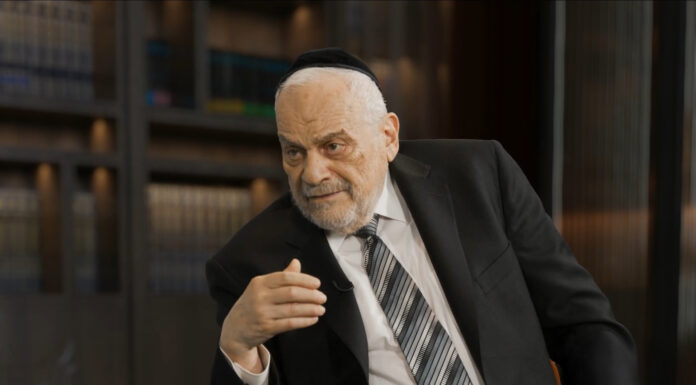




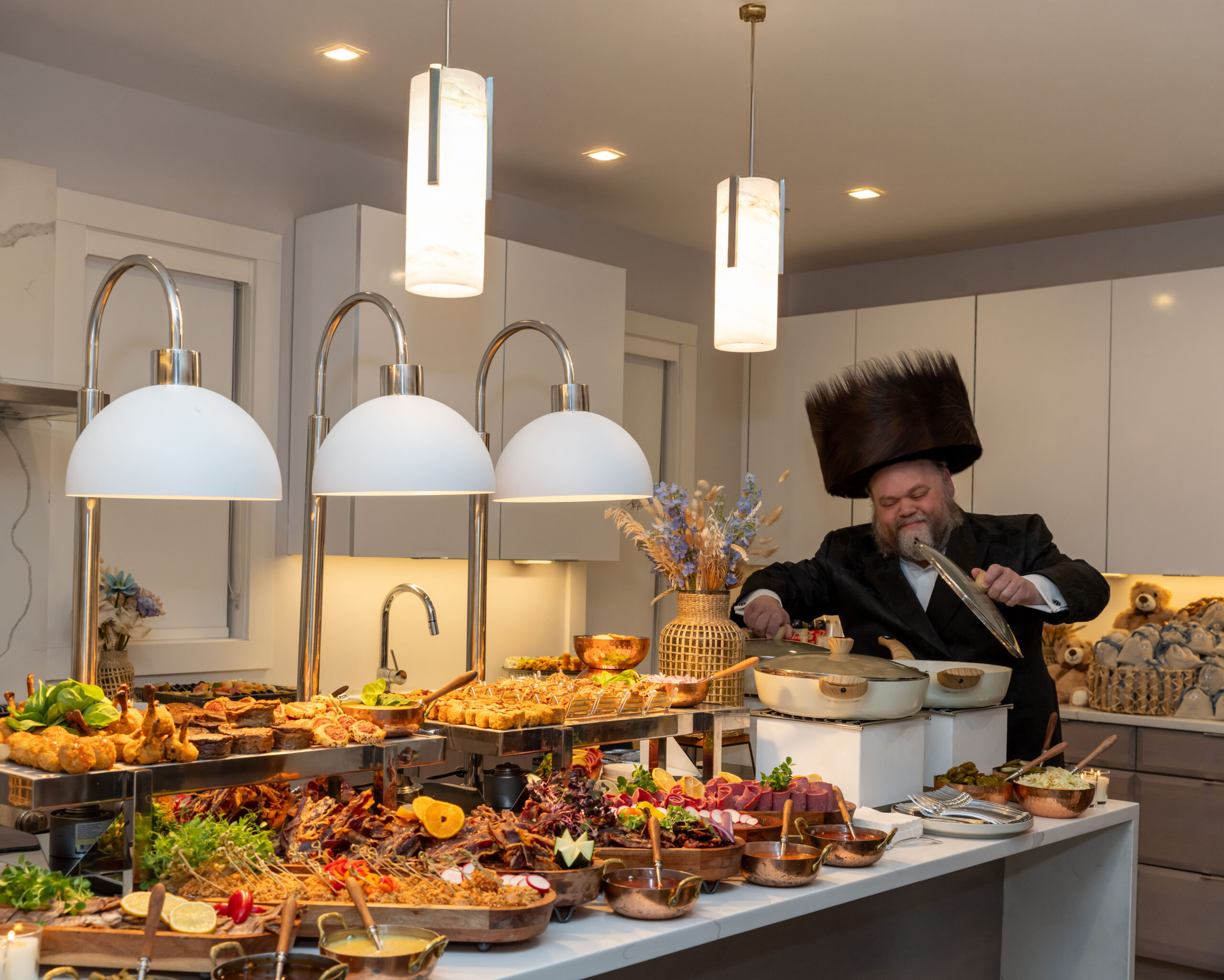
I must admit that speaking to Tuli Guttman was one of the most memorable Lunchbreak conversations I have had in a while, for two main reasons. The first is that Tuli is a sweet man to talk to, softspoken and with a big heart to match. Second—and this will hopefully be made clear in the article—is how Tuli came to grow his company, Guttman’s Production & Event Planning, a full-scale catering and production company.
Tuli learned “the catering business” from his father. He started out being a shammes in a local shul, managing the mikvah and setting up brissim. Those brissim led him to his career today. It’s truly a fascinating and inspiring journey, and it was also fun to discuss food for over an hour.
Today, Guttman’s Production arranges high-end events with a focus on Shabbosim for families and organizations. Tuli, together with a dedicated team of staff and many subs, arranges everything from A to Z.
We discussed his career journey, how he works with his family, and how he sets himself apart—by caring.
Enjoy!
—Nesanel
I was born in Williamsburg in 1975 to Satmar chasidim and am the only son with six sisters. I didn’t go to Satmar cheder because they only accepted children at age three, and my father wanted me out of the house at two (laughs). There was a Tzehlemer cheder on our block, so my father enrolled me there, where I remained until my bar mitzvah. Afterward, I went to Satmar Yeshivah Ketanah in Williamsburg for a year. When I was 14, my parents moved to Boro Park, and I continued in the Satmar yeshivah there.
“My mother was a homemaker, and my father worked at Meal Mart, first in the meat department and later in the kitchen. In those days, not every Meal Mart location had its own kitchen. Each store sold meat and received prepared food from the main kitchen, where my father worked in a few different roles. One of his main responsibilities was broiling liver. Since liver has to be broiled within two days after the shechitah, he would often go in at five in the morning when the liver was delivered to get that done.
“My mother passed away 20 years ago at the age of 52 after suddenly contracting meningitis. Within ten days she was gone. I was 30 at the time and had just had my third child. My father passed away two years ago at age 74 after an illness.
“My father moved to Boro Park when I was 14 and left Meal Mart. Around that time, Meal Mart was changing. The meat department and kitchen had always been separate, but when they moved to Maspeth, everything merged into one large operation. My father felt it was too big for him, so he became a shammes in the big Satmar shul in Boro Park.
“He quickly became well known in the neighborhood, often going around to chuppahs and brissim. My father originally came from Bnei Brak, where the only rebbe was the Vizhnitzer Rebbe, so he grew up going to the Vizhnitzer tishen and knew all the Vizhnitzer niggunim—and of course their kugel recipes as well.
“As the shammes, he was in charge of making the Kiddushim and the shalom zachars. As the only son, I would help him whenever there was an event. That’s really where the seeds were planted that eventually led to my business today. Satmar Boro Park was a busy shul, and there was always something happening. He served as shammes for about five or six years until they built a new, larger shul. Again, he felt it would be too big to manage, so he stepped down.
“He then worked for a while at Landau’s Restaurant in Williamsburg. Even after leaving the shul, people continued calling him to facilitate chuppahs, sing and announce the kibbudim at brissim. He jokingly called himself the “Boro Park Shammes,” but it wasn’t too far off from the truth. He was constantly in demand, going from one small shul to another, wherever they needed a gabbai. He was busy almost every night with chuppahs and was paid a few hundred dollars per event. He had a beautiful voice and sang beautifully under the chuppah. It was more than enough for him.
“I used to daven in Krula in Boro Park, and the Krula Rav asked me to help with some of the responsibilities there. I ended up helping to arrange simchos and served as shammes. I was still a bachur living with my parents, but who doesn’t need some pocket money? I was there all day anyway, learning in kollel, so I agreed to take it on and became the shammes in Krula. I started arranging the Kiddushim there, and within a year, I got married.
“I wasn’t out to make money when I was in yeshivah, but I was always taking care of things; I got things done. I was the gabbai of kinyan sefarim and the gabbai of the yeshivah. If there was a yahrtzeit seudah, I was the one giving out the food.
“I wasn’t profiting from it, but I liked being involved. Anything that had to do with food—a siyum, a yahrtzeit, a seudah—I was always the gabbai.
“I got married at 24 and stayed in kollel in Krula. I received a small kollel stipend and also earned money from my work there. I took care of the pushkas, nedarim and nedavos, managed the mikvah room, helped with simchos, and I was especially busy before Purim and Pesach. People would often tip me. My wife was a teacher, and together we had enough to get by.
“In 2001, exactly a year after we got married, someone was making a bris in another shul, not in Krula, and he asked me to arrange it for him. I told him that I usually did this as part of my work as a shammes in Krula, not anywhere else.
“Whenever I would set up a bris in Krula, I would pick up the food, bring it to shul, hire the waiters and set everything up. I usually marked up the food a dollar or two per person, and that was my profit. I told the Yid whom to contact and he could handle it himself, but he insisted that he liked the way I did things and didn’t want to deal with the stress.
To read more, subscribe to Ami