




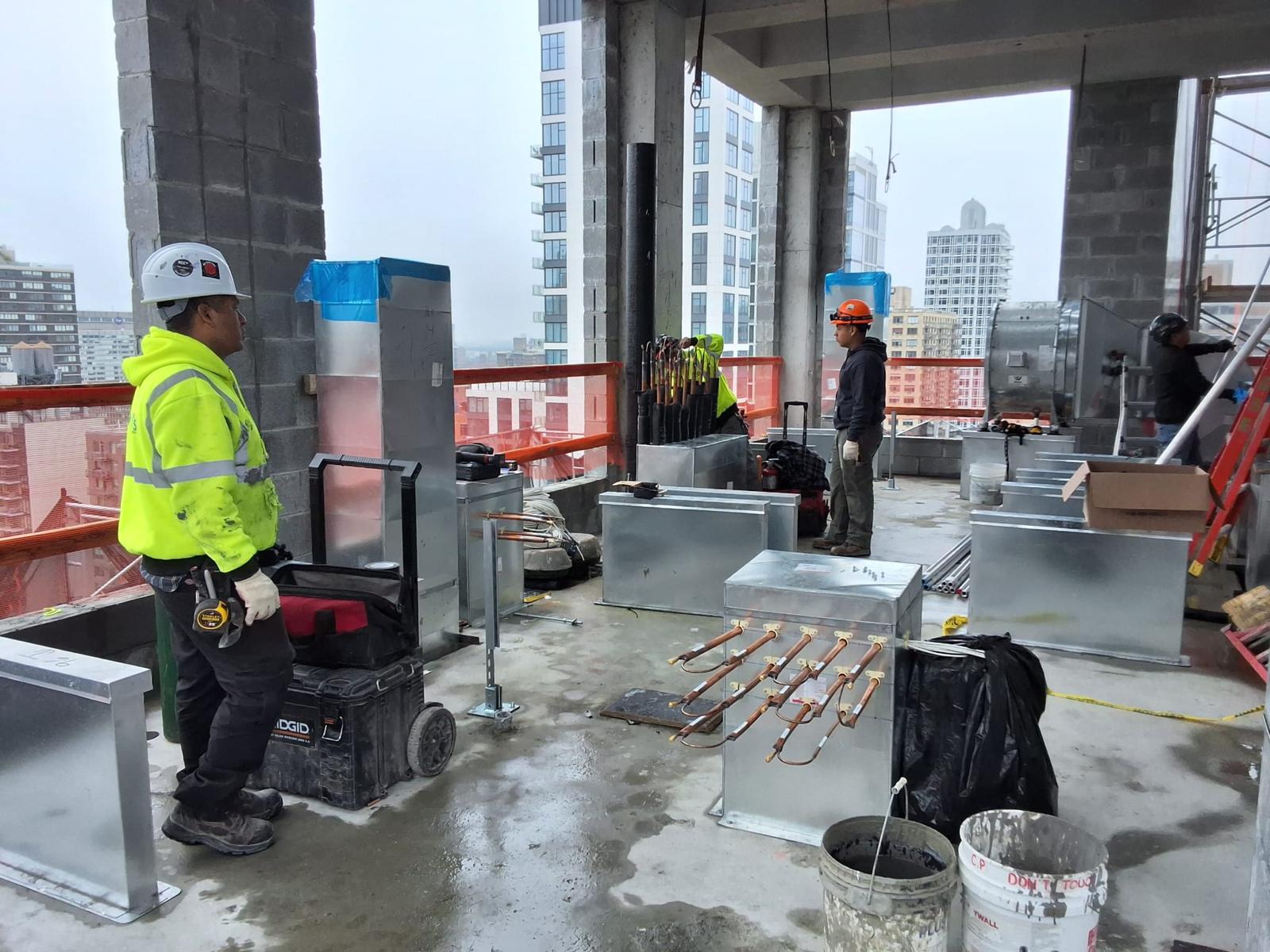
In the high-stakes, high-stress world of New York construction, you expect to find tough, loud and brash personalities. Eli Hoffman, founder of construction management firm City Builders, is an anomaly. While his firm handles some of the city’s most ambitious residential projects, his reputation is built not on volume but on uncommon composure. He’s known as the calmest person in the room.
In a remarkably short period, City Builders has established an impeccable reputation for executing large-scale projects with precision.
Eli’s trajectory, from meticulously hand-crafting the aron kodesh in his yeshivah to managing 300-unit high-rises with tower cranes, is a master class in scaling with intent. Our conversation explored his distinctive business approach, from an ingenious marketing tactic that fast-tracked his company to industry prominence to his philosophy of meticulous cost analysis, down to the last hinge.
Particularly noteworthy is his commitment to family time, exemplified by closing his business every Friday at chatzos. Eli’s story is about building structures, but more importantly, about building a business while building a life.
—Nesanel
I was born in Borough Park. My father was, and still is, a jewelry salesman, always traveling and coming home with interesting stories. I am one of five kids, and my mother was at home taking care of us until we were all married.
I went to Klausenberg cheder and then to a yeshivah called Matei Ephraim for mesivta. I’m a very detailed guy; I’m all about iyun. I’d rather learn four blatt in a month and understand every single word than get a superficial understanding of a whole masechta; that was the style of the yeshivah. That’s how I live and work. I need to understand everything, from a simple definition to the most complex concept.
Looking back, what I do today for parnasah is something I always enjoyed doing: building. Even as a kid, I had a passion for building things. In high school, I physically built all the sefarim shelves, the bimah and the aron kodesh. I’d order the plywood and screws from the lumberyard, use my own tools and build everything from scratch—cutting, staining, painting and all. I always liked creating things and doing it the right way so the final product looked professional, not like some amateur job. I was a perfectionist when it came to the final product, and I believe I bring the same skill set to our buildings today.
My connection to Klausenberg remains strong, and I’m very close to the Rebbe. It’s a unique relationship; I ask the Rebbe my personal big shailos, but I’ve also had the zechus that the Rebbe asked me some questions about buildings.
After high school, I went to Eretz Yisrael for three years, learning in Sochatchov and then in the Mir. When I came back, I was 20 and got married to my wife, who is also from Borough Park. I learned in the Klausenberg kollel for a while, but then I realized that I wanted to make a dream of mine a reality: to be able to afford a home of my own. My parents and in-laws lived comfortably, but they weren’t in a position to give me money to start a business or buy a home. So I knew I had to go to work.
My first real taste of making money came right after I got married. A friend from yeshivah and I started a car service driving people upstate for the summer. We hung simple signs with our number in every shul in Borough Park. The response was insane. We were getting lots of calls and doing four trips a day. To this day, I still get calls from people who saved my number as “Upstate Car Service.” One day, I want to say yes just for fun.
My first real job in construction was patching concrete floors in a warehouse. From there, I worked my way up through various contractors, eventually managing increasingly larger projects. I worked on the new Klausenberg school building, the Armon Hotel in Connecticut, and eventually a 100-unit building that really established my reputation. The major leap in my career came when I was offered a position with NY Developers to help manage a 27-story building project with 500 units on Linden Boulevard. I had a specific salary in mind, and I also wanted to join a top-tier company. But first, I needed to do my homework.
I’m friends with Aaron Klein of Guma Containers, and in that business you get to know everything about every developer in New York. Back then, Guma basically had no competition, so they were delivering containers and picking up garbage for nearly every contractor in the city. People don’t realize it, but the guy who drops off your containers and picks up your garbage is like your cleaning lady. He sees everything. He knows if there’s money, if there are problems, if bills are paid on time. Aaron had the inside scoop on every developer in New York City.
So as I was shopping around for a job, I asked him: Does this guy pay his bills? Is he nice to his workers? Is he organized? That information was gold. Aaron told me, “You want to make money? You want a good place that pays well? Go to NY Developers.”
I got an interview and was hired, though not as the top guy. I came in as the assistant manager on the Linden Boulevard project, which was a whole different league of construction from anything I had done before.
To read more, subscribe to Ami