




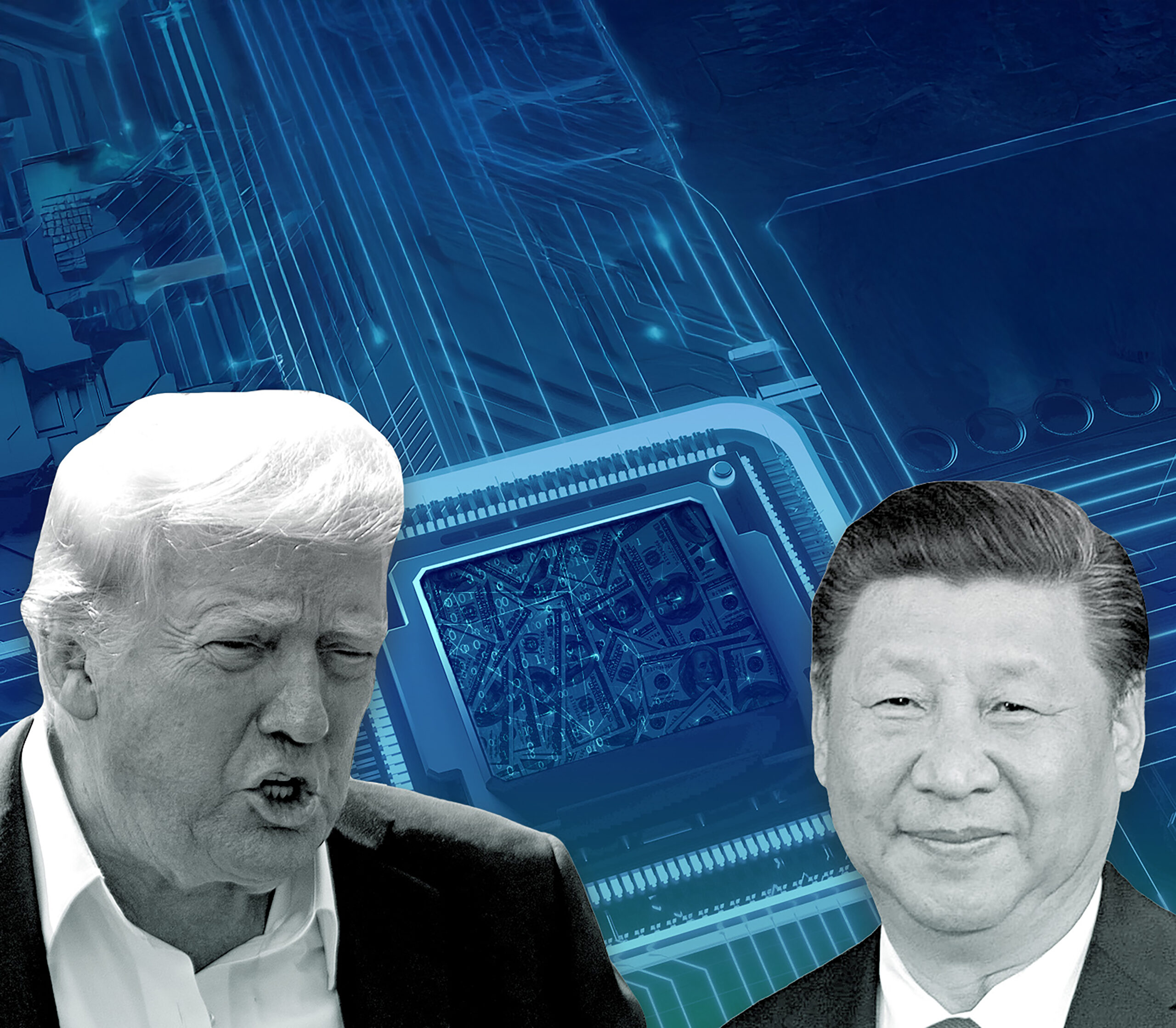
“While we haven’t shipped H20 to China for months, we hope export control rules will let America compete in China and worldwide.”
—A spokesperson for the Nvidia computer chip manufacturing company
“We again urge your administration to quickly reverse course and abandon this reckless plan to trade away US technology leadership.”
—From a letter six Senate Democrats sent to the White House last week
“It’s quite rich to see Democrats and irrelevant ‘experts,’ who were totally MIA when Joe Biden’s autopen administration let H20 chips and other advanced technologies flow freely to China, now pretend to care about our national and economic security.”
—White House spokesman Kush Desai, to CNBC
Are advanced technologies too dangerous to sell to the Chinese? That’s been the position of the US government for some time, with various restrictions placed on all sorts of things. In recent years, one item of concern has been the most advanced computer chips, those that are used for artificial intelligence systems. The Trump administration went even further earlier this year, clamping down on a kind of chip that had previously been sold to China.
However, a deal made by the president two weeks ago with Nvidia and AMD may have loosened the reins a bit. In fact, the deal was so unusual that some experts claim it violated US law. According to the agreement, those two companies will receive export licenses for some chips they were previously prohibited to sell to China in exchange for giving 15% of the profits from those exports to the US government.
Why are these chips so important? And is this deal really a danger to US interests?
The legal issue
Before addressing the chips themselves, the idea that the government would essentially charge these companies for an export license may be the most questionable aspect of the deal. That’s because there’s a law that explicitly outlaws any such fees.
The 2018 Export Control Reform Act states: “No fee may be charged in connection with the submission, processing or consideration of any application for a license.”
Then there’s another small problem: It may be unconstitutional as well.
The relevant part of the US Constitution is Article 1 of Section 9, which states: “No Tax or Duty shall be laid on Articles exported from any State.” This was interpreted by the Supreme Court as recently as the 1990s to bar excise taxes on exports by US companies, and the 15% fee would likely fall i nto the same catetgory.
The legal issue may be moot, however, since Nvidia and AMD have agreed to pay the fee. In those cases from the ’90s, the companies pursued legal action against the US in order not to pay. If no one other than legal pundits is complaining about this fee, it might not matter.
The security issue
The average consumer probably thinks of AI as a technology that can quickly write your resume or make a recipe out of the ingredients you have in your refrigerator, but it is clear that the US government views it as a potential military tool.
Of course, the exact extent of such military use is a closely guarded national secret. But we know that any number of offensive and defensive weapons use some form of AI for targeting. For example, drone warfare has become ever more accurate and deadly because of AI.
The analytics aspectof warfare is undoubtedly also making use of AI. In the same way that computer programs can help radiologists find health problems in a scan, they can help military analysts find troop movements or naval activity.
Concerns about the possible use of the advanced chips used to run AI systems led the Biden administration to make several rules restricting their export to China.
In 2022, the Biden White House put in place export controls that limited the processing power of the chips that could be sold to China. The year after that, realizing that processing power wasn’t the only important criterion, they added other characteristics that would prohibit them from being exported, targeting things like density and whether the chips were designed for use in data centers.
But that still didn’t limit the chips adequately, and in 2024 the Biden administration added a restriction on chips that use high-bandwidth memory, which is basically a way to arrange chip memory to make accessing it much faster.
To read more, subscribe to Ami