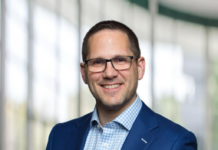




Phil Friedman was born and raised in the former Soviet Union. After spending 12 years in numerous positions in the Soviet military complex, he immigrated to America and settled in New York City. In addition to his degrees in electrical engineering, economics and finance from his native country, Mr. Friedman also studied information systems in the US.
In 1984, Mr. Friedman founded Computer Generated Solutions (CGS), a diversified IT solutions and services company that provides software, consulting, systems integration, training and help desk support. Today, with close to 8,000 professionals and a global presence spanning North America, South America, Europe, the Middle East, Africa and Asia, CGS maintains a leadership position delivering end-to-end award-winning solutions in 48 countries.
Under Mr. Friedman’s leadership, CGS has been recognized by Inc. Magazine, Deloitte & Touche and Crain’s New York Business as one of the fastest growing privately-held technology companies in the US. In 1996, he was named Entrepreneur of the Year by Ernst & Young, Merrill Lynch and the City of New York. In 2007, he was awarded the Ellis Island Medal of Honor.
Mr. Friedman’s contributions to the US economy and society were twice recognized by the US Congress. In 2011, he received an honorary doctorate from Yeshiva University.
In the past, he has served as president of the American Committee of Shaare Zedek Hospital. He currently serves on the board of the Tom Lantos Foundation for Human Rights and Justice and is a member of the executive committee of the Tom Lantos Institute. Mr. Friedman is also on the board of the American Society of Yad Vashem; he is a fellow of the Foreign Policy Association; and he serves as a member of the US Chamber of Commerce International Policy Committee.
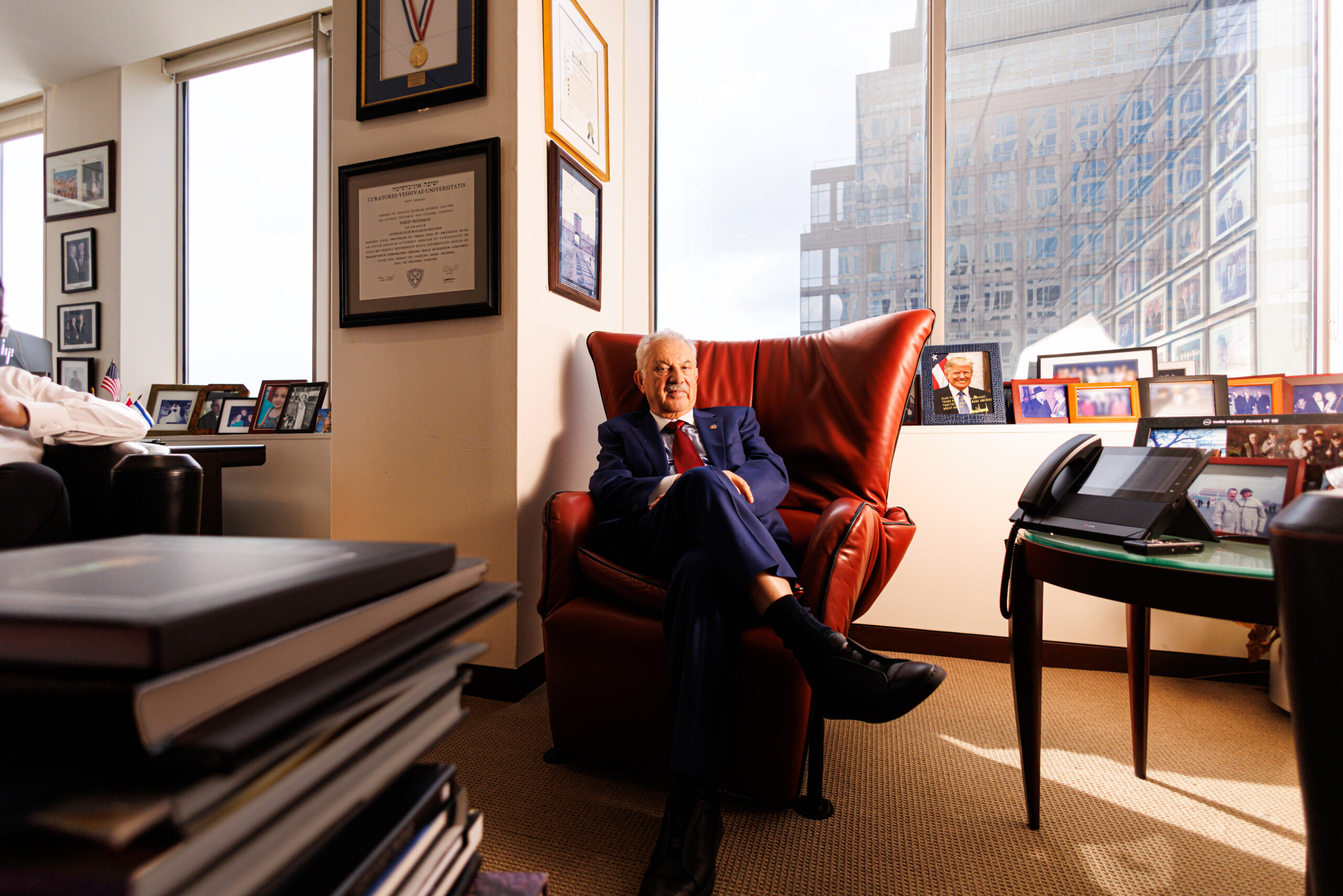
I recently met with Mr. Friedman in his office in the American Express Tower at the World Financial Center in Lower Manhattan.
This is an amazing place. You have an astonishing view of the Statue of Liberty and Ellis Island.
We were the first tenant to sign a lease in this building after 9/11. American Express had actually moved out and only moved back in later. Every morning when I go into my office, the first thing I do is look at the Statue of Liberty. As an immigrant, the Statue is very meaningful to me. A year and a half ago, we celebrated the 40th anniversary of the company and I held a party on Ellis Island. It was very special to be able to celebrate this milestone in a place that holds so much significance for immigrants.
Where were you born?
I was born and raised in Munkatch in the Carpathian Mountains. Munkatch was first part of Hungary, then it was part of Czechoslovakia, then it went back to Hungary, then it was occupied by the Germans during the war, and after the war, when I was born, it was part of the Soviet Union. Today it’s part of Ukraine. I always joke that my parents lived in the same house for decades but managed to live in five different countries. They just changed the flag.
Munkatch was a very Jewish city.
Before the war, Munkatch had around 35,000 residents, half of whom were Jewish. Warsaw was the largest city of Jewish learning in Europe, and Munkatch had the distinction of being second. The Munkatcher Rebbe (the Minchas Elazar) was very well known, and when he married off his daughter in 1933, the president of Czechoslovakia, Tomas Masaryk, attended the wedding. A film crew was sent to record Jewish life in Munkatch at that time, and they recorded part of the wedding. It’s the only live film we have of Munkatch from before the war.
My house was right across the street from the Munkatcher Rebbe, whose house had a big backyard. When I was born, it was turned into a military recruitment center. I spent a lot of time there because it had so many beautiful fruit trees.
So you’re a child of Holocaust survivors from the city of Munkatch.
Yes. I’m almost 77 years old. I was born in 1948 to parents who survived the Holocaust. My mother was born in Beregszasz and my father was from a village called Silz. If you search for “Goldie’s Story” on YouTube, there’s a musical video I had Leiby Moskowitz produce that tells my mother’s story.
My mother was 16 years old when she and her whole family were sent to Auschwitz. She came face to face with Mengele. When she was taken to the barracks, the girls from Holland, who had arrived in Auschwitz before her, pointed to the chimneys of the crematoria and told her, “That’s the only we will ever get out of here,” so she had no illusions about what was happening there. Her whole family was killed aside from her and one sister.
My father saw what was happening in Hungary, so he ran away and crossed the border. He was arrested by the Russians and sent to Siberia for three and a half years of hard labor. My parents survived the war, but they went through incredible suffering both in Auschwitz and the Gulag.
To read more, subscribe to Ami