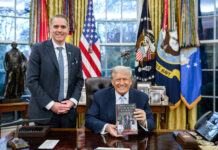




An exclusive interview with Adam Boehler
This has been a week of great anxiety for the global Jewish community, so I am very grateful to have the opportunity to speak to you and get your perspective. As an insider, what do you think Trump’s trip to the Middle East signifies with regard to Israel?
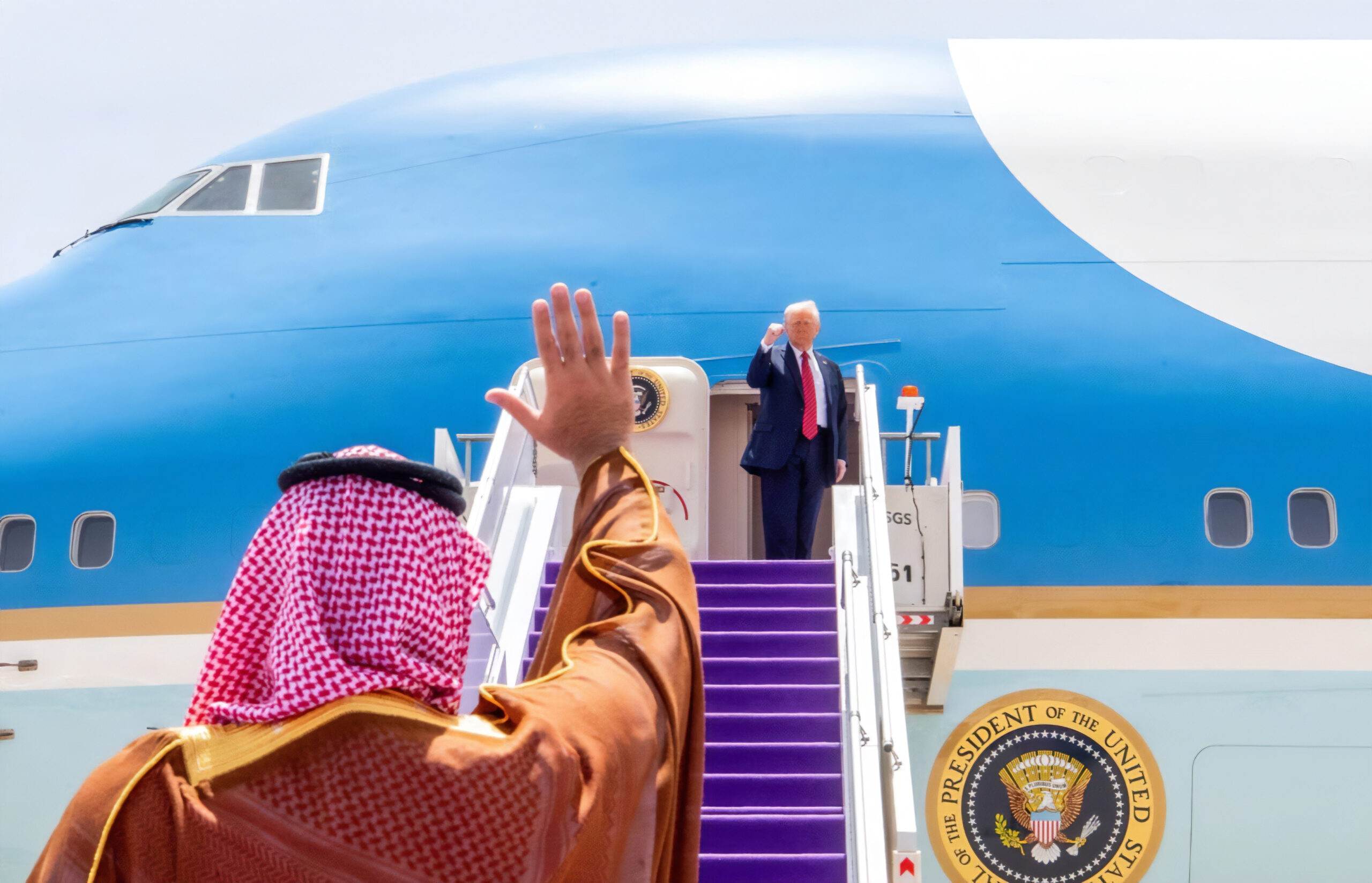
I would separate it into those things that are related to Israel and those that are unrelated to foreign policy. I’ll start with what’s unrelated to foreign policy. Part of the president’s job is to encourage business and drive the economy. I think these visits were very helpful on the business front; he brought in over $2 trillion worth of deals, so it was mission accomplished. Then from a foreign policy perspective, the relationships with Saudi Arabia and the UAE are extremely helpful in terms of thinking about the Abraham Accords and how to expand them, while the visit to Doha gave us the opportunity to discuss what’s happening in Israel. I also hope that Qatar will eventually become a signatory to the Abraham Accords.
Just getting Qatar to drop some of its animus toward Israel would be amazing. I really thought that everyone involved in the Abraham Accords deserved the Nobel Peace Prize. If Qatar were brought in, or even just nudged a little closer to Israel, that would be a real coup.
Under Biden, the Qataris had different incentives in terms of continuing the war in Gaza, but at this point they have no interest in perpetuating Hamas. It’s a bad look for them. I also think they have a future in playing a very important diplomatic function in negotiations, which this visit helped to develop. Qatar has the potential to become the Switzerland of the Middle East. That’s not where they are today, but if that’s where they could go, the question becomes, can we create a path for them to get there while also monitoring extremism and the flow of money? Simply creating that path could be interesting. Qatar has also evolved a lot, just like Saudi Arabia has. We have to continue to push positive evolution, while always making sure that things are going the right way.
I’d like to go back to what you said about separating business from foreign policy. There’s a concern in Israel and elsewhere that the foreign policy of the United States will be linked to investments. There was a joke circulating in Israel: “What can we offer President Trump other than a free parking spot in Tel Aviv?” Do you see that linkage happening, or are they still separate?
Investments are always a huge component of foreign policy. I also want to point out that we didn’t raise money from Iran. The nice thing about dealing with Saudi Arabia, the UAE and even Qatar as it becomes more moderate is that they are allies of the US and Israel, so I don’t consider investments to be negative. I find that these kinds of deals intertwine and encourage things like the Abraham Accords, meaning that they could also lead Saudi Arabia to join.
Israel has a lot to offer as well. Look at Israel’s GDP compared to that of other countries. Economically, there’s a lot there for Israel, so I’m not concerned about them being irrelevant. We do a lot with Israel; it’s just that this trip was based on those particular states. Keep in mind that the president has received a number of visits from Bibi, so it’s not as if Israel has been ignored in any way.
I had the opportunity to speak to former Ambassador David Friedman and Jared Kushner about the Abraham Accords, which I understand you were part of as well. Correct?
Yes.
As I understand it, the philosophical underpinnings of the Accords is that Israel can have relations with its Arab neighbors without resolving the Palestinian issue first. Would that be a fair characterization?
Yes, although I would go a little further and say that the Accords unite countries not only economically but also from a foreign policy perspective against a common threat, which I would link to extremism and Iran.
It seems that the Saudis, especially after October 7—which was probably the intent of Hamas—have once again linked the Palestinian issue to normalization with Israel, and they have reiterated that they will not engage with Israel until it is resolved. Do you see the Abraham Accords being able to overcome that impediment, or are we stuck at the moment?
I don’t think we’re stuck. The Saudis were already leaning toward doing that. When you’re the head of the kind of country that MBS is leading, you need to guide your population and look at polling, etc. So I’m not shocked that he is saying that now, but I also wouldn’t be shocked if things changed in the future, considering that he was moving forward and things were looking very good on October 6. We saw things change in a single day, but things can change in the other direction as well. Saudi Arabia was interested in joining the Abraham Accords before October 7, and that interest still exists. The main issue October 7 presented for MBS was a change in support within the country, but I have great hope that they will eventually come around.
To read more, subscribe to Ami