



“If I Had Taken Myself Out Two Years Ago, I Shudder to Think What My Children’s Lives Might Look Like”
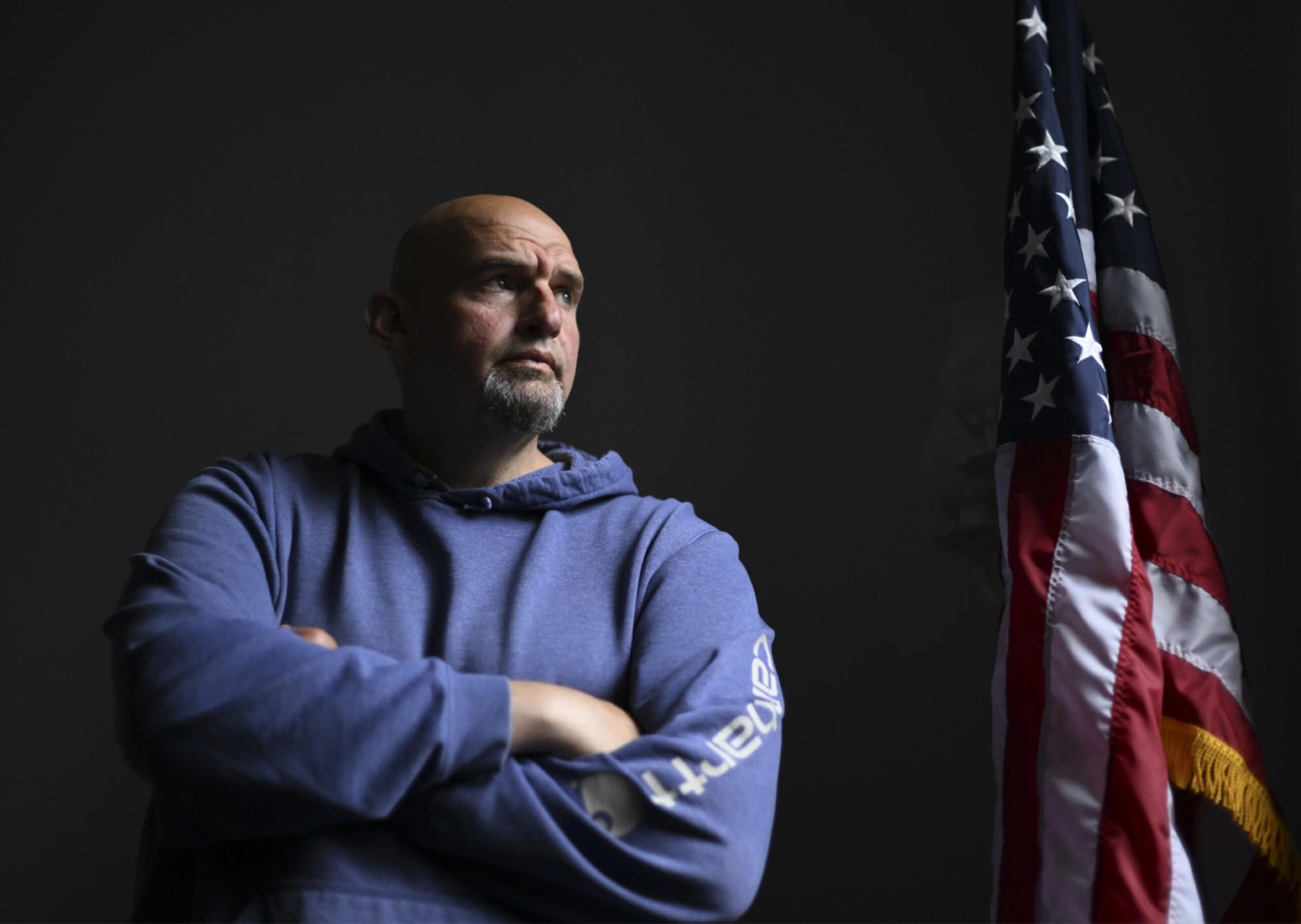
John Karl Fetterman (born August 15, 1969) is the senior United States senator from Pennsylvania. A member of the Democratic Party, he has been in his present position since 2023 and is one of his party’s most outspoken supporters of Israel.
Having suffered a serious stroke in May 2022, only a few days before his primary victory, which impaired his speech, Fetterman’s health became a major issue in his bid against his Republican opponent, Dr. Mehmet Oz. The stroke was induced by a clot caused by atrial fibrillation (an irregular heart rhythm). Because Fetterman also had cardiomyopathy, his doctors implanted a pacemaker and defibrillator.
On September 15 of that year, Oz and Fetterman agreed to a single debate on October 25. After Fetterman omitted words, paused awkwardly and spoke haltingly, Senator Chris Coons, among others, said that the debate “was hard to watch.” Although Fetterman was leading in most of the polls, his debate performance and concerns about his health helped Oz take a narrow lead before the election.
After winning the Senate seat with 51.3% of the vote to Oz’s 46.3%, Fetterman’s health plagued him again. To assist with his stroke-related speech-processing issues, the Senate chamber was outfitted with closed captioning technology at his desk and at the front of the chamber. Then, on February 10, 2023, he was hospitalized for two days due to syncope (lightheadedness). Unfortunately, two days after his discharge he was hospitalized yet again, this time for a severe case of major depression. For about a month and a half, Fetterman lived and worked at the Walter Reed Army Medical Center. As part of his daily schedule, his chief of staff would arrive every day at 10:00 a.m. with newspaper clippings, statements for Fetterman to approve and legislation to review.
I spoke to him last Friday about his mental health challenges as well as his unabashed support of Israel. Senator Fetterman became so emotional at times that he had to stop, take a deep breath and then answer. At one point the pause was so long that his assistant and I both thought that the call had dropped. When he continued with his thoughts, he was sobbing audibly.
Listen in.
Mr. Senator, it is an honor and privilege to speak with you.
Thank you very much. I feel the same way.
I appreciate that. I would like to speak to you about mental health. This topic is very dear to me because a close relative of mine also suffered a stroke that led to depression for many years. I witnessed not only the severity of depression but also the stigma associated with it. Most people don’t want to recognize it as an illness and don’t have the courage to speak out about it. What’s your take on that?
I’m talking about it because there are a lot of people who have it, and you don’t need to have a stroke to suffer from depression. It’s an incredibly dangerous situation. Now, depression isn’t having a couple of down days. I’m talking about when you’re overcome by those kinds of views and the way you start seeing the world; you start having conversations with yourself that can take you to really dark and ultimately dangerous places. That’s where I was. Things were tough and difficult, and it turned darker. Then you realize that you might start to lie to yourself and say that maybe it’s a better solution if you’re not part of it anymore, or that the world would be better off, or that the people you know and love would be better off without you, which is an absolute lie. That’s why I wanted to talk about it.
I keep it simple. I tell people, “Stay in the game. Whatever it is, know that however difficult it might be, stay in the game, because if you don’t, you can’t take that back. You can’t come back from it.” I don’t know what your journey to being better would be; it’s different from mine. Everyone’s journey is different, and I’m not a trained expert. I just know what that feels like, and I know that as long as you stay in the game you have another opportunity, another day to find your path back to feeling better.
As you know, there are a lot of problems with seeking help because of the stigma. People sometimes risk losing their job or even their marriage just by looking for help.
Absolutely. I was fortunate that I didn’t face that, but it was a concern, and I certainly thought it’s not a winning political move to talk about these things. Then I had one moment where… Well, I didn’t take it to the extreme. I didn’t want to talk about self-harm. But then I called myself out on that, because I realized that I had to be really honest. That’s why I expanded [what I talk about] to self-harm, because they go together. I can’t be afraid to talk about it, because people need to understand that it’s okay to feel that way. But what isn’t okay is to give up, which is why I beg people not to do that. If I had done that, I can’t even imagine the damage it would have left. Now I’m better, and I’m promising people that it’s not easy to find a way back, but you are worth fighting for.
Can you please describe the treatments you went through?
I didn’t find many of the things helpful, but what finally did help was that I had an emergency brake in my life. I hope everyone would have their own personal emergency brake, but for me it was my kids. I realized that I can’t allow myself to be that example. I can’t allow my last statement to them to be, “He left.” I couldn’t explain. I couldn’t take that back, and I also couldn’t tell them not to do it, because I would be gone. I refuse to be that legacy for them.
But you also looked for a cure.
I did. Sometimes people will respond to therapy and some people will respond to medication. Those didn’t work for me, but I did have a situation that was able to help me. I don’t judge people. For some people it’s going to be therapy, for others it’s going to be antidepressants. Whatever your path is—it can be a combination of some or all of them—just make sure to keep searching for relief, and then you will be okay one day.
To read more, subscribe to Ami