



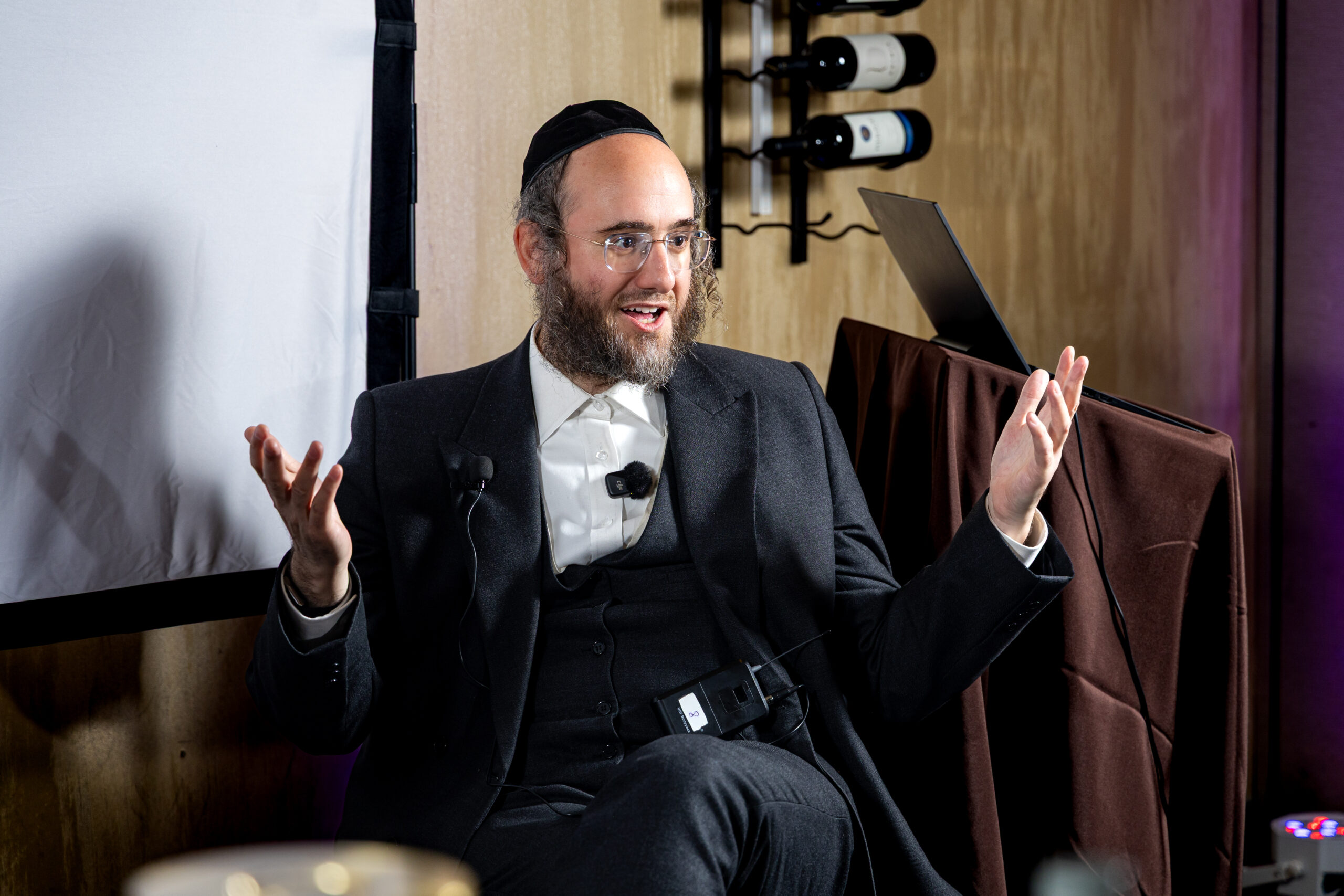
I was born and raised in Williamsburg. I’m one of six children, two brothers and three sisters. I learned in Satmar cheder and Satmar yeshivah in Kiryas Yoel. After I got married, I learned in kollel for about six years. I always had an interest in opening things up and understanding how they work. I was probably the biggest introvert you could find, but I was a tinkerer. I liked to get to the very core and essence of things.
“I would take the huge tape recorders with the large buttons and take them apart to examine them. My bed was full of massive boxes and electronic parts. My mother, a”h, appreciated my desire to have a computer, and she bought me one back when it was MS-DOS 3.0 and Windows 3.0. The Internet wasn’t even a thing yet. I wrote chiddushei Torah on it.
“A rav in Williamsburg had a computer in his home, and I helped him set up Dagesh and whatever else he needed, so we became fairly close.
“My mother started out leading the Boro Park Council, which was the same idea as the UJO back then. Later in life she was busy with the kids and her health. For over 30 years she was unfortunately more in the hospital than at home, but she made sure that we wouldn’t feel it. She was very into reading and education, and she gave me a lot of books to read. She was a very inspirational and incredible woman, and a lot of people depended on her. She passed away right before Covid at the age of 61.
“She was a Bochner from Boro Park; Shlomo Bochner of Bonei Olam is my second cousin. My father’s father was a Gerrer chasid, but he married a girl from Satmar and later became a Satmar chasid. For the last 40 years, my father, who is an incredibly ehrlicher Yid, has been doing payroll for UTA Boro Park.
“I got married at 19 and moved to Kiryas Yoel, where my wife is from. During my six years in kollel I learned Hilchos Shabbos and a bunch of other things, but I didn’t learn to get smichah. That wasn’t my life’s trajectory as I saw it. While I was in kollel, I did word processing on the side for sefarim.
“One sefer was an updated typesetting of the Avodas Hagershuni at the request of the Kosover Rebbe, who gave it to me to print, and we became fairly close. At the time, the main word processing application was Word, which wasn’t usable for a sefer, until another one called Tag popped up. I wanted to build some custom plug-ins, so I connected with its owner, Daniel Weissmann, who told me, ‘I actually have a plug-in language.’ I was fascinated. It really caught my imagination, and I said, ‘This is my future.’ That’s what exposed me to coding.
“My entire career in software began from a simple need. I wanted to track my time because I used to bill by the hour. So I started building an application on something called Microsoft Access. For those who have no clue what that is, Microsoft Access was an easy way for non-programmers to put programs together quickly. If you wanted to track your inventory or bookstore, it let you use drag and drop, which historically wasn’t the case with programming; you had to type everything up.
“This gave you a canvas where you could use a mouse, drag some buttons and text boxes and do calculations on the fly. It also had a little code engine behind it called VBA that let you do other things. But for someone who wanted to do serious programming, it hit its limits pretty quickly. Believe it or not, many of the applications I built using it are still running 25 years later.
“I created all kinds of apps, from a system that ran Der Blatt to s’char limmud systems to a village voting system that the Democratic Party came to look at. They were fascinated by how we were showing charts and graphs in real time as people were voting, which was unheard of back then.
“But I always felt a deep passion to build something in which I could pour all of my energy. When you do consulting and one-off projects, you can’t really give it your best, because they only want to pay by the hour. I wanted to build something where every click matters and the thing you need on the screen is right in front of you. So I decided to build something for myself rather than for others.
To read more, subscribe to Ami