



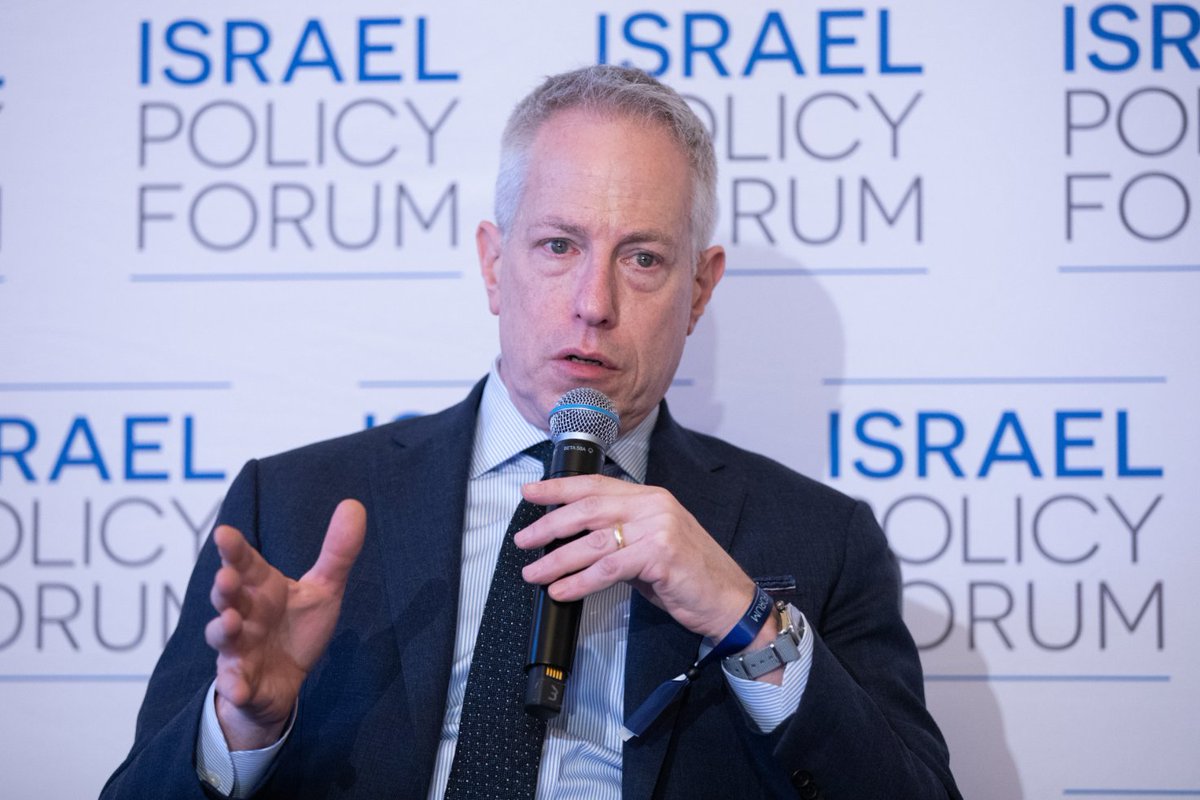
Michael Ratney spent 34 years in the US Foreign Service, serving in some of the Middle East’s most consequential diplomatic posts. His career included assignments in Israel and Syria, senior positions dealing with the region in Washington, and, most recently, two years as US ambassador to Saudi Arabia under President Biden.
That unusual range of experience has given Ratney a firsthand view of countries that are geographically close but worlds apart. He has seen how Israelis view their Arab neighbors, how Gulf leaders and citizens view Israel, and how Iran, the Palestinian issue and rapidly shifting regional alliances shape the calculations of both.
Now retired from the State Department, Ratney advises companies doing business in the Middle East and continues to write and speak about the region. In this conversation, he discusses Saudi Arabia’s dramatic transformation, the fallout from the war with Iran, the prospects for Israeli-Saudi normalization and what each side still misunderstands about the other.
It’s great to speak with you and have the opportunity to get your perspective on the Middle East. Unlike many ambassadors, who are political appointees, you’re a career diplomat.
Yes. I spent 34 years in the Foreign Service, and I retired from the State Department last year.
How long were you in Saudi Arabia?
I was there for two years. The posting would normally have been three, but I was dismissed at the beginning of the Trump administration, which was well within the president’s rights. I would have loved to stay for the full three years, but the two years I spent there were a wonderful experience.
You had other postings in the Middle East, including in Israel and Syria. But I imagine Saudi Arabia was a very different experience.
It was. Partly because of the remarkable changes taking place there, and partly because serving as ambassador gives you a front-row seat to so much of what is happening. It was an extraordinary experience.
There has been a great deal of focus on Saudi Arabia during the Trump administration, but you served there under President Biden. Was the relationship with Saudi Arabia as significant then?
I talk to Saudis about this now when they ask me to compare the relationship under the Biden and Trump administrations. The way I see it, under Biden there wasn’t much warmth between the leaders—the crown prince and President Biden—but the relationship steadily improved and was very predictable. The level of trust also grew considerably as we began discussions about normalization with Israel.
Under Trump, the relationship is very different. There is almost an exaggerated warmth at the leadership level—for whatever reason, Trump seems to genuinely like the Gulf leaders—but much less predictability at the institutional level. So the Saudis are left wondering what they prefer: leaders who get along very well but preside over a more chaotic relationship, or a more businesslike relationship at the top that is also more predictable.
I guess all foreign countries wonder the same thing, because chaos is Donald Trump’s middle name.
Yes. And if you’re in the Middle East, it’s a messy part of the world. The Saudis, like other Gulf countries, are investing heavily in what they hope is a very different future. When you’re making these kinds of multibillion-dollar bets on transforming the future, you want predictability. By the way, if you’re in the oil business, you want predictability too.
We’re in such a rapidly changing Middle East that predictability is almost impossible. If I had spoken to you yesterday—or if I would speak to you tomorrow—your predictions might be very different.
That’s one of the big challenges. Whether it’s the UAE, Qatar or Saudi Arabia, the Gulf countries making these huge investments have one overriding concern: the last thing they want is war. They have a historically antagonistic relationship with Iran—“antagonistic” is probably an understatement—but in a way, they would prefer an absence of conflict, even if the underlying antagonism remains unresolved, to open warfare. Open warfare means missiles, drones and rockets flying into the country, which discourages investors and tourists from coming and makes business decisions much harder.
Their view is pretty realist: “We’re not going to change the ideology of the regime. We just have to figure out how to keep the worst effects away from us, whether that’s Iran’s sponsorship of terrorist proxy groups like the Houthis and others in the region or direct attacks. We have to figure out how to keep that at bay so we can focus on what’s happening internally.”
They look at it as something that may change in Iran a generation or more from now. But they have pretty dark expectations about this war actually changing anything for the better.
To read more, subscribe to Ami