




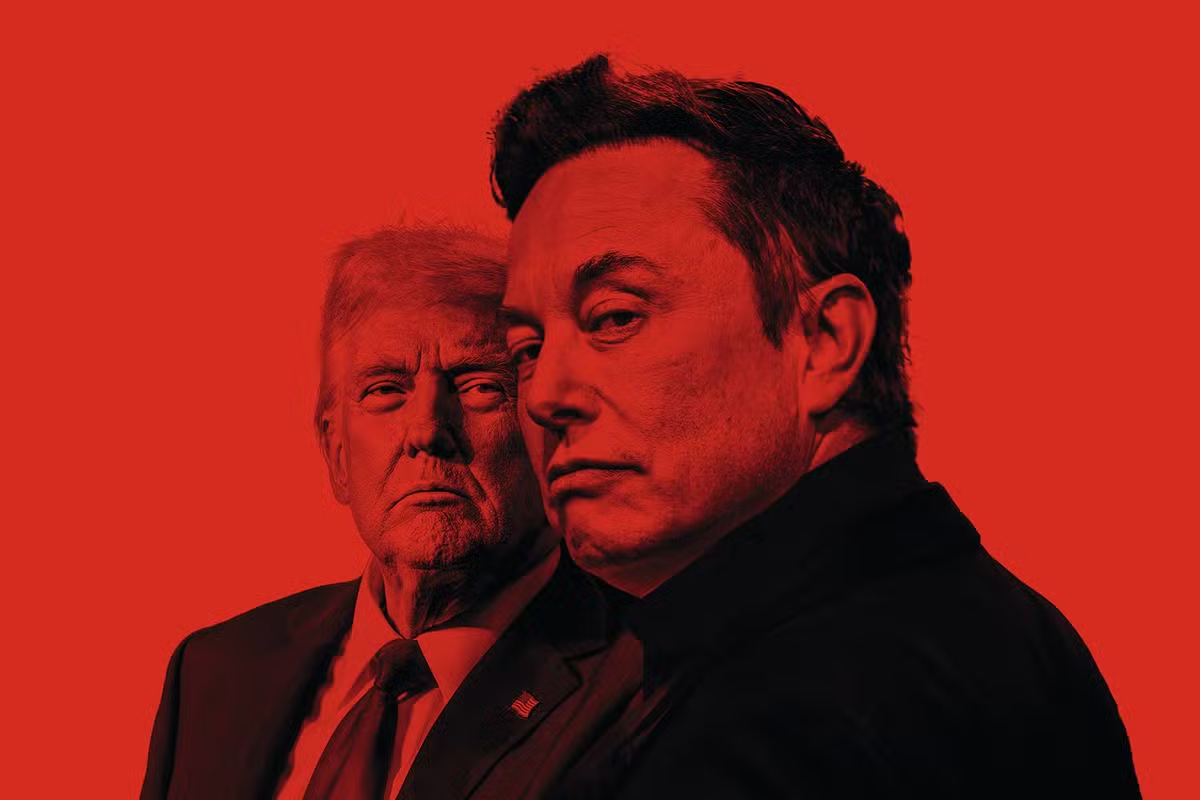
They couldn’t have been more different, but for nearly a year they were inseparable. Now the friendship is dead, and the world is watching the fallout. Both sides are bleeding, but this is the lifeblood of Washington.
“Nothing lasts forever.” “Easy come, easy go.” “All good things must come to an end.” The English language is filled with such platitudes. And if any place fits the mold for a city that is built on relationships that are often transactional at best and petty at worst, it would surely be Washington, DC. Welcome to the swamp, where you never know what ugly, smelly or slimy surprise is lurking around the corner.
There had long been concerns about the relationship between President Donald Trump and his newfound bestie-turned-nemesis, Elon Musk. They ranged from questions about compatibility to business ethics to access to sensitive information, but most of them were about two of the biggest egos in the world teaming up to take the establishment down. Many of these concerns were shoved under the rug, but they couldn’t stay hidden for long.
The two men have a history going back to Trump’s first term in office, when Musk was appointed to serve on a presidential advisory board. He would occasionally visit the White House and attend some meetings, but he eventually relinquished his position.
Fast-forward a few years. By then Trump had lost the election (or had it stolen from him) and was a political pariah, considered by many in his own party to be dangerous after the events of January 6, 2021, which left a stain on his presidency and reputation. At the same time, Musk—who for all of his adult life was far from a conservative—became disillusioned with the Democratic Party. He began tweeting his observations about the things he saw going on in the United States that he felt were less than savory. His criticisms of the “politburo” were quickly met with hit pieces and character assassination from the legacy media, which felt threatened by his often stinging digs at the expense of the liberal establishment.
However, this was all child’s play in comparison to the attacks he would face after floating the wild and seemingly impossible idea to buy Twitter, which was in a financial tailspin, and turn it around. Musk’s detractors called him crazy and dangerous, and they did whatever they could to derail the sale, with media personalities and celebrities promising an exodus from Twitter to other platforms, and advertisers pulling their spots in protest of his absolutist views on free speech. Although the bans, boycotts and bickering did hurt the newly renamed X, the platforms to which former Twitterers defected just couldn’t measure up, and most of those who left returned to post, pontificate and even advertise on it.
Elon Musk had been victorious, against all the odds, and he now owned the world’s virtual town square. But he’s never been one to back down from a fight, especially when it’s personal. His disdain for those who tried to run him off the road only deepened, and the Biden White House didn’t help by excluding his Tesla vehicles from certain EV tax credits and incentives. Tesla was also not invited to the White House electric vehicle summit despite the fact that it was and still is the world’s most popular electric vehicle. At the time, Musk commented on the matter in a tweet, saying, “Does that sound maybe a little biased? Not the friendliest administration.”
The rift between Elon Musk and the liberal establishment only grew deeper when he allowed Donald Trump and many of his staunchest supporters back onto the platform, prompting the other major platforms like Facebook and Instagram to do the same. It was one man who stood up to the behemoth of the left-wing media and essentially quashed the woke religion of government censorship and cancel culture. While Trump was being prosecuted all over the country, Musk apparently felt that he and Trump were fighting the same battle.
Interestingly, while the two men were fighting on different fronts, the war was fundamentally identical. Both were trying to break systems, and the people who controlled those systems would stop at nothing to derail anyone who threatened their power. Both Trump and Musk were being targeted by the government and the media and faced security threats. It all came to a head last July, when Trump survived an assassination attempt. That same day, Elon Musk took to X, writing: “I fully endorse President Trump and hope for his rapid recovery.”
It’s hard to know exactly what he was thinking, but something had obviously clicked. Musk, one of the world’s busiest and most influential people, who spent his time managing some of the world’s biggest companies, and who also happened to be the world’s richest man, basically put the brakes on whatever he was doing and joined Team Trump pretty much full time. His businesses would suffer, his shareholders weren’t happy, but Elon Musk was doing whatever he could on the campaign trail, giving his time, energy and money to the tune of $270 million to ensure a Trump victory.
It is said that hindsight is 20/20. Looking back, perhaps Musk’s efforts weren’t so much about his love for Trump as they were about his hate for the other side, in keeping with the saying “the enemy of my enemy is my friend.” Maybe that’s the best approach to understand the dynamic between the two. Yes, they had some commonalities. Both were businessmen and billionaires, but ideologically they were very distant from each other.
While Trump hadn’t always been a Republican, he’d been on the conservative side for the better part of the last 20 years. Musk, by contrast, had been the darling of the Democratic Party, caring deeply about the environment and not living a conservative lifestyle by any stretch of the imagination. Moreover, Trump had always strongly shied away from alcohol and drugs, which is allegedly not the case with Musk, not to mention that Trump’s own butler has gone on the record to say that Trump “hates sloppy dressers.” While Trump’s circles usually include men in dress shoes and tuxedos, Musk’s signature T-shirts and his often goofy style didn’t really jive with the president, something that Trump even commented upon publicly. Still, they became almost attached at the hip.
Trump looked past his differences with the tech billionaire, and Musk did the same for the president. They were a team—and they were determined. That was all that mattered and the rest was just fluff. Musk decked himself out in MAGA hats and Trump merch, attending rallies, going on podcasts and making legally questionable daily million-dollar giveaways to support Donald Trump. It would be hard to say that he didn’t play a large role in swaying the country toward a cultural shift that resulted in Trump’s victory, and the newly elected former president seemed to show him a side that he usually only reveals to family.
To read more, subscribe to Ami