




In my 25 years of dealing with all kinds of trauma,” begins Rabbi Yisrael Fried, “I’ve never encountered anything like the recent car accident that took the lives of three bachurim in Lakewood.”
He quickly clarifies: “It’s not that this tragedy was worse than any other—every loss is devastating, and no two are the same. But this one had a ripple effect unlike anything I’ve seen. Thousands of people were affected. You could see it on the streets—bachurim walking around in a daze.”
Rabbi Fried, a veteran crisis responder, recounts how quickly his team mobilized: “We had 15 crisis interventionists on the ground within 30 minutes of the incident.”
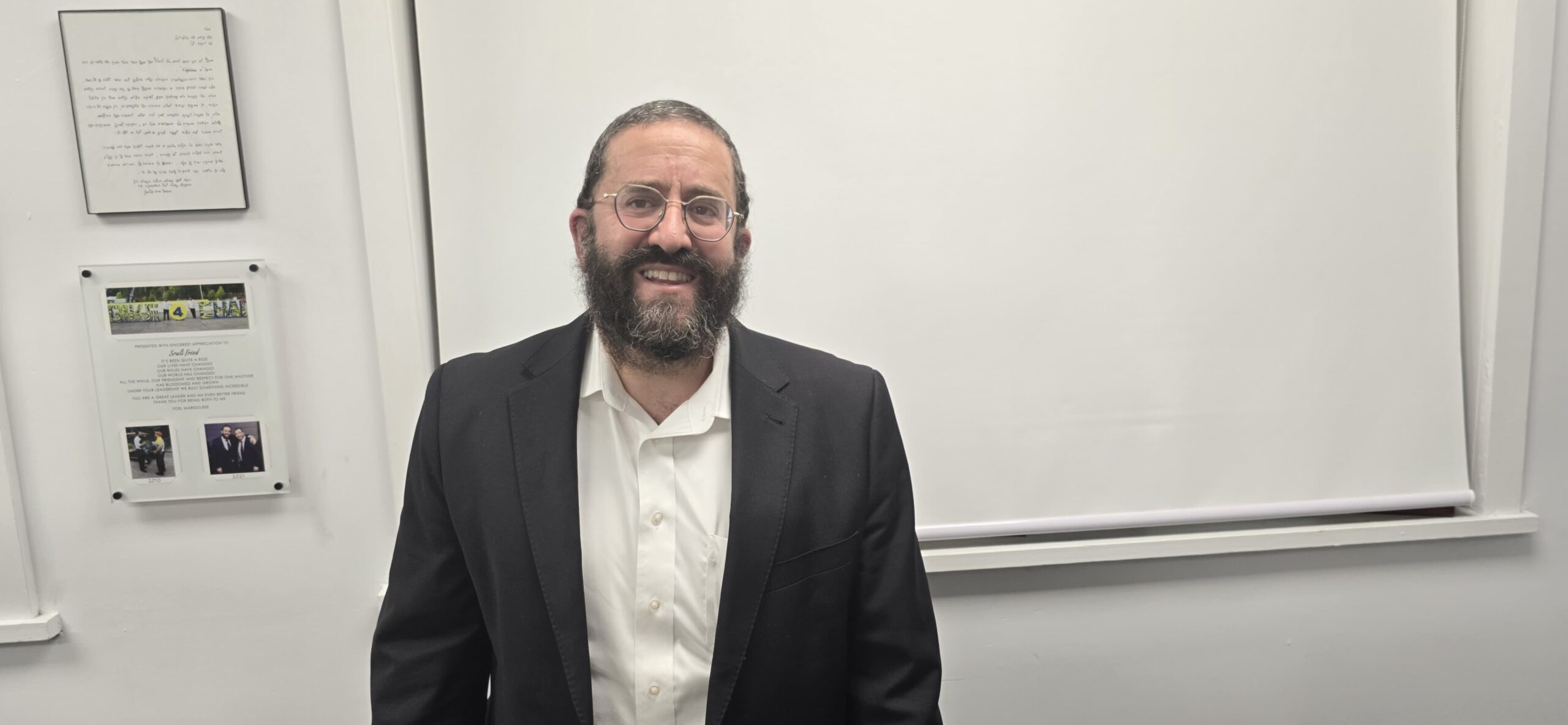
Rabbi Fried is the director of Chai Lifeline of Lakewood—or as he clarifies with a smile, the New Jersey and Pennsylvania region. “Just call me Sruli,” he insists.
“This was particularly hard on everyone,” he explains, “because everybody drives, and everyone has family members who drive. These bachurim weren’t doing anything unusual or reckless—they were simply coming home. That’s what made it so unsettling. It shook people to the core, because it made them feel vulnerable and insecure. It could have been anyone.
“Within a short time, we were flooded with hundreds of calls from people asking how to manage their emotions and how to talk to their children about the accident. There was simply no way to answer all of them individually, so we recorded a message that thousands of people ended up listening to.”
He emphasizes the importance of validating people’s feelings. “It’s not enough to simply reassure; we have to acknowledge and validate their fears. We can’t promise that something similar won’t happen again, but we can remind them that Hashem’s world is ultimately safe and secure. Parents should let their children know that they are there for them, no matter what.”
Rabbi Fried explains a common psychological response to tragedy: “Often, when people hear about a disaster, they create a narrative—a story that helps them feel safe by distancing themselves from it. But in this case, there was no story that could give people that sense of security.”
I’m meeting with Sruli—whose phone hasn’t stopped ringing—in his office at Chai Lifeline in Lakewood. I’ve come to speak with him about pain, loss and trauma, and to learn how family members, friends and neighbors can offer meaningful support in times of need without overstepping their bounds.
When tragedy strikes, Sruli is often one of the first people to be called. “You want to ensure the family is guided on how to break the news to others—what to say and what to avoid,” he explains. “It’s crucial that those most affected hear the news from the most important people in their lives. For that reason, they need to be shielded from outside sources, and if possible, they shouldn’t find out from aunts, uncles or even grandparents.”
Moreover, even when parents need to share difficult or negative news with their children, it must be done thoughtfully and carefully.
“There was one man whose wife was very ill, but his outlook was to always remain positive. Because of this, he never told his children how seriously ill their mother was. As her condition worsened and she neared the end, he realized he had to share the truth with them. One of his worries was that he might cry in front of the children. On one hand, he thought it might be good for them to see that crying is normal. On the other hand, he feared that if he broke down completely, the children might feel as if they were losing both parents.
“I explained to him that both feelings are valid. It’s okay to cry, but it must be done in a way where the parent maintains composure and does not become hysterical. If a parent feels like they might lose control, they should step away to a private place, away from the children. Losing control in front of the kids can make them feel as if they have lost that parent as well.”
After addressing those closest to the situation, the next step is to inform others.
“One of the yeshivos of the boys who tragically died in the horrific car accident in Lakewood, which we just discussed, had an off Shabbos,” he continues, “but the rosh yeshivah was advised to have all the bachurim come for Shacharis so they could receive the news together. This way, they would be surrounded by their friends and able to grieve as a community. One of the most vital aspects during a crisis is having calm, clear-headed individuals nearby to ensure that everything is handled properly.”
Delivering such devastating news should be left to those trained to do it properly. There is no “right” way for someone to react to a tragedy. Some people break down right away, while others appear composed at first and only feel the impact hours or even days afterward. Children, too, respond in different ways — every person is an individual. Those who are affected need to be surrounded by loved ones and given the space to grieve in their own way, for as long as they need.
People who lose close family members each cope in their own unique way. As part of his work, Sruli sometimes attends bereavement retreats—weekends where families who have suffered unimaginable losses come together to find comfort, support and healing.
“I once led a support group at a Chai Lifeline retreat for bereaved parents,” Sruli shares. “One father told me he didn’t really need to be there. He said he had come only because his wife needed the support and because he felt a deep sense of hakaras hatov to Chai Lifeline for everything they had done during his child’s illness. ‘I believe in Hashem, and I know everything happens for a reason,’ he said.
“Every person in that room had experienced an unspeakable loss, and each one was processing it differently. Some parents carried photo albums of their child and shared memories. Others spoke openly about the gaping void that had been left in their lives. And some found healing simply in the realization that they weren’t alone. I encouraged that father to be open to the experience. I told him, ‘Since you’re already here, try to make the most of it.’”
Shabbos was intense and emotional. People shared. People cried. There was heartfelt singing. But Sruli noticed that this one man stayed on the sidelines—quiet, withdrawn.
“I honestly didn’t know how he was coping,” Sruli admits.
Then, on Sunday, just as the retreat was ending and the man was walking to his car, he approached Sruli and handed him a cassette tape.
“It was a recording of the hesped he had delivered for his daughter,” Sruli says softly. “He asked me to listen to it.”
In that moment, something clicked.
“I realized that everyone grieves differently. For him, healing didn’t come through group sharing or crying with others. What he needed was someone to hear him speak about his daughter. He wasn’t as ‘fine’ as he had claimed. He was still holding on—still aching.”
Sruli pauses, his voice thick with emotion.
“That tape—just the fact that he carried it around with him—taught me that healing has many faces. There’s no way to know what someone needs from us. All we can do is be there, be present and be available. If they want to tell you how you can help ease their pain, they will. Though often, it won’t be in so many words.”
To read more, subscribe to Ami