



A Visit with Rav Mordechai Shmuel Edelstein, Rav of the Naavat Yosef neighborhood in Bnei Brak
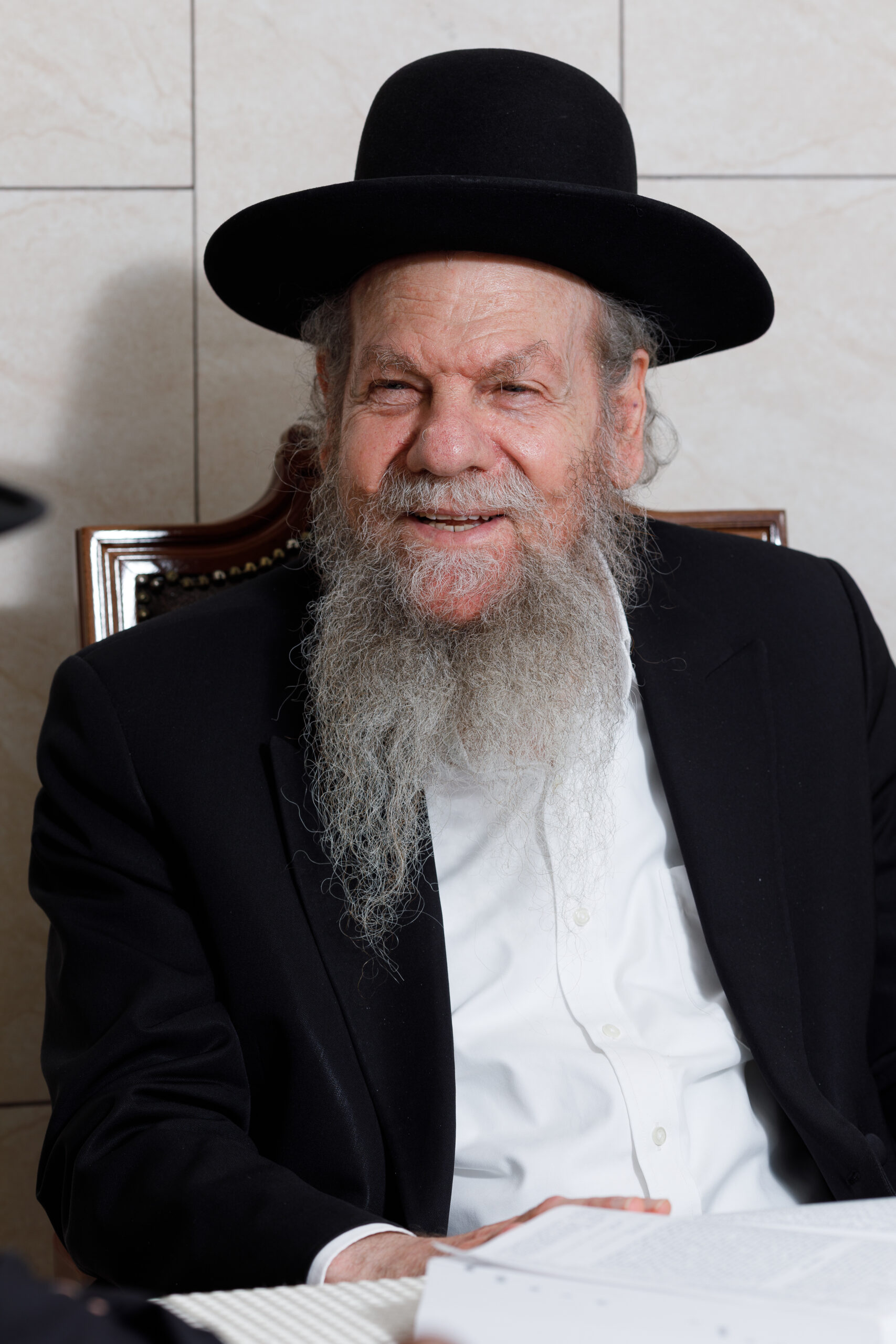
This summer, I had the privilege of meeting with one of the revered gedolim of Eretz Yisrael, Rav Mordechai Shmuel Edelstein, in his study near his shul in Bnei Brak.
In addition to his own stature in Torah learning, Rav Mordechai Shmuel comes from an exceptionally distinguished Torah family. His grandfather, Rav Tzvi Yehuda Edelstein, served as rav of Shumyachi, near Smolensk, in Soviet Russia, before leaving the country with his family and settling in Eretz Yisrael, where he became rav of Ramat Hasharon. His sons, Rav Yaakov and Rav Gershon Edelstein, learned under him until the age of 18 and then joined the newly founded Ponovezh Yeshivah, becoming among its earliest talmidim. Rav Yaakov, Rav Mordechai Shmuel’s father, was a close talmid of the Chazon Ish and later succeeded his father as rav of Ramat Hasharon, earning renown as a posek and dayan. Rav Gershon went on to serve for many years as rosh yeshivah of Ponovezh and, in his later years, became one of the foremost leaders of the Torah world.
Growing up in Ramat Hasharon under his father’s tutelage, Rav Mordechai Shmuel was immersed from an early age in that world of Torah and rabbanus. In his formative years, he too became a talmid of Ponovezh. Some time after his marriage, he began serving as a maggid shiur in Yeshivas Chemed L’Tze’irim, a noted yeshivah ketanah in Bnei Brak, a position he has held for close to 45 years. Following his father’s passing, he succeeded him as rav of the Naavat Yosef neighborhood, a community of some 700 families. Rav Yaakov had served as rav of the neighborhood as well, in addition to his rabbanus in Ramat Hasharon.
Rav Mordechai Shmuel’s stature, however, has never rested solely on the positions he has held. His uncle Rav Gershon regarded him with particular esteem. About 35 years ago, when Rav Mordechai Shmuel’s brother was making a bris on Shabbos in Yerushalayim and asked Rav Gershon to come serve as sandek, Rav Gershon declined because he did not like to travel and suggested that Rav Mordechai Shmuel be given the honor instead. “Your father says that Mordechai Shmuel has the koach to give brachos,” Rav Gershon said, “but he doesn’t want to take him away from his learning, so he isn’t mefarsem it.”
Others spoke of him in similarly remarkable terms. The mashgiach Rav Dov Yaffe would say that if a person wants to acquire yiras shamayim, he should simply sit and look at Rav Mordechai Shmuel, while his father would refer to him as “bni hatzaddik.” Rav Berel Povarsky would call him “my shliach tzibbur,” as Rav Mordechai Shmuel would daven for the amud on Rosh Hashanah and Yom Kippur.
Over the years, that stature has drawn many people to his door. They come to Rav Mordechai Shmuel for guidance, brachos and yeshuos. Before Rosh Hashanah, large numbers come to receive his brachah for the new year, and, continuing a custom of his father, he distributes honey to those who come.
Soft-spoken and reticent, Rav Mordechai Shmuel discussed a wide range of subjects, from the challenges facing bnei yeshivos and the pressures surrounding giyus to chinuch, children leaving the derech, and the broader nisyonos confronting this generation.
To read more, subscribe to Ami