



“It is time for us to maybe scale back on this government or PIF spending…and to let the private sector come in and start investing.”
—Saudi Investment Minister Khalid al-Falih, speaking at a conference in October; he was later replaced.
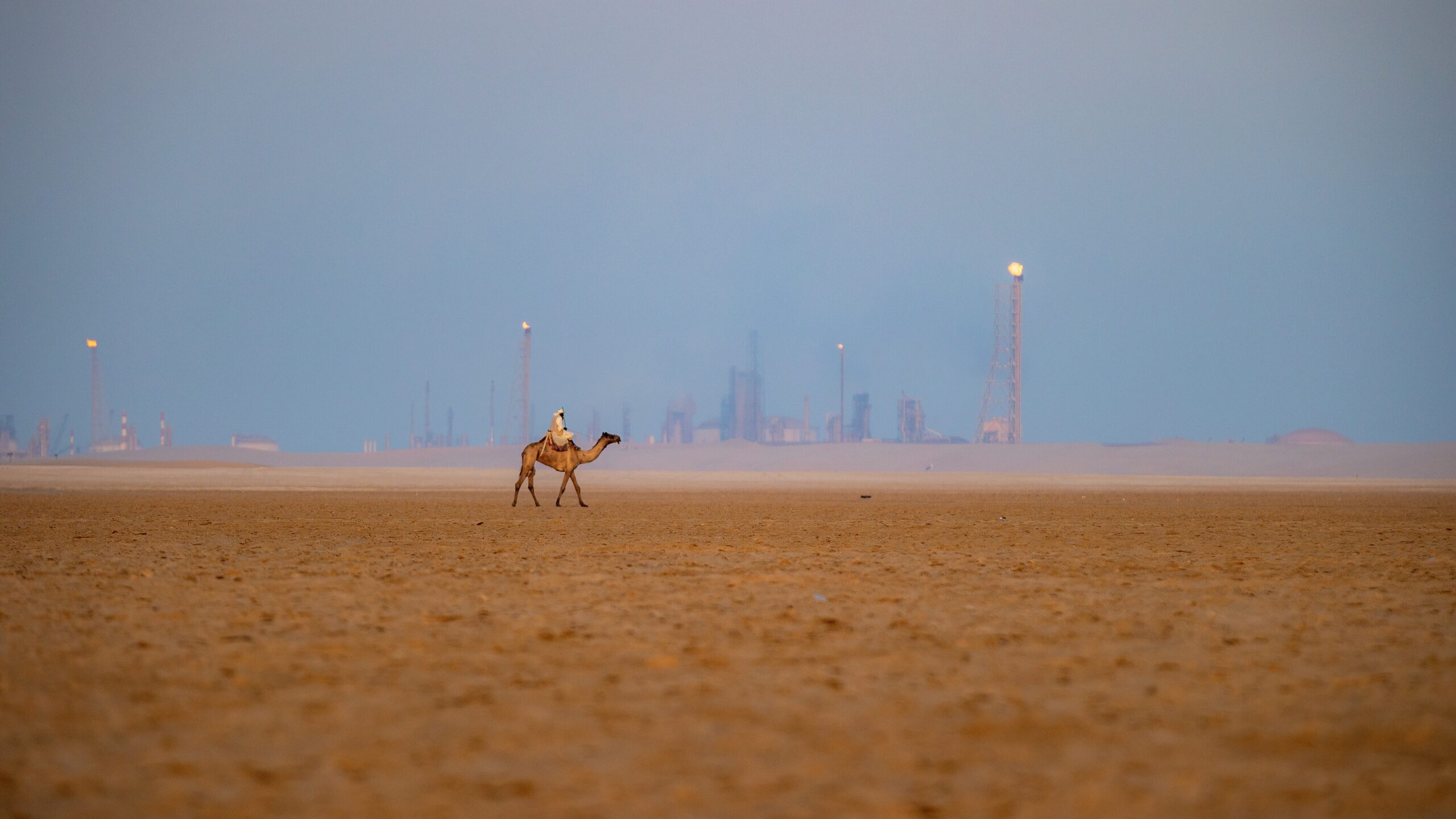
Imagine a pair of buildings that are over 100 miles long and 16 stories tall, with a mirrored finish that reflects light back onto the desert.
Now imagine how much they would cost.
For over a decade, the Saudis have engaged in a series of megaprojects that leveraged the Kingdom’s apparently limitless discretionary wealth. The Line, for example—the dual buildings intended to extend into the northwest desert of Saudi Arabia—once sounded like science fiction coming to life. Now the plans are simply too expensive.
The Kingdom has begun pulling back from its most grandiose projects because of the need to redirect money and a lack of outside investment. And that was even before the Iran war broke, which may further change the country’s economic outlook.
Saudi Arabia isn’t going to be poor, but it’s undergoing an economic contraction. What does that mean for the region and Israel?
A plan to expand
The pouring of massive funds into infrastructure has been part of a larger attempt to rehabilitate the Kingdom’s image by means of the Vision 2030 effort started by Crown Prince Mohammed bin Salman (MBS) in 2015.
That included a number of reforms, such as granting women the right to drive. Making Saudi Arabia more palatable to the West could also mean making Saudi Arabia more palatable to Western investors, helping to diversify its economy.
The effort also included an increase in entertainment and sports ventures spearheaded by the state. Bringing Western events to the Kingdom meant that they would no longer be seen as an oil-rich, culturally backward theocracy but as an open society, even if it wasn’t really true, as the 2017 Ritz-Carlton detention of dissidents and the 2018 killing of journalist Jamal Khashoggi confirmed.
The gargantuan building projects proposed by the Kingdom may have been the most tangible sign of its desire to remake its image. One of these was the Cube, a massive edifice in Riyadh that was supposed to be the biggest building in the world, able to contain 20 Empire State Buildings. Then there was the NEOM project, intended to develop the northwestern corner of Saudi Arabia near the Red Sea and Jordan, including The Line and other cyclopean construction projects. Many of them seemed outlandish, and some critics claimed that only a ruler insulated from criticism could consider such folly to be feasible. But having them in the works signalled confidence.
A turnaround of fortunes
That confidence has weakened, if not disappeared, in the last year or so. The losses from the Kingdom’s various ventures have been growing, and the rate of foreign capital flowing in remained too low to justify them.
In fact, the amount of money needed for these projects might have never been there to begin with. The Saudi Sovereign Fund has $1 trillion in it. The government has an annual budget of $300 billion. But the spending was greater than they could sustain.
Even the “small” projects were multi-billion-dollar boondoggles. The Wall Street Journal recounted just a few of them: “They included a new airline built from scratch, with about $20 billion in planes on order; investments in e-sports and video game companies totaling $38 billion; a new theme-park city with the world’s tallest rollercoaster at a total cost of $32 billion; a collection of 30 Maldives-style resorts in the Red Sea with $10 billion already spent; and a $100 billion AI push. “
To read more, subscribe to Ami