



Israelis woke up from their dream of trust in the Israeli military and intelligence services on October 7, 2023, when the IDF was caught off guard by terrorists in gliders and pickup trucks. And more people are waking up now, after the recent revelations about the Shin Bet’s blithe and inaccurate assessments of Hamas’ plans while simultaneously engaging in what many claim is steady harassment of innocent Jews in the settlements.
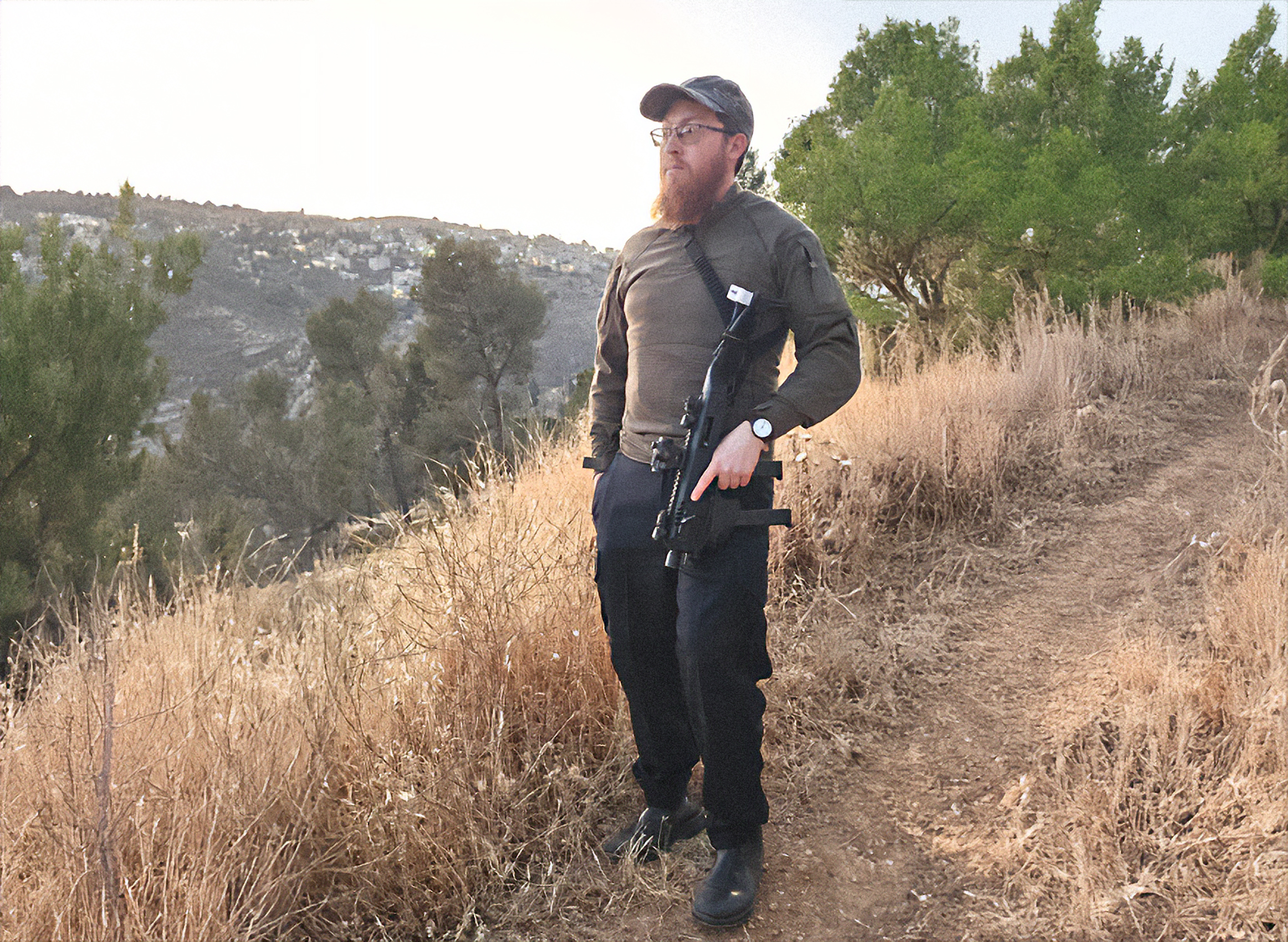
One concerned citizen who decided to do something about the inadequate security situation is Avi Tennenbaum, a resident of Ramot for the past 23 years who is originally from Chicago.
Avi was already a psychotherapist specializing in trauma and addiction before he extended his academic training to postgraduate studies in international crisis leadership. He is also an emergency medical technician (EMT) and sergeant major in the Israel Police, volunteering in its patrol and Jeep divisions.
In 2019, Avi founded a company that has since trained over 4,000 emergency responders, psychologists and others involved in crisis management including doctors, nurses and government officials. He has been involved in the responses to the Covid pandemic, the Lag BaOmer tragedy in Meron, Operation Guardian of the Walls and other situations. Seeing the vulnerabilities that existed in his neighborhood, he felt that something had to be done.
“Israelis living in areas in close proximity to Arab communities are allowed to own a single handgun and 100 bullets, which was recently upped from 50,” he said. “Meanwhile, it is estimated that there are a half-million illegal guns in the hands of Arabs both in Israel proper and the territories, including rifles that they shoot in the air to celebrate their weddings without fear of repercussion. Arabs perpetrate between 400 and 600 security incidents a month, ranging from firebombs, stone throwing, stabbings, shootings and assaults, with the media reporting only the ones that result in deaths and serious injuries.
“One of the well-known failures of the Israeli military in the Gaza border communities was insisting that all rifles held by the local security volunteers be kept in a single weapons armory. That ensured that the communities were defenseless during the tragic attack on October 7, with many residents being picked off by terrorists as they attempted to reach their weapons.
“Volunteers with the police are also stifled by bureaucracy. They carry a patrol rifle while on shift and drive police cars to terror attacks and violent crimes, but they aren’t equipped with bulletproof vests, nor are they allowed to bring their own.
“Another challenge is that armed Israeli citizens aren’t allowed to train with each other on their own private property, not even with toy guns. Heavy-handed rules and regulations affect the security apparatus of the entire country while terrorists arm, organize and train with impunity. We learned on October 7 that we cannot rely on the army. We must have local volunteers in place ready to respond,” he says decisively.
Avi adds that the police were more responsive on October 7 than the army because police are generally community based, whereas the army’s logistics are more cumbersome, involving getting the soldiers from their homes to the base, issuing them equipment, coming up with a combat plan, etc.
Every large city in Israel has a municipal department devoted to emergency preparedness. If a disaster occurs, which unfortunately happens far too often, the authorities have to be ready to take charge.
Ramot was one of the first Jerusalem neighborhoods to set up an emergency security team—on October 13, 2023. The Ramot Community Administration, the Jerusalem Municipality and the police approved the group, but its scope was limited. Its members were also restricted to the one legal pistol and a small supply of bullets.
“Another attempt at bolstering security involved organizing a group of local IDF veterans that Minister Itamar Ben-Gvir put together with the Israel Police. They were given rifles and very limited powers to form Ramot’s official quick-response squad. These volunteers received minimal training and equipment, and were essentially only on retainer to operate in an October 7-type scenario, but nothing else.
“A third group offered to help fund and train citizens under police guidance, but it never came to fruition. The organization’s coordinators, all IDF soldiers, were soon called up to fight in Gaza and the initiative folded overnight.”
In the first week of the war, one of Avi’s family members donated 10,000 NIS, which he immediately put towards training and bulletproof vests for security personnel. The following month, he privately arranged six weeks of enhanced pistol firearms training led by an IDF instructor in a professional training ground in Rishon LeZion.
A close friend later donated $10,000, which Avi transferred to Givat Zeev’s security unit to help build a base of operations there, reasoning that a stronger Givat Zeev would simultaneously help strengthen Ramot’s northwestern flank.
To read more, subscribe to Ami