



The SUV pulled up a few minutes early. The driver climbed out, lifted the stroller into the trunk, buckled the car seats into place, and tightened each strap with practiced hands.
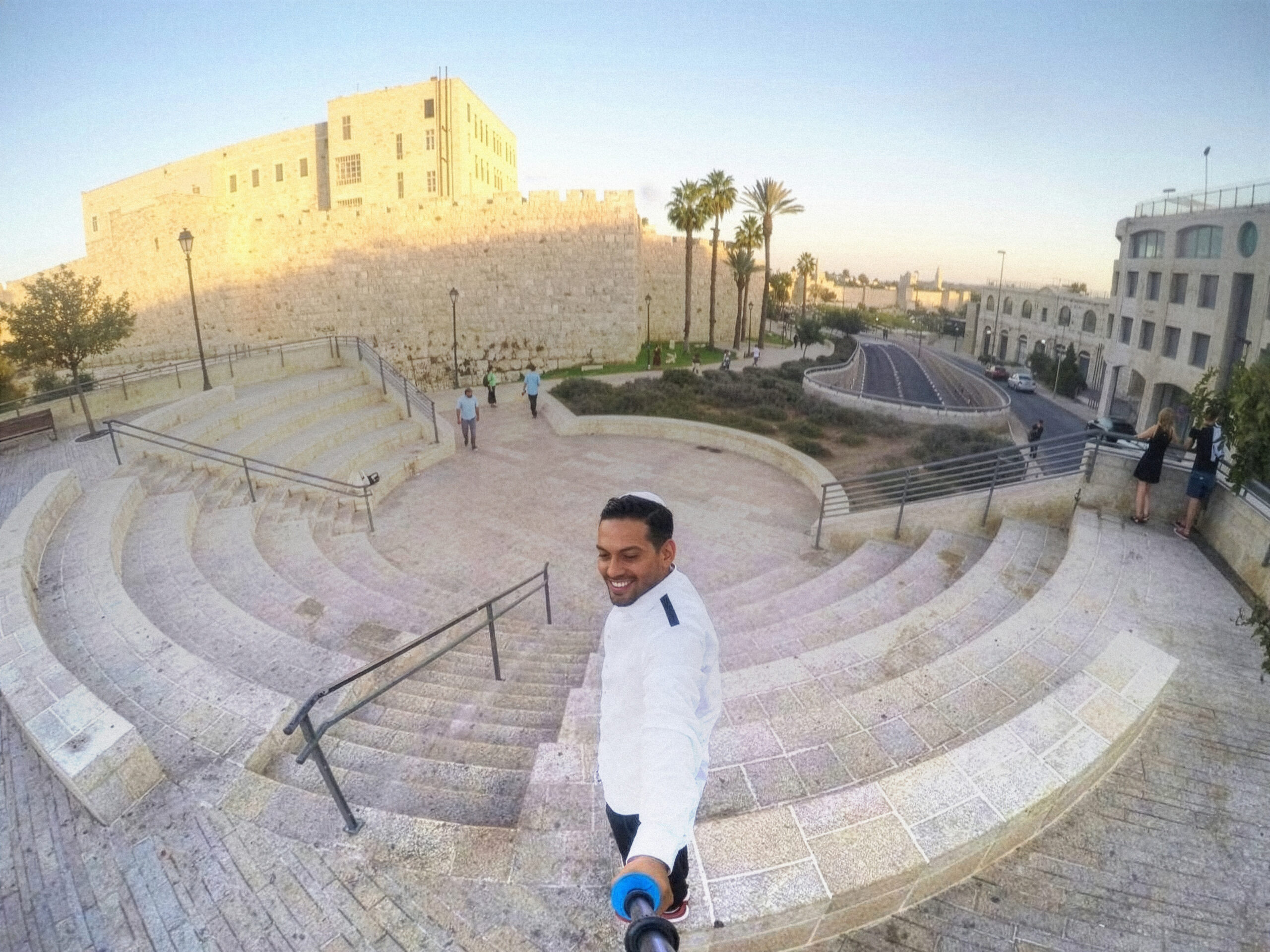
He wore a dark suit despite the Florida heat, a black kippah resting on neatly combed hair, the first threads of gray showing at his temples. He smiled shyly, with a temimus about him, his brown eyes bright and alive, his expression good-natured, quiet, and composed.
As we made our way to the I-95, morning light streamed through the windows. The night had cooled things a little, but the heat was already climbing; inside the car it was cold. The children slept, their heads fallen sideways, utterly trusting in the world around them. My daughter and I took advantage of the rare stretch of uninterrupted time to talk.
We had come to South Florida for a few days so my daughter could complete the US citizenship process for her two youngest children. We asked around for a Jewish driver who could take us from Miami to West Palm Beach, and someone had given us Moshe Martinez’s number.
As turquoise waterways shimmered beside marinas and neighborhoods shaded by flowering trees passed by outside the windows, I found myself paying less attention to the landscape than to the man behind the wheel. He sat upright, his hands resting lightly on the steering wheel, never impatient at a slow light, never leaning on the horn. He didn’t try to make small talk and seemed perfectly comfortable with the silence.
When we arrived, the heat outside the car was brutal, the humidity slapping our faces like a hot mop. The government office, meanwhile, was cold with air conditioning and slow with waiting. Half a dozen guards sat scrolling through their phones. Nothing moved. Then someone came in and announced that the system was down. “Come back later,” he told us.
We called Moshe. He pulled up with two bottles of cold water already waiting for us and drove us to a park to wait out the delay. When we stepped out, the heat hit us at once. He took off his suit jacket, folded it once, then again, and laid it carefully aside. The sky was high and bright, with big clouds piled over the blue lake. My daughter’s toddler ran for the open grass while her baby sat watching from the blanket.
Moshe stayed in the shade of the pavilion, close enough if we needed him, far enough to not intrude on us. Something caught his eye, and after a few minutes he suggested we try a park in a safer neighborhood. We drove only a few minutes to a different park, with a waterfall and a playground tucked beneath the trees. There were no other children around. For the first time all morning, there was a breeze, cool on our damp foreheads.
While my daughter helped her little girl climb the steps to the slide, I asked Moshe where he was from. “I was born in Bucaramanga,” he said. “Boo-cah-rah-MAN-gah,” I tried, but couldn’t make it sound the way he had. “Where is that?” He looked past me toward the lake. “Northeastern Colombia,” he said. “It’s a beautiful city.”
Just then the immigration office called. The system was working again. We buckled the children back into their seats, finished what we’d come for, and started back to Miami.
For a while we drove in silence. Then, somewhere along Interstate 95, Moshe began to talk. His English was good, but every so often he paused to search for a word, and when it wouldn’t come, he reached for Google Translate and continued as though the interruption had never happened. Slowly, the story emerged of how Fredy Yovany of Colombia became Moshe of Miami.
To read more, subscribe to Ami