



When I arrive at the apartment of Rav Avraham Salim, he opens the door himself.
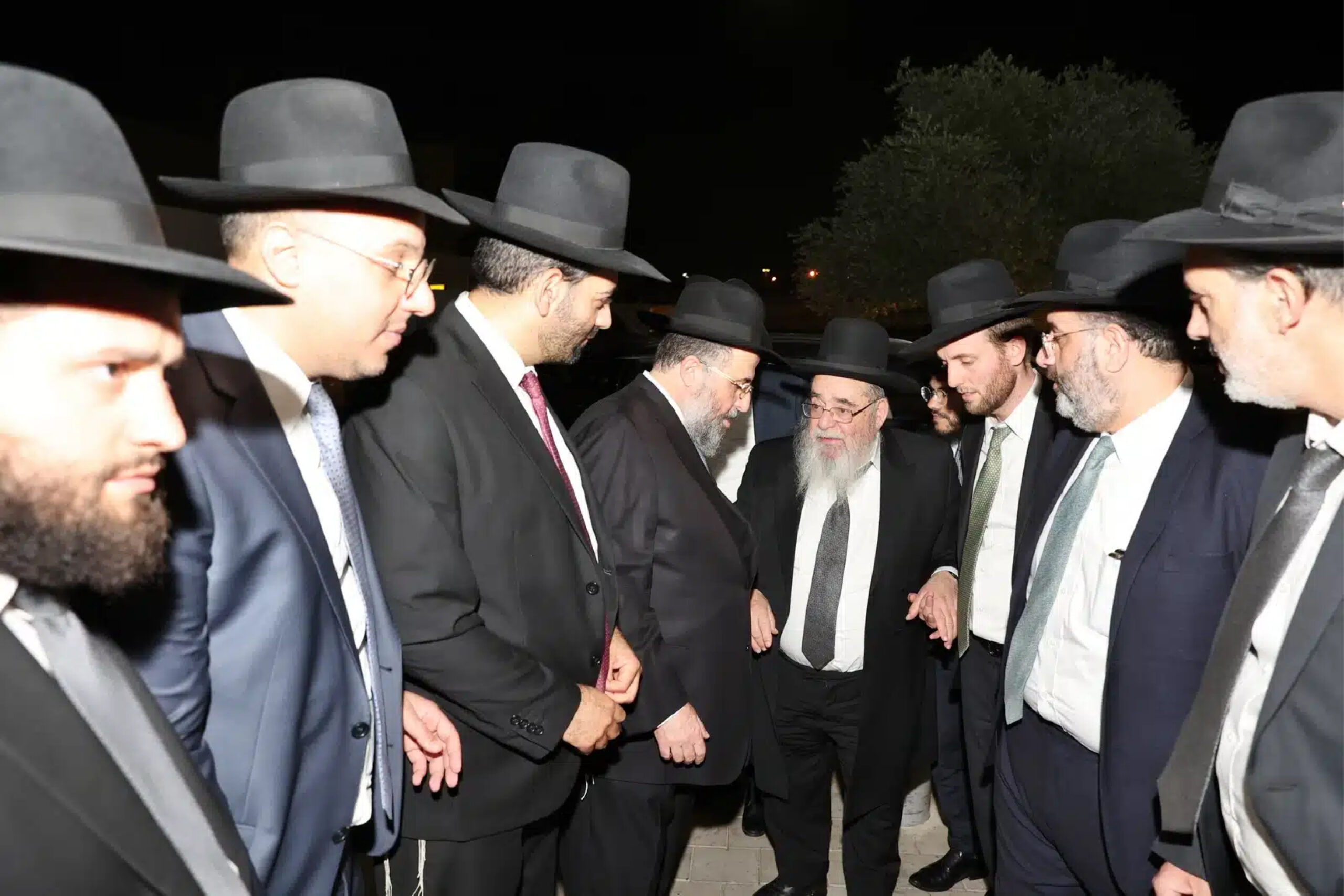
The rav is 88 years old, the rosh yeshivah of Yeshivat Me’or HaTorah and a member of the Moetzet Chachmei HaTorah. Yet there is no assistant waiting outside, no secretary ushering visitors in, no reception room or entourage. Just the rav standing at his own front door.
He welcomes me inside and, almost apologetically, points to the dining room. He’s sorry, he explains, about its current state.
His wife had been released from the hospital just the night before, he explains, and that morning he had hosted a large group for a siyum. The table is still covered with platters and drinks.
“There’s no mess,” I tell him.
He smiles.
It’s difficult to reconcile this unassuming scene with the stature of the man sitting across from me. For decades, Rav Salim has taught generations of talmidim. And in recent years, despite his advanced age, he has traveled around the world on behalf of the Keren Olam HaTorah, raising funds to support for bnei Torah.
And yet, as his nephew tells me, Rav Salim still see himself as primarily what he has always been: a rebbi to bachurim.
Perhaps that is because his story began long before he became a rosh yeshivah, before there was even a thriving Sephardic yeshivah world for him to lead.
He grew up in a generation when a Sephardic boy who wanted to dedicate himself to Torah could not necessarily assume there would be a yeshivah waiting for him. Porat Yosef, the great Sephardic yeshivah where his uncle, Rav Ezra Attieh, served as rosh yeshivah, had been displaced during the War of Independence and scattered among different batei midrash.
His father, a devoted mechanech, feared that without the structure of a real yeshivah, his son could be swept up by the powerful secular and ideological movements competing for young people in those years.
So, despite being the nephew of Rav Ezra Attieh, young Avraham Salim was sent to an Ashkenazi yeshivah: Kol Torah.
There, he became one of the first Sephardic bachurim of his generation to immerse himself in the world of the Ashkenazi yeshivos, learning under Rav Shlomo Zalman Auerbach and absorbing a derech halimud that would profoundly influence him.
He would got on to learn in Ponovezh, return to Yerushalayim, teach in Porat Yosef, establish a kollel, and eventually build Yeshivat Me’or HaTorah.
In other words, Rav Salim’s life traces a remarkable transformation: from a time when his family had to look beyond the Sephardic world to find the yeshivah framework they wanted for him to a time when he himself would build an institutions that would help shape the Sephardic Torah world of today.
That is the story Rav Salim tells when he looks back at
his life.
To read more, subscribe to Ami