



Dov Ber (Gilbert) Weill sits on a couch in the old terminal of Entebbe Airport, his eyes moist. He is surrounded by his family, the Ugandan ambassador to the United States and a Ugandan military spokesman. On the table before him sits a plate with a large banana. Weill picks it up, peels it with deliberate care and recites the brachah over it while his family responds with amein and mazal tov.
It’s only a banana, but it tells the story of Dov Weill.
Weill was one of the hostages held at Entebbe exactly 50 years ago. During the hijacking, the terrorists distributed small portions of meat among the captives. Weill refused; the food was clearly not kosher.
“It was obvious that it was treif,” he tells me. I have joined him and his family on this return to the place where he was once held captive and then miraculously rescued.
Rather than eat anything non-kosher, he survived that week on bread and bananas. “That’s why I haven’t touched a banana in 50 years,” he explains. Today, returning to the place where his miraculous rescue occurred, he closes the circle, eating a banana for the first time since then.
The date is 6 Tamuz. At the invitation of Ugandan President Yoweri Museveni marking the 50th anniversary of Operation Thunderbolt (Mivtza Yonatan), Weill has come to visit the old terminal surrounded by his many descendants to recite the brachah “Baruch she’asah li neis bamakom hazeh—Blessed is He Who performed a miracle for me in this place.”
He was welcomed by the spokesperson for the Ugandan military, Colonel Chris Magezi, who oversaw the visit. Magezi described the hijacking as an act of terrorism that must never be repeated, noting that the successful rescue operation became a turning point in relations between Uganda and Israel. “We share a great deal with Israel,” he said, “particularly in military and intelligence cooperation and in sectors such as agriculture, technology and the global fight against terrorism.”
“I have long wanted to return here to recite this brachah,” Weill says. “Flying again wasn’t hard for me; I got back on planes right away. But it was very difficult for my wife. She almost never boarded a plane again. Her mother lived 1,200 kilometers (745 miles) away from us, and every time we wanted to visit her, we had to drive. She passed away a few years ago, and I am returning for her sake as well as in her memory.”
The Flight He Was Never Supposed to Be On
“When I look back at that summer of 1976,” he begins, “I realize that nothing happened by chance. Everything was orchestrated from above. We were never even supposed to be on that flight.”
Indeed, the story began when the couple’s return flight from Tel Aviv to Paris was delayed by four hours. Then came an unexpected, welcome offer: they were offered seats on an earlier flight. They accepted without hesitation.
“They said it would make a brief stop in Athens and then continue to Paris,” Weill recalls. “I had a short visit planned with my father-in-law in Metz, France, and from there I was to collect the children and drive home to Antwerp.”
They had no idea they were walking into a trap.
In Athens, the plane filled slowly. Passengers of various nationalities took their seats. Overhead bins closed, seatbelts clicked, and everything appeared calm and entirely unremarkable.
Of the 250 passengers on board, roughly 100 were Israeli citizens, but four were terrorists. Two of them were fair-skinned Germans; the other two were of Middle Eastern origin. Their bags were slightly heavier than usual, but their behavior gave nothing away.
Weill’s wife, Helen, of blessed memory, caught his eye and discreetly nodded toward the front of the plane. “Arabs,” she whispered. “Maybe we should find another flight?” He dismissed her concern with a wave of his hand. Getting to France on time was more important. When I ask him whether anything seemed unusual, Weill pauses.
“I remember a child who pointed at one of the bags out of pure curiosity and asked what was inside. The answer came without hesitation in a voice that was cold and detached: ‘Dates for you and grenades for your parents.’ The words drifted through the cabin without anyone taking notice, except that much later they acquired a chilling meaning.”
The plane took off, and then it happened.
“There was a commotion near the business class section and the cockpit. I immediately knew that something had happened. Then the hijackers appeared with weapons, screaming that the plane was being hijacked. I watched it all unfold in seconds and actually knocked on the window to make sure I wasn’t dreaming. This can’t be happening, I thought to myself. But I was wide awake.”
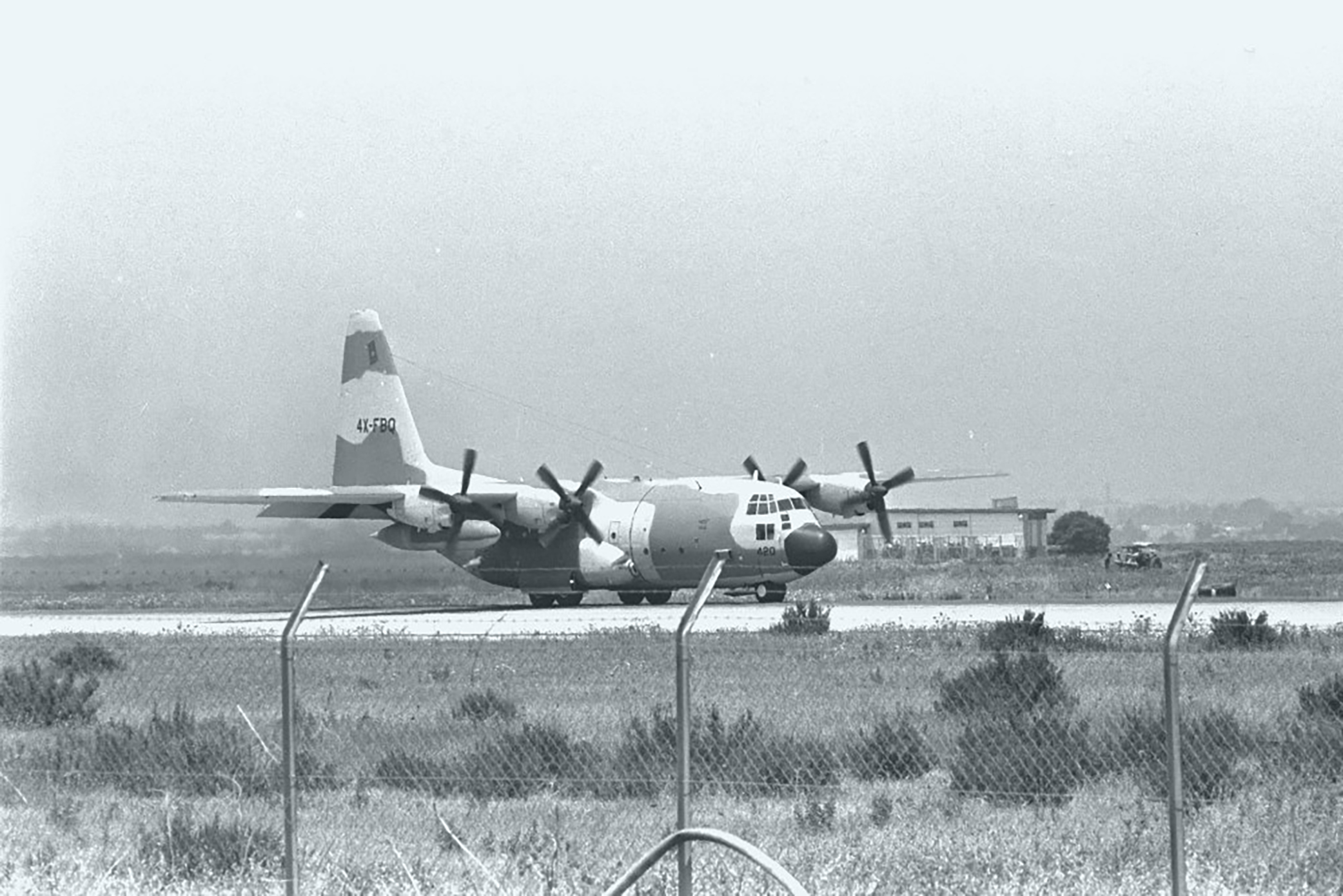
The hijackers quickly seized the cockpit and forced the pilots to change course, first to Benghazi, Libya, to refuel, and ultimately to Entebbe, Uganda.
“The German woman was the worst one of all,” Weill says. “She had a history; her husband, also a terrorist, had been killed by Israelis in a previous hijacking. She moved through the aisles collecting passports row by row and screaming at us.”
Passengers who looked Jewish quietly removed their yarmulkes, tucking them away and trying to blend into anonymity. “My wife asked me to remove my yarmulke, but I couldn’t. I’m not an actor. The terrorists in the front of the plane had already seen me wearing it, and I was determined to keep it on.”
When morning came, he wanted to put on tefillin. “For reasons I still can’t explain, I had packed my tefillin in my checked luggage instead of keeping them with me. I always took them along on every trip, and I had never put them in my suitcase before.”
Since he didn’t have his own tefillin, Weill turned to the man sitting behind him and asked if he could borrow his. The man replied, “I don’t want to put them on, but you can take them and do whatever you want.” After Weill put them on, he walked up and down the aisle asking if anyone wanted to use them. “In the end, I was the only one who put them on,” he recounts. “The others didn’t dare; everyone was paralyzed with fear. But three days later, an older man approached me. His voice trembled as he said, ‘I haven’t put on tefillin since World War II. I would like to do so now.’ I helped him put them on.”
To read more, subscribe to Ami