




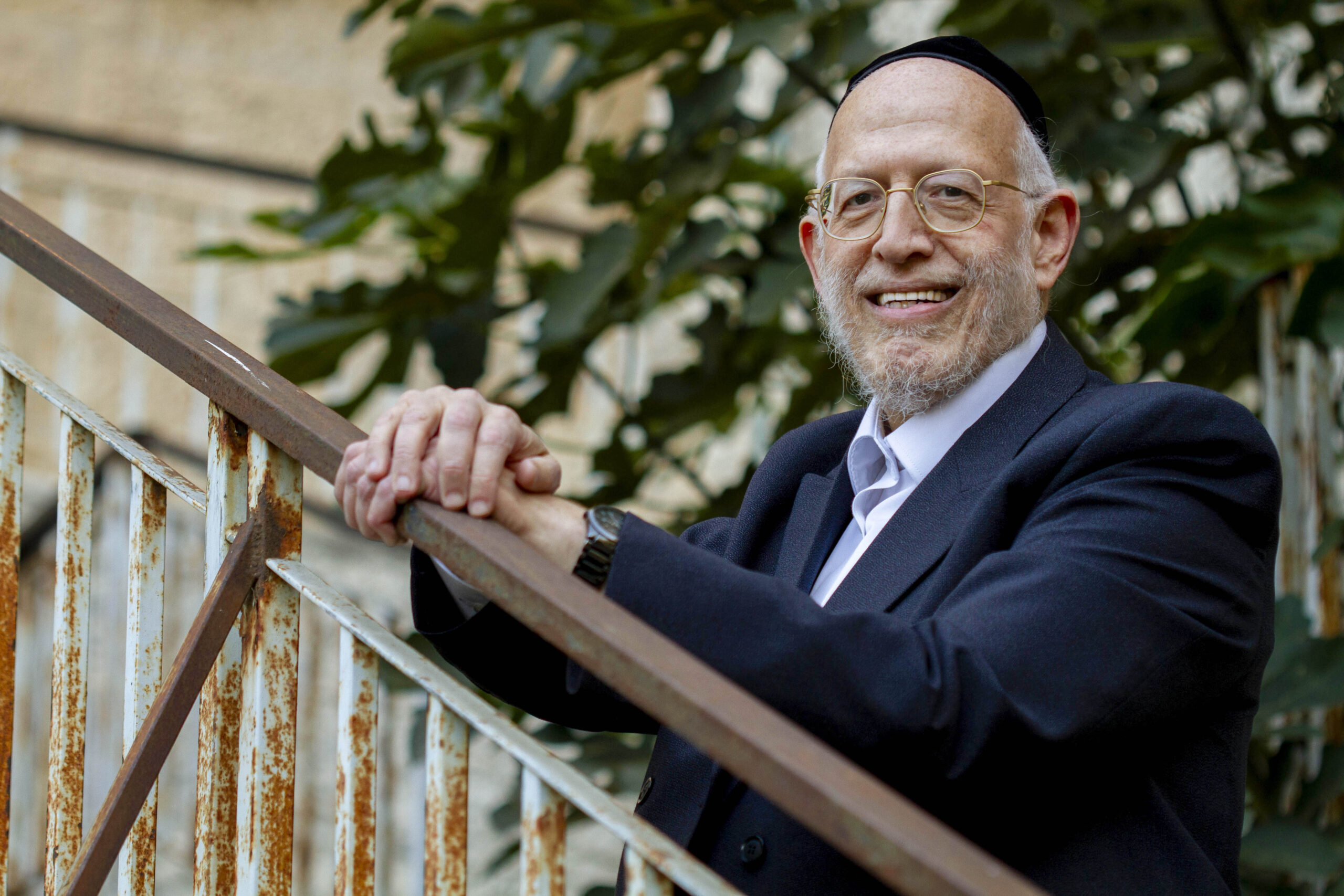
When I last met Rabbi Aharon Friedman in his Yerushalayim office in July, he mentioned that he was unwell but was reluctant to discuss his condition. At the time, he was still awaiting a diagnosis, uncertain about what lay ahead. Now, having undergone chemotherapy for lymphoma, he is ready to speak about his experience and the lessons he has drawn from it.
For more than three decades, Rabbi Friedman, a Belzer chasid, has devoted himself to understanding the human psyche and helping people cope with life’s difficulties. A prolific author, lecturer and counselor, he has guided countless individuals struggling with anxiety, personal setbacks and seemingly insurmountable challenges. His approach, rooted in Torah and informed by his own experiences, emphasizes the importance of accepting uncertainties rather than allowing fear of the unknown to dominate one’s existence.
He is hardly a stranger to adversity. Having endured serious financial difficulties, the challenges of raising a child with a congenital heart defect and the devastating loss of his first wife to cancer, Rabbi Friedman has long drawn upon his own life when counseling others. But his recent diagnosis confronted him with a new challenge: Could the principles he had spent a lifetime espousing sustain him when he himself faced the possibility of death?
In this deeply personal conversation with Ami, Rabbi Friedman discusses his illness and the relationship between emunah, fear and emotional resilience. Particularly striking is his insistence that even having a serious illness doesn’t necessarily enable a person to understand what another patient is going through. Every individual, he explains, brings a different history and psychological makeup to the experience of suffering.
Throughout our conversation, Rabbi Friedman displays the candor, humor and self-awareness that have characterized his work. He makes no claim to having conquered his own anxieties or achieved perfect equanimity. Rather, he describes a lifelong process of personal growth, one that his recent ordeal has both tested and deepened.
When we last met, you told me that you weren’t well, but you didn’t feel comfortable discussing your condition.
I didn’t want to talk about my matzav because I didn’t know where things stood or how they would develop. As I came to understand my situation better, I gradually became more open about it. But I’m still careful.
You told me there was some uncertainty about your diagnosis. Why did it take so long for the doctors to determine what was wrong?
The tests showed I had something in my spleen, and it was growing. It eventually grew to over six inches, which is very large, but it didn’t have the typical characteristics of a tumor. The doctors therefore thought it might be some kind of parasite. They even asked me whether I had traveled to a jungle or been around animals.
The only way to determine exactly what it was would have been through a biopsy, but they were afraid to perform one. If it turned out to be a parasite, puncturing it could potentially endanger my life. The spleen is essentially filled with blood rather than being a firm organ, so there was concern that a parasite could spread directly into the bloodstream.
The doctors were doing everything they could to identify it without a biopsy. What made the situation even more puzzling was that all of my lymph nodes and other markers were normal, and the blood tests weren’t showing anything unusual.
When they finally did do the biopsy, they discovered that it was lymphoma. It’s unusual because the disease was confined to one location. The mass was very big, but they found no evidence of it anywhere else.
To read more, subscribe to Ami