




Teaching tolerance isn’t “mind control”
The reaction of some Palestinians to an effort aimed at educating Gazan children not only in math and grammar but also in tolerance and respect for others says something important. And depressing.
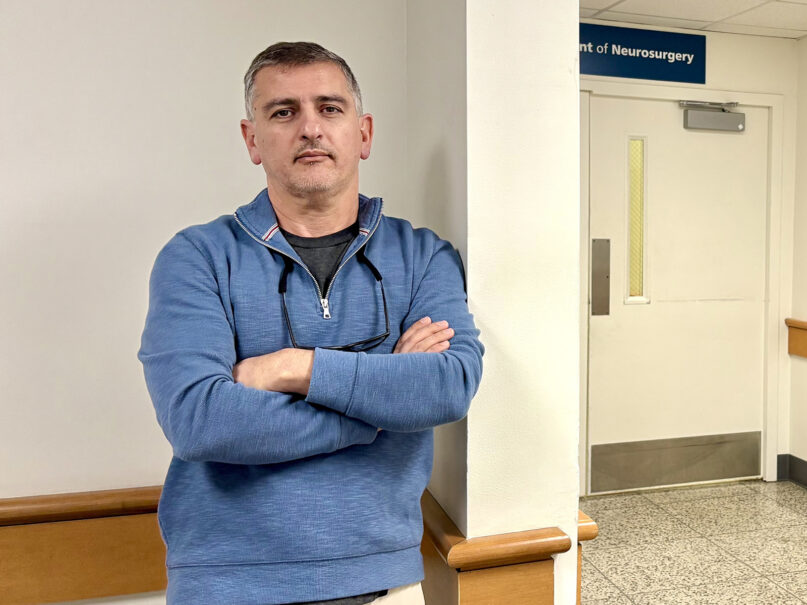
Dr. David Hasan is a neurosurgeon born in Kuwait to Palestinian parents. He teaches at Duke University Medical School in Durham, North Carolina.
And like most, if not all, children from backgrounds like his, Dr. Hasan was taught from an early age to see Israelis as enemies and Jews as objects of contempt. When he attended college in the US, though, he met Jewish students and came to understand that the lessons of his youth had been born of unfounded bias and unwarranted hatred.
During the post-October 7 Israeli war against Hamas, Dr. Hasan volunteered at hospitals in Gaza. And it was then that he decided to try to do something that might help end the region’s seemingly endless spirals into violence.
So, last year, he founded a publicly-funded charity, Gaza Children Village, which aims to get children in Gaza, hundreds of thousands of whom are not in school, back into classrooms—and taught not only the usual subjects but also the need to respect different perspectives as well.
Incoming!
Dr. Hasan is taking flak for his intention to monitor the charity’s schools—called Academies of Hope—to ensure that implementation of its curriculum in fact promotes peace and tolerance. He plans, he said, to have classroom conversations recorded in real time and to employ artificial intelligence to flag speech deemed hateful or inciting.
Classroom discussions, he explained, will be analyzed by an AI-powered system designed to detect anti-Semitic, inciting or hateful language. Recordings will be stored for 72 hours.
If problematic language is detected, a warning will be sent to Dr. Hasan, who can then contact the teacher to understand the context of what was flagged and provide feedback. And, presumably, if objectionable attitudes have indeed been imparted to students, remove the teacher from his or her post.
That Palestinian Authority textbooks, modified versions of which are used by Gaza Children Village, blend incitement into lessons is nothing new. Calculations of “the number of martyrs” have been used to teach math, and sentences describing a boy shot by Israeli soldiers have constituted a grammar lesson. Violence is glorified by texts used to teach reading, and Israel is erased from textbook maps.
A recent study by The Institute for Monitoring Peace and Cultural Tolerance in School Education found that “virulent antisemitism, the glorification of jihad, and incitement to violence remain deeply embedded across all grades of Palestinian Authority textbooks.”
In the past, even UNRWA, the UN agency for Palestinian refugees, attempted to modify the PA curriculum to remove objectionable content. It, too, was met in that quest by “teacher and community resistance,” according to a January US Government Accountability Office report.
But even using textbooks that have been cleansed of such incitement does not preclude promotion of hatred and justification of violence being verbally communicated in Gazan classrooms by irresponsible or malevolent teachers. Which sad fact is what yielded the rationale for Dr. Hasan’s monitoring plan. He knows with whom he is dealing.
Depressingly, his classroom monitoring plan has—as was the case with the UNRWA effort—been lambasted by Palestinian “advocates,” and even from one of the charity’s partners.
“It is very concerning,” said Ines Abdel Razek, co-director of the Palestine Institute for Public Diplomacy. “They’re trying to control the minds of new generations.”
“Cameras to silence students and teachers from being able to have a free exchange in a classroom…” complained Bishara Bahbah, a Palestinian American political activist on the charity’s board, “are not acceptable.”
But trying to wean young people from a diet of hatred, however, isn’t mind control. It is ethical education.
And it’s not the free exchange of ideas that Dr. Hasan seeks to stifle. It’s the promotion of hatred and encouraging of violence. Any objection, board member Bahbah, to that?
What, indeed, are the critics of Dr. Hasan’s plan afraid of? The funds he oversees, donated by people of good will, including Americans, are intended to cleanse Gazan classrooms of anti-Israel and anti-Semitic animus, and to promote peace.
The fact of the pushback, it would seem, only highlights the very problems he seeks to solve. ●