




When I walked into the women’s closed unit at Herzog Hospital, I was immediately struck by the fact that well over half of the patients were chareidi women of various ages and backgrounds.
Nothing prepared me for how such a sight would affect me. Most of these women were sitting and saying Tehillim or davening; others were coloring mandalas. One was getting ready for a visit from her school-age children. The question plagued me: “How did they end up here? Why aren’t they with their families?”
What was I doing there? Actually, it was my fourth mandatory rotation as a student nurse. Given the state of mental health issues prevalent globally and in Israel in particular due to all the terror attacks, it makes sense that this was considered a prerequisite for all aspiring nurses.
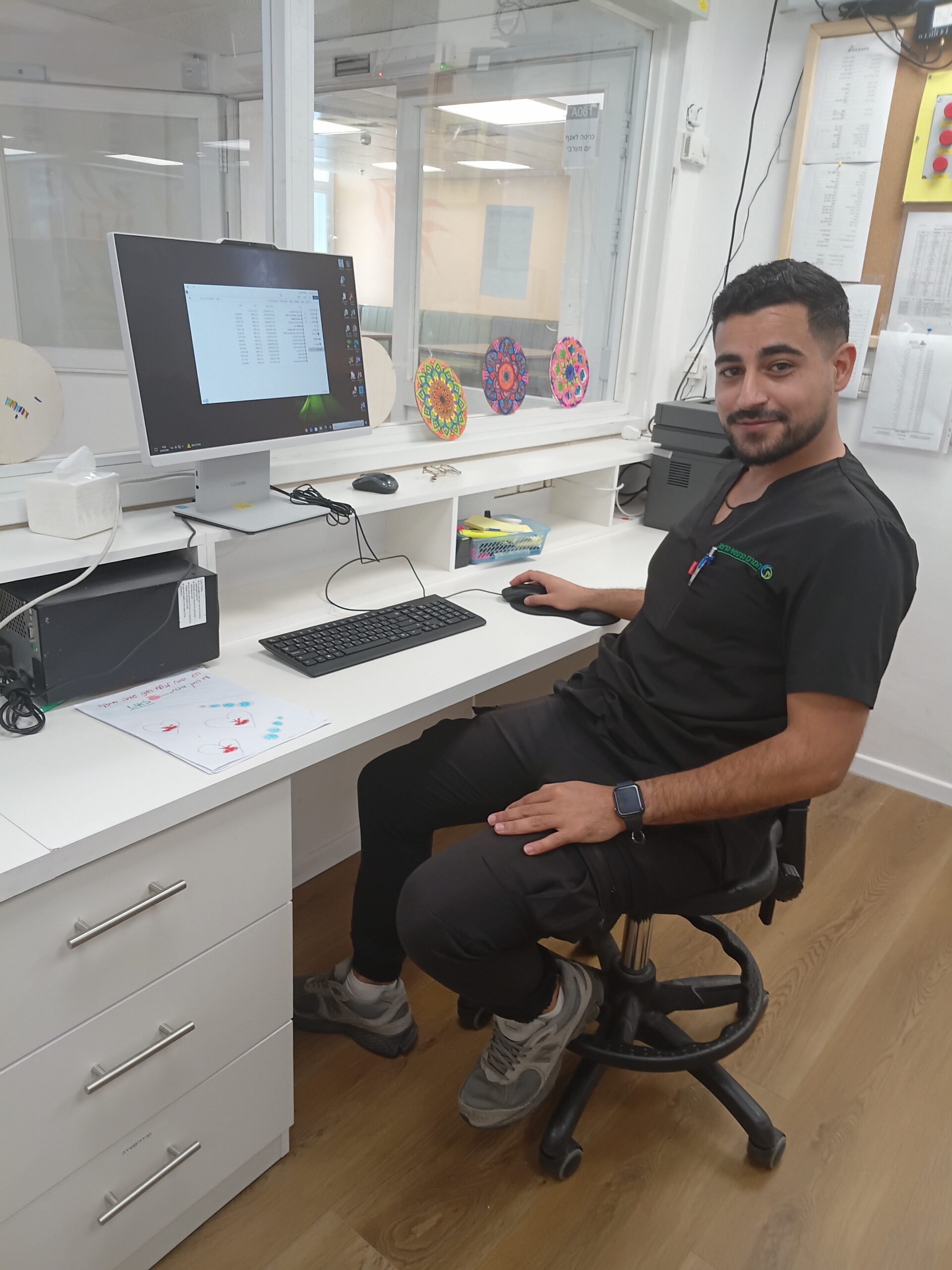
Three other student nurses and I were placed in Herzog’s closed unit after completing our second year of nursing school. The school’s psychiatry department coordinator informed us that we would be in the women’s wing, and our preceptor would be Khalil Igbaria, the head of the ward. I dreaded this rotation and also found it odd that a Muslim male nurse was responsible for frum women’s mental health. Did he understand them? And if yes, how? And why was he here of all places?
I approached it as a hurdle I had to just grit my teeth and get through to become an RN. But by the month’s end I had a slew of profound insights into mental health in the chareidi world, thanks to Khalil’s tutelage. After my shifts, I asked Khalil if he would be willing to share his experiences with the public. Upon receiving permission from Herzog’s administration, we sat down in his office to discuss his own journey, his accomplishments at Herzog, and primarily how his perspective as an outsider became his biggest asset in helping this community.
* * *
At our orientation, I already understood that his approach was going to be unorthodox, medically speaking. He did something no other preceptor had done in any of my previous rotations: he told us that we would not be permitted to know the medical background of a single patient for the next two weeks. “I want you to see them as people, not as labels or diagnoses,” he explained emphatically. Sure enough, not only was this his motto but it was also hanging in pastels on the nurses’ station in Hebrew: “We look at patients here as people, not diagnoses.” We could appreciate the idealism, but we felt intimidated not knowing what we were dealing with and which possible landmines to look out for. Khalil assuaged our concerns by giving us a heads-up on potentially violent patients (there were two), and how to communicate with the women in a non-triggering way.
We started our first shift with a quick meeting on the lime green upholstered benches in the newly constructed wing for a quick prep session. He told us two crucial points. Number one: Don’t be misled by appearances. The woman who looks the most normal is often one of the most ill patients. On the flipside, the louder patients will most likely be the most innocuous.
Point number two was a reminder about our commitment to confidentiality. He warned us that if we saw someone we knew, we could ask to be transferred to a different ward or hospital. We could also choose to stay, but we couldn’t breathe a word about what or whom we saw.
He noticed two of us rolling our eyes at the thought that we might run into someone from our respective communities.
“You think it’s unlikely that you’ll meet someone you know? Really? It happens to almost every new batch of students. With the last group, one student saw a rabbanit from her community and was stunned. I gave her the option to switch if it was unpleasant for her to treat someone so pivotal. She decided to stay, but she said that her perception of people who are institutionalized was completely shaken.”
We nodded our agreement, and he chaperoned us into the ward’s activity room.
Suddenly a nurse came in, saying that there was a disturbance in one of the rooms. He folded his arms and sighed. “Oy, Tatte,” he said.
To read more, subscribe to Ami