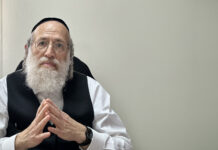




Following the collapse of the Soviet Union, Dr. Shyfrin emerged as one of the leading industrial entrepreneurs in Eastern Europe. He cofounded Midland Group, an international industrial and investment company with operations spanning steel production, shipping, real estate, agriculture and technology. Under his leadership, the company became a major force in the global steel and commodities sectors, with partnerships and investments extending across Europe, North America and Asia. Throughout his business career, he became known for combining scientific thinking with strategic long-term vision in highly complex international markets.
Despite his considerable commercial success, Dr. Shyfrin experienced a profound personal and existential crisis in 2002 at the age of 42. Confronted by questions with regard to mortality, meaning and human purpose, he found that neither business achievement nor science could adequately answer these queries that increasingly defined his inner life: Why are we here? What is consciousness? What happens after death? Is there an underlying order to existence?
During this pivotal period, Dr. Shyfrin sought guidance from Rabbi Yaakov Dov Bleich, the chief rabbi of Ukraine, who encouraged him to undertake teshuvah. What began as a personal search evolved into decades of intensive study of Torah, Talmud, Jewish philosophy and Kabbalah. Approaching these subjects through the disciplined lens of a scientist, he became especially interested in the relationship between ancient mystical thought and modern developments in quantum physics, information theory, thermodynamics and consciousness studies.
These explorations culminated in his book From Infinity to Man, which proposes a synthesis between Kabbalistic concepts and contemporary scientific thought. In the book, Dr. Shyfrin advances the idea that information rather than matter alone may constitute the fundamental structure of reality, drawing parallels between Jewish mystical teachings and modern theories in physics. The work attracted international attention for its ambitious interdisciplinary approach and positioned him as a distinctive voice in contemporary discussions about science and spirituality. He later expanded these ideas into what he calls the “Kabbalah of Information,” an evolving philosophical framework he explored in subsequent writings and lectures.
In parallel with his intellectual work, Dr. Shyfrin has remained deeply involved in philanthropy and Jewish communal life, supporting educational, humanitarian and cultural initiatives all over the world, particularly in Ukraine. He has also contributed essays and Torah commentaries to leading Jewish publications and educational platforms.
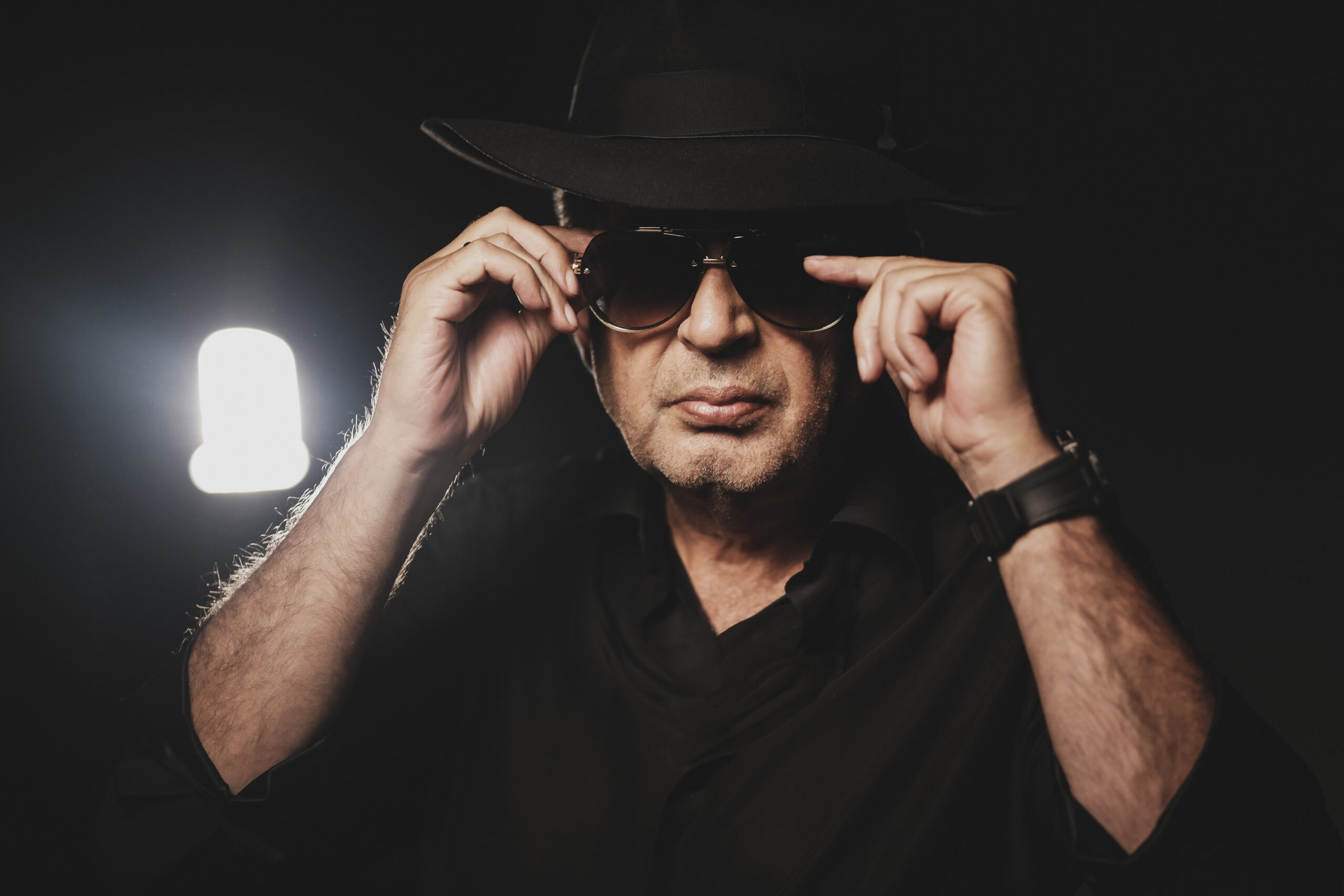
In recent years, Dr. Shyfrin has expanded his creative pursuits into music through his project Shyfrin Alliance, blending blues, jazz and rock with philosophical and spiritual themes. His music reflects many of the existential and mystical ideas explored in his writings, creating what he describes as another language for expressing questions of time, soul, longing and transcendence.
Known for his rare ability to bridge science and spirituality, commerce and contemplation, Dr. Eduard Shyfrin occupies a singular place among contemporary thinkers, equally at home discussing metallurgy, quantum theory, Torah or music. A few weeks ago, I had the privilege of speaking with him about the remarkable journey that has taken him from the industrial upheavals of post-Soviet Eastern Europe to the worlds of Jewish mysticism, philosophy and artistic expression.
You are a man who is interested in so many things. How do you see all of that coming together in your personality?
That’s life, Rabbi. Life has many faces.
Does it have many faces, or is it one face with many features?
You could put it that way as well. We shouldn’t limit ourselves. If we think we can do something important, we should allow ourselves that possibility instead of restricting it.
You seem to be on a continuous journey, constantly exploring and looking for different experiences.
Exactly. I was once told by my rabbis that if you do something against your will but do it anyway, you receive the greatest reward. I jokingly replied that in that case, I wouldn’t receive any reward for my work, because I genuinely enjoy studying and learning. I’m not doing it against my will.
You’re doing what you like to do.
Not always. There are times when I have to do something that’s a duty. But when you can do what you like and be happy with the results of your labor—I’m quoting Koheles—it’s a great gift from G-d.
As a man of many facets, what is your ultimate like?
Intellectual cognition.
Sometimes a person’s occupation and life story aren’t one and the same. But it seems that your life mission and intellectual interests align. They seem to be very interconnected, with your biography influencing your thought processes.
You’re absolutely right. In my view, the ideal state is one of holism, when the whole is greater than the sum of its parts. It’s very difficult to reach, but we should strive toward it. You’re also right that all of my activities are interconnected; they flow into each other, forward and backward. I’m driven by a desire to understand this world, to understand G-d, and to understand whatever I can.
Life is a journey for everyone, but for you it seems to be one in the geographical sense as well. I understand that you’re currently in Monaco, although your life began in a different culture and place.
Absolutely. I was born in Soviet Ukraine.
At what age did you discover your need to discover?
It’s a long story. My late parents, of blessed memory, were people of the book. As long as I can remember, our small apartment was filled with volumes. I started reading very early. We were a family that valued language, and that orientation was deeply ingrained in me, shaped first and foremost by my parents.
What kinds of interests did they have?
They were both metallurgical engineers. Later on, my father became a professor and earned a doctorate in science. He was more analytically inclined. My mother, by contrast, adored books and knowledge, and she collected several thousand volumes. In our home, the book was the queen of the apartment.
I assume it was a very small apartment.
Yes. I was born in a one-room apartment with six people living there.
Did you have any exposure to religious books?
Absolutely not. This was the Soviet Union, and my father was a member of the Communist Party. I was also a member of the party for six years. Religion was strictly forbidden. I didn’t know anything about the Torah or the synagogue. However, I did know that I was Jewish.
Did you know that you were Jewish because your non-Jewish neighbors told you?
My neighbors did tell me that regularly.
How did you define your Jewishness at the time?
I didn’t really know what it was. I grew up in a secular family that was completely cut off from any Judaism. But I was reminded that I was a Jew on a regular basis. While my father was more intellectual, my mother was a fiery Jewish woman. She would tell me, “We are Jews. It’s in our blood, and you should stay Jewish.”
So it was mostly a racial identity, unassociated with any religion or ideas.
It was the world of Tohu. Tohu isn’t entirely bad. It represents the world of pure concepts. There are mixed concepts and pure concepts. For example, mercy without even a drop of judgment or judgment without even a drop of mercy is Tohu. In Atzilut, by contrast, we have mixed concepts with varying degrees of integration. Tohu is the world of the strongest concepts, because pure concepts have the maximal force of transformation. This is why both great evildoers and great righteous individuals are associated with Tohu. There were certain righteous individuals, including Yishai, the father of King David, and Rabbi Chanina ben Dosa, who are associated with Tohu.
In which city did you grow up?
Dnipropetrovsk, which is now called Dnipro.
I assume that you went to the regular communist schools.
I went to a regular school, but for the last three years I attended a class with an advanced focus on physics. It was a very famous class in the Soviet Union, led by the Jewish teacher David Sholomovich. Every year, students from this class became winners of the physics Olympiads, and I was the absolute champion of Ukraine for two consecutive years.
What did you do after you graduated?
I tried to get into the top physics university in Moscow. I came there with my late father and scored 24 out of 25 possible points, but I was not accepted, despite the fact that the passing threshold was 13.
Why weren’t you accepted?
We learned afterward that all candidates were divided into groups, and all the Jewish and half-Jewish applicants were placed in the same group. That was the policy of the Communist Party at the time, because Jews were immigrating to Israel and the aim was not to allow Jews to access the best education in the Soviet Union.
What did you do after you were rejected?
I took my documents and exam results and submitted them to another Moscow university for steel and alloys, where I was accepted. I graduated from there and got married during my final year. After graduating, I was sent to work at a metallurgical plant in Ukraine. I worked in the steelmaking shop in front of a 2,000-degree furnace. I did that for ten years.
During those years, I completed my PhD. My rise in metallurgy was meteoric. By the age of 27 I was already the chief of the steelmaking shop, with 1,000 people working under me. After I left, I started a steel business from scratch.
Did you start your business during communism?
No. That was in 1993, after the collapse of the Soviet Union. The Communist Party was dissolved in 1991.
That was how you succeeded in accumulating wealth, correct?
Yes, thank G-d. At its highest point, it was pulling in a few billion dollars a year. We started from zero.
I assume you weren’t dealing only with Ukraine; it became an international company.
Correct. We produced steel in Ukraine, but we sold it all over the world. We had 36 offices around the world selling steel.
Is your business still based in Ukraine?
No. Thank G-d, I left the former Soviet Union, and I no longer have any connections there.
Where is your business based now?
In the West. In Western Europe and the United States.
I guess your children also emigrated from Ukraine to the West.
Of course. Our youngest daughter was born in London.
Where is your primary residence now?
I split my time between London and Monaco, but my tax residence is naturally in Monaco. By the way, there’s a very large Jewish community here. I was recently able to organize a visit to Monaco by the Ashkenazi chief rabbi of Israel.
I would assume that you’re involved in Jewish life there as well.
I’m the vice president of the Monaco Jewish community. I’m also the vice president of the World Jewish Congress. I held the same position back in 2008 or 2009, but I’m not a political person so I eventually stepped away from it. However, about a year ago my Jewish brothers from Ukraine asked me to take on the role again, and I felt that I couldn’t refuse given the situation with the war. To be honest, I wasn’t looking for this position.
You are a man of science, but after the collapse of the USSR, you quickly became a man of business acumen.
I believe that people with certain intellectual abilities must apply them universally—it doesn’t matter whether it’s science, business or any other field—if they are able to do so. I’m not claiming I can do everything, but I do believe that with a certain level of intellectual development, a person can be both a scientist and a businessman.
King Solomon said in Kohelet, “Lo lachachamim lechem—The wise do not always have bread.” Sometimes business acumen and a life of the intellect don’t go together, but you seem to integrate the two.
I disagree with that reading. King Solomon was the wisest man on earth and also the richest. And not just him; Rabbi Yehudah Hanasi, Rabbi Eliezer ben Horkenos and many other Talmudic sages were both very wealthy and very wise. So I don’t accept the idea of a contradiction between wisdom and wealth.
You not only deny the contradiction but you see an interconnection. You see one influencing the other, correct?
Yes.
How do you think your intellect influenced your business acumen, where you have to make decisions, take certain risks and sometimes act without fully weighing every consequence in advance?
You touched upon a very important point. In physics, there is a principle that in a state of equilibrium or symmetry nothing happens. For something to occur, symmetry must be broken; you must leave equilibrium.
I was born into a very intellectual family, focused on education and science. Then I found myself in a steelmaking shop among steelworkers—very tough people. Being there was like hell: 2,000 degrees and a furnace sounding like several jets. These were people with nothing to lose. So I was placed into a completely different environment. Not only did I survive, but I rose to the top positions there. I would describe that as a breaking of symmetry.
In business, things are similar. Ukraine and Russia were like a jungle. Business there was not like in the West, and I went through many difficult situations, including with gangsters, police and others. It was a major contradiction for me, because I was raised in a very intellectual environment, but I had to adapt to that reality.
Not only did you survive but you thrived.
Thank G-d.
What are your keys to success?
That’s a very difficult question, because there are lots of factors and components, and there is no simple recipe. I can tell you that you have to be persistent and resilient, and you have to have vision and communicative skills. There are many things, and it’s difficult to boil them down.
What I can say, and this is something I discuss with my wife, is that many people are under an illusion. They know that in order to become a mathematician they should study for ten years. In order to become a good piano or violin player, they should practice 10,000 hours. Yet they think that becoming a businessman is very simple; it’s something that anyone can do. That’s a huge myth and a mistake.
There are no real skills one can acquire from reading books or studying business in an academic setting.
No. All of the famous business schools are for managers, not for businessmen. Being a businessman is a whole different story. A businessman is a leader who bears responsibility for his people. He should know how to pay salaries tomorrow and after tomorrow. He should be creative. The distance between the businessman and the manager is like the distance between Jupiter and Earth.
As a person of intellect and science, did you find satisfaction in making money?
It would be insincere to say no, but it came at a big price. Looking back, I see the loop. I started as a scientist, and then G-d decided differently. I worked in the mill, and then I opened my business, but then G-d brought me back and I’m doing science again, although on a different level. That is a great gift from G-d. When I was at the peak of my business success, I went through a life crisis that greatly altered my future.
Could that crisis have been motivated by the fact that you left the world of science and went into the world of finance?
We can never precisely determine the cause; it’s very difficult. All we can do is make a scientific guess. Looking back, first of all, in 2002 I was 42, which is the beginning of middle age. Then, too, many adverse factors came together at the same time, and I made a grave mistake: I gave up smoking. That was the final straw that broke the camel’s back, because I’m a chain smoker. So yes, I had a crisis because of that, but the underlying cause was the contradiction between the intellectual person and the tough world of business. It was muted, but it was still there. Maybe the Almighty decided to give me a kick. I don’t know. I can only guess.
I continued managing the business and the family and everything, but I found myself with a completely different personality.
Would you call what you went through a mental breakdown, or would you hesitate to go that far?
It wasn’t a mental breakdown; it was a state of anxiety, including anxiety attacks. It was a very unpleasant period. I didn’t stop working for even one day, but it was extremely difficult.
When you were going through this crisis, you were fairly wealthy. Clearly, money doesn’t guarantee happiness.
That’s a very deep philosophical question. Money gives you a certain freedom: the ability to choose what you want to do. That is the most important thing. At the same time, I was also a slave to my business, because you can never really stop; you have to keep going all the time. So there was a paradox. On the one hand, I had financial freedom and the ability to decide; on the other, I was constrained by the demands of the business itself.
So you decided that you wanted to do something different?
I decided to try to return to G-d. The first time I met a rabbi was in Kiev in 1996, when I was 36 years old. I met Rabbi Yaakov Dov Bleich, who was the chief rabbi of Ukraine. He got me involved in Jewish charities, and at least I learned what a synagogue is and what Torah is, but not deeply. Still, I began to understand more about Judaism and our tradition. I did a lot of good deeds. I rebuilt the oldest synagogue in Kiev, financed the construction of a Jewish educational center there, which I dedicated to my late father, and I built schools.
But I was still far from religion on a deep level. But a few years later, after the crisis, Rabbi Bleich told me, “You should do teshuvah. You should return to G-d.” That is what I started trying to do. It was not easy, but I began that process.
Would you characterize meeting Rabbi Bleich as your first awakening in terms of Yiddishkeit?
I was 36 at the time, and I was spending 24 hours a day on my business. I didn’t think about profound, deep matters. But the fact that I was Jewish was ingrained in me, and I wanted to support Jewish life. That was my motivation and that’s what I did.
There was a phenomenon in the former Soviet Union. For 70 years, Judaism was forbidden and we were on the brink of assimilation. But when the Soviet Union collapsed, Judaism bounced back and flourished. In the 1990s, synagogues couldn’t fit all the people who wanted to attend. It was extraordinary, a kind of rebirth from almost nothing.
And this also affected you, to a certain extent?
Of course. All of a sudden we felt an identity, and we were proud to be Jewish. Before the crisis, what I did was charity. After the crisis, it became something on another level. I found myself becoming a different personality. What does that mean? I started asking myself questions I had never asked before, and I couldn’t walk away from them. Why are we here? What happens after we die? Why is death inevitable? I realized that unless I could find plausible answers, I wouldn’t be able to continue as before. That became a real inner problem. So I began looking for answers, and that was the beginning of my journey.
Do you think that the questions were also the beginning of your crisis?
It’s possible subconsciously but not consciously.
After Rabbi Bleich suggested that you do teshuvah, did that provide the answers for you as well?
In the beginning, no. I had begun reading Torah and other books, but I come from a scientific background, and it initially seemed that there were many contradictions. But my starting point was that G-d exists and I wanted to believe in Him, so I told myself that if something appeared to be a contradiction, my knowledge must be incomplete or mistaken and I needed to keep searching.
I read the existing literature on Torah and science, but I wasn’t satisfied. I didn’t find the answers there, and at a certain point I decided to try to work through the questions myself.
Are you referring to the age-old seeming contradictions between science and Torah?
There were many things, such as miracles, the age of the world and others that on the surface appear to be contradictions if you don’t look deeply enough.
And you started finding answers in Kabbalistic texts, correct?
The first book I read was Moreh Nevuchim by the Rambam. Then I read a number of works by Jewish philosophers including Rabbi Levi ben Gershon and others, such as Beliefs and Opinions by Rabbi Saadia Gaon. I studied several philosophical texts, but I didn’t fully connect with them, perhaps because they were rooted in Aristotelian philosophy and the scientific understanding of their time. I wasn’t satisfied, as I hadn’t found the answers I was looking for.
Then I began reading Kabbalah and something shifted. I realized that Kabbalah—written by mystics who didn’t have a formal scientific education—appeared to contain a very deep, almost scientific structure. That became the beginning of my engagement with what I call the Kabbalah of information.
Do you think that your books have contributed to the study of Kabbalah?
I don’t know the true result as to whether I contributed or not. I consider my books food for thought; I never say that they are universal truths.
You were influenced in your study and understanding of Kabbalah by Claude Shannon, one of the greatest scientific minds of the 20th century, correct?
Yes. His theory was a real revolution. But in a sense, the information revolution happened thousands of years earlier; it just went unnoticed. Sefer Yetzirah suggests that everything is information. People simply weren’t aware of it at the time.
Are you into meditative ideas as well?
No. That’s outside my field of interest. I’m not involved in prophetic Kabbalah. I focus on theological Kabbalah.
So the mystical part isn’t something you’re involved in?
No, and I don’t want to be. Many Kabbalists died young because they went too far and too high.
Would you say that you’re keeping it an intellectual endeavor rather than a true mystical experience?
Look, if you take the word “mystical,” what does it mean? In Latin, it is often taken to mean something anti-scientific. But what’s considered mystical today may become scientific tomorrow. If someone in the 19th century said that time could be measured differently, he would have been considered mystical or even insane. Then Albert Einstein came along and now it’s science, not mysticism. So the boundary is blurred, as usual.
Take, for example, Rabbi Avraham Abulafia and his meditative practices. I am definitely not into that, although I’ve read his books. I’ve also read works by Rabbi Aryeh Kaplan and many others, but I am not on a purely intellectual journey. I am a believer.
As the Rambam put it, we should follow the middle way, not to burn and not to be frozen. That is my approach to Kabbalah. I know the meditative practices, but I don’t practice them in that sense. I try in my own way to combine these elements.
You’re trying to follow the Rambam’s golden mean, or the Aristotelian middle road. You began as a man of science, then became a businessman, and after the crisis you are now into Kabbalah.
Yes, but I’m also still in business even though I dedicate less time to it. My sons are managing the business, but I remain involved and in control of everything. I’m also into music, I do sports regularly, I read Kabbalah every day, and I write articles and books. I’m very grateful to G-d for all these things.
It’s interesting to me that a man of science, business, Torah and Kabbalah has also discovered something else: music.
To be honest, Kabbalah and science were both logical because I was a scientist, so to me there’s a connection. But music was absolutely out of the blue and completely unexpected.
When I was seven years old my parents sent me to music school, but I wasn’t happy about that at all. Other kids were playing football and I was supposed to practice octaves. I failed the entrance exams because I wasn’t interested. But my parents didn’t take no for an answer and somehow pushed me into the school anyway.
I spent seven years playing classical piano and guitar. Looking back, I’m very grateful to my parents because they introduced me to music. Our apartment always had music playing because my parents adored it; that’s why I can’t say that it’s alien to me. I always liked singing karaoke and listening to music, but it never crossed my mind that I would compose music, write lyrics and perform.
When did that happen?
I left Russia in 2020 and settled in Monaco. I told my wife that we should have some fun in life, so I organized a band of local musicians. I started taking lessons in piano, guitar and vocals and regained everything very quickly.
Once a year, for my birthday, I would organize a party for friends and family and play the guitar and sing various songs. That was the beginning. Then somehow in 2023 I composed my first song, and then came a second and third.
I’m a man of action, so I decided that regardless of the reaction, I would record them and produce a quality product, knowing there was no guarantee that people would like it. I organized the Shyfrin Alliance, brought in managers and talented arrangers, and recorded in the best studios in Paris and London. They are now played on many radio stations in the US, the UK, Germany and France. Of course, I’m not massively popular because I write blues, which is a very ’70s style. I write what I like, not what’s trendy. But for me, this is a huge success. The reward is being in the music world and being able to express myself that way. At the same time, there was a risk that people would say, “Mr. Shyfrin, your music is rubbish.” However, people who never take risks never achieve anything.
I understand that your lyrics are based on Kabbalistic ideas.
There are many hidden Kabbalistic ideas in them.
It seems as if you resist letting your emotions take over, trying to temper them through intellect. You avoid purely mystical or meditative experiences, and the same seems true of your music. If I were a psychologist, I would say that there’s almost a fear of emotion.
You’re coming from the right direction, but as I said earlier, I try to stay on the path of the golden mean.
You’re influenced by the Rambam in that regard.
Absolutely. Maimonides is my role model.
I can see that the Rambam is your guide—you started your return with the Moreh Nevuchim—even though he was no Kabbalist, and according to many he even rejected Kabbalah.
You’re absolutely right that there are different opinions about the Rambam, and some people say that secretly he did know Kabbalah. Rabbi Saadia Gaon, who lived 200 years before the Rambam, wrote commentaries on Sefer Yetzirah. I don’t believe that the Rambam didn’t read Sefer Yetzirah, because it was studied by Rabbi Saadia Gaon, Rabbi Yehuda Halevi and the great Spanish sages. So I don’t believe that the Rambam missed it. What his attitude toward it was we don’t know, but I’m 100% sure that he was aware of it.
And the Kabbalist Abulafia’s meditative practice was certainly strongly influenced by the Rambam.
Of course. But as I’m sure you know, there was a great rift between Rabbi Shlomo ben Aderet and Abulafia. Abulafia’s path of pure meditation is not for me. Many people ask, “What’s more important, faith or knowledge?” My answer is that it’s like asking, “What’s more important, the left leg or the right leg?” Why not faith and knowledge together?
You said that your style is blues, which is not a traditionally Jewish musical form even though there were many Jewish jazz players and composers. Do you view it as a foreign influence? How do you see the music you’ve chosen?
I like to ask myself questions, and I’ve asked myself this one as well. Why blues? In blues, there are only two pentatonics, major and minor. I asked myself why it’s so popular, why it touches and affects us. What is the secret of the blues? So I decided to do research.
As you know, in the Torah there is nothing superfluous. Every letter has meaning. G-d gave Moses the measurements for the Ark of the Covenant and for the altar of sacrifices. He also gave Noah the measurements for his ark. I asked myself: What is the meaning of these dimensions? Why specifically these measurements?
I made some simple mathematical calculations and realized that the geometrical ratios of the Ark of the Covenant, the altar and Noah’s Ark all follow the same proportions connected to the golden ratio, the famous mathematical principle associated with the number five. I realized that all three are united by the same numerical structure. That was one part of the story.
When I analyzed the blues’ pentatonics, I found the same numerical relationships. I later wrote an article in The Jerusalem Post called “Why Does G-d Love the Blues?”
As a Kabbalist, you also appreciate the deeper meaning of colors, and we know that blue is reminiscent of the color of heaven.
Yes. I even wrote a composition called “Colours of Time.”
I don’t consider myself a great singer, but that’s okay.
How do you define a great singer?
A great singer doesn’t sing with his voice; he sings with his soul, and his feelings connect directly with other people’s souls. That’s what makes a singer great. There are millions of people with good voices.
That’s true, but you have to have a certain developed skill. Just as you need a good instrument to play music, you need a good voice—even though it’s really about the soul—because you can’t convey that without a good voice.
You’re absolutely right. We need the means to convey our emotions and expressions, but expression comes first.
What do you find most important in your music, the melodies or the lyrics?
It’s a good question. I mentioned earlier the notion of holism, which is a universally important idea in science and philosophy. A song is made up of components: lyrics, melody, vocals and expression. If you manage to reach the stage where your song is bigger than the sum of its parts, that’s holism. It’s very difficult, but that’s the goal.
I can give you an example of holism from science. Imagine that you’re assembling an aircraft, and you have 1,000 spare parts. If you only use 999 parts it’s not an aircraft, it’s just 999 spare parts. But if you add one more part, all of a sudden it can fly. It has a new quality. That’s holism. In other words, you need all the parts to get to where you want to go. And the whole must be bigger than the sum of its parts. That’s what’s difficult. You have to reach a new quality.
Do you think you’re flying?
The jury is still out. Of course I would like my music to be helpful and of interest to people, but that judgment doesn’t belong to me.
You’re originally from Ukraine. Is what Vladimir Putin doing to Ukraine affecting you?
We were brought up in the Soviet Union. People ask me where I come from. The answer is that I was born in Ukraine, I went to school in Ukraine, and I speak Ukrainian, but I went to university in Moscow, after which I went back to work in Ukraine and then back to Moscow. So where did I come from? In our worst nightmares, we could never have imagined war between Russia and Ukraine. It was always one country and one people.
So what Putin is doing is a terrible crime because he has sown hatred and bloodshed for generations. Not only is it a crime against Ukraine but it is no less a crime against Russia. He’s shedding the blood of young people for a tiny piece of land in Donbas. At the same time, Russia has fallen behind on space exploration, and it doesn’t have scientific or technological developments. It’s far behind China. That’s what determines Russia’s place, not a tiny piece of land that is now soaked in blood. Putin is a criminal against the Russian people as well.
You are also an author and wrote a book about the relativity of death.
That was my second book. My first book, which was published in 2019, was From Infinity to Man.
As the verse says, “Mi ha’ish hechafeitz chaim.” Everyone wants eternal life. Tell me about the relativity of death, which is really eternal life.
There is nothing absolute in creation other than Ein Sof. It’s not my idea. It says in Eitz Chaim that the Arizal clearly stated that death is the transition of one part of creation into another part. That’s why death is relative to the part of the world where we are. There is no absolute death or absolute life.
So even kareis, the cutting off from eternal life, is also moving into a different part.
It says in the Zohar that evil is defined by good and vice versa, because this is a world of dualism. When did that happen? After the sin of Adam. We read in the Torah that Adam ate of the Tree of Knowledge of Good and Evil. That’s clearly written. Most commentators say that evil entered the world as a result. However, I say that both good and evil entered the world at that time. What was there before? A reality that was radically different from what we know. It was without good and evil and without separation. The same goes for life and death. The first man was punished with death and life. Before that, there was neither life nor death.
This is my point of view, and I don’t insist on it. The first part of the book is not about death; it’s the theory of Kabbalah information based on principles and rules. B’ezrat Hashem, in the second part I will touch upon the relativity of death, and I’ve already published a number of articles on that.
Where do you think your journey is taking you? Are you already at a point where you feel you’ve reached a plateau, or are you still exploring?
We never know. If you had asked me a few years ago whether I would ever write music, I would have said of course not, and now I’m there. Our job is to continue exploration, and G-d will decide when to stop.
I’m not a prophet or a wise man, but if I had to make a prediction…
You are not a wise man. You are a very wise man.
Why do you say that?
Because you’re asking very good questions. I liked our conversation very much. Your questions are perfect, precise and to the point.
Some people produce steel for a living. I ask questions for a living.
I understand, but there are some people who do something for a living in a good way and others who do something for a living in a bad way. In my view, asking a good question isn’t easy.
I greatly appreciate that. I’m going to put that into a frame. Going back to what I was saying, I think your next stage will be where you won’t resist your emotions and the meditative state. Your intellect is standing in the way and stopping you from letting go. Do you think there’s any truth to that?
You’re absolutely right. There is a certain truth to that. Your observation is precise. I’m afraid that if I relax the reins on my emotions, I will go too far. That’s why I work so hard to take the middle path.
I would guess that you spend more time in the music studio than in the office these days.
My time is distributed among various activities. I’m preparing video lectures on my book The Relativity of Death as part of an agreement I reached with the Israeli website Walla. I’m dictating certain articles. I’ve started working on the second part of the book. At the same time, I’m recording music, and I also have some new projects. Then there are my regular activities.
In addition to everything else, I find you to be a very humble man. That was probably the most surprising thing for me in this interview.
I try to stay in a state of balance. It’s difficult, but it’s important to balance humility and ambition. Without ambition, you won’t achieve anything. However, if you are overambitious, you will also not achieve anything. You have to find the middle way. That’s a universal rule.
I guess the golden rule comes into play again.
Correct. The Talmud says that when a person is created, on the one hand he is told, “This whole world is for you,” and on the other hand he is told, “Even a mosquito was created before you.”
I feel that we’ve only scratched the surface, but even the surface is fascinating.
We always begin from the surface. There is no other way. .●
To read more, subscribe to Ami