




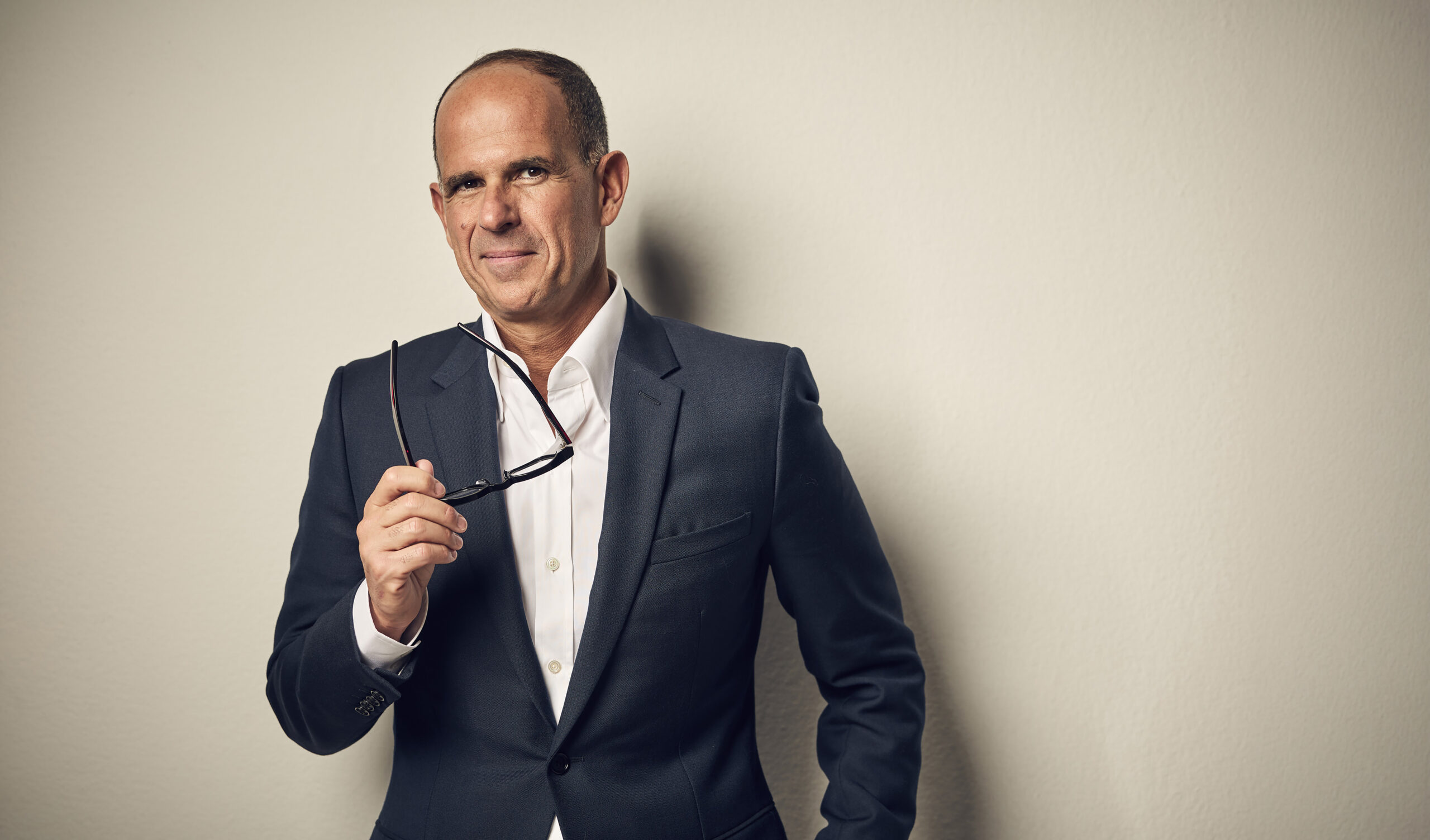
Marcus Lemonis is a Lebanese-born American entrepreneur, investor and television personality best known for revitalizing struggling small businesses, including Popinsanity (a Jewish-owned popcorn company) as featured in Ami Magazine, and hosting the reality series The Profit. Born in Beirut during the country’s civil war in 1973, he was abandoned as an infant and later adopted by a Greek Lebanese couple in Miami, Florida, where he was raised. His early life experiences, which were marked by displacement and resilience, profoundly shaped his outlook on leadership, risk and human connection in business.
He went on to earn a degree in political science and criminology from Marquette University, initially considering a path in politics before deciding upon entrepreneurship. Early exposure to the automotive industry, combined with mentorship from figures such as Lee Iacocca, guided him into the world of RV dealerships and retail expansion. Over time, Lemonis built and led major enterprises including Camping World and Good Sam Enterprises, turning them into dominant forces in the recreational vehicle and outdoor retail sectors.
Beyond his corporate achievements, Lemonis is widely recognized for his “people, process, product” philosophy, which emphasizes the balance between human relationships and operational structure. Through The Profit, he became known for a direct, often emotionally engaged approach to business turnarounds, investing not only capital but also personal attention into the lives of struggling entrepreneurs.
His story reflects a theme of transformation, moving from abandonment and uncertainty to influence and authority in American business culture. The tensions between vulnerability and control, personal history and public persona, frequently surface in our conversation, offering a unique perspective. This interview moves beyond the public figure into those deeper contradictions, resulting in a conversation that is both reflective and revealing.
The people I most enjoy speaking to are artists, and I see you as one—using business as your canvas or perhaps a musical instrument. Does that resonate with you at all?
It’s ironic that you framed it that way. My wife and my late mother would both call me a performer, but I prefer the word artist. A performer can certainly be an artist, but I see myself more like a potter working clay or a painter facing a blank canvas, trying to bring out the best version of the people with whom I interact. I use my hands or thoughts to shape things in a way that gives them the optimal chance to succeed.
Academically, I’m not really a great businessperson. I’m not technical; I’m a people person. That’s why I appreciate being called an artist, because it’s the art of understanding people that ultimately makes businesses work.
Every art form has its own craft: the materials, tools and techniques. But when I look at art, I ask only whether it moves me. That’s why I can have a meaningful conversation with an artist even without fully understanding the craft, because I can still appreciate what he’s created.
If you don’t care for a piece, may I ask what it is about the artist that still sparks your curiosity?
His soul. Typical business transactions are grounded in self-interest. I buy because I need something, and you sell to make a profit. It only works because those interests align. Art feels different. Especially when it’s made for its own sake, it rises above that exchange and becomes something more inward. When I think about you and what you represent, there’s a similar sense of moving beyond pure utility toward something more exploratory and reflective.
I think what motivates me is an insatiable curiosity and drive to learn. Money is a byproduct—and a necessary one—because it’s how success is measured. But my real motivation is the transformation of an idea or an individual. What I get out of it, if I’m being honest, is the growth of my own understanding. If I do that well, financial success will either come or it won’t. But what’s most invigorating is that curiosity: learning about different people, cultures, industries and ideas without any fixed expectation of what they’re supposed to be.
I’ll go a bit deeper than that. In addition to the above, as an only child with two adoptive parents who are no longer on this earth, no children and a strong belief in my faith, I think that what I love most is the attachment and connection to people. By the way, I am married to a Jewish woman.
When I evaluate a return on an investment, I’m usually disciplined about the dollars and cents, and that tends to work for me. But I also factor in the relationship. You can make an investment in a business and feel disdain for the person, which can sour the return. Or else you can make a modest return but have a meaningful relationship that enhances the entire experience. I try to balance both while still recognizing that I need to make more than I lose financially. It’s fascinating to me, even as I say this out loud, to reflect on why I’m motivated the way I am to do what I do.
In addition to being a doer, you’re obviously very introspective, thinking not only about the deal but what motivated you to do it in the first place.
And maybe on a deeper level what I didn’t do well. I spend a lot of time—more than most people, I think—replaying what didn’t go well and what I can do better. Part of it is trying to understand how the other person perceived my time with him. Also, because I’m human, I wonder if my motivations are always pure or if they can be influenced by other things, meaning that there may be mixed or imperfect motivations at play.
Some ulterior motive?
No. “Ulterior motive” feels like a crime. “Motivation” feels like the right word.
Let’s say we’re building a puzzle and there are six pieces. I have five, and I’m looking for the last one. I might move through different ideas looking for that final piece—yes, out of curiosity, and yes, to help—but the primary motivation is to find the piece that completes the puzzle. Sometimes people perceive that as selfish, and I can understand that perspective, but as long as the other party also benefits, I can live with it.
I tend to get pulled into situations where there’s distress, and that’s where things get complicated for me. My curiosity is partly about industry, partly about culture and partly about people, but it’s often driven by a sense that “this is broken,” “that doesn’t work” or “this needs fixing.” Then I convince myself that I can fix it.
That isn’t always a pure motivation, because the idea of “I can fix it” can shift from a values-based decision into a form of self-interest or self-enrichment, which is never good.
To read more, subscribe to Ami