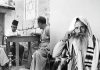





Chanukah is about miracles. Ours wasn’t a joyful one. But after 20 years of not knowing what happened to my father, learning the truth and finally bringing him to kever Yisrael was still a neis.
This is my story.
I grew up in a loving home in Far Rockaway with a devoted father, a doting mother, a sister a year and a half younger than me, and even a pet monkey my father had gotten us.
I was very close to my father. We were crazy about him. He was so good to my sister and me, always buying us toys and things. He was a businessman who traveled a lot, but he was always home for Shabbos. I have so many beautiful memories of sitting on his lap as he sang Eishes Chayil, and every summer he took us on a trip to Israel. We did things that other people in our neighborhood could never dream of doing.
We lived in a very charming Colonial that my father furnished. Even though my father was Israeli, he came from a Hungarian background, and he loved chandeliers and velvet and other lovely things. We had a beautiful life. I knew that we were more privileged than most. I remember feeling very lucky.
My paternal grandparents were Holocaust survivors from Hungary who made it to Israel right after the war, before the State was founded. My mother was also born in Israel to Holocaust survivors, and I was born there as well, in 1976. When I was six months old, we moved to South Africa to be near my maternal grandfather, who was a diamond dealer in Johannesburg. My grandfather set him up with his first diamonds and told him, “Go to America and start a business,” so we moved to New York. My father thought that America was paved in gold and he would make a lot of money there, and he did.
He started from scratch, but by the 1980s he had a business called Blue River. He was also a diplomat for Liberia, although I have no idea how that happened.
My mother was a first grade teacher in a yeshivah; it was a part-time job, so she was able to be a very involved mother. She was also very creative and made great parties for our birthdays. She and my father were both a lot of fun.
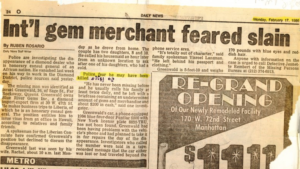
We were a happy family. My days were full of laughter and adventure. Then, one month before my tenth birthday, on February 10, 1986, my father disappeared. That particular morning my father, who usually rushed off to work, stopped in his tracks, walked back to me, and hugged me very tightly. It was awkward; I felt squished. I remember thinking, What was that all about? That was weird. Afterwards, I left for school, but I had a shaky feeling. I don’t know if he felt that something bad would happen that day, but he seemed to know that it eventually would. I’ve been pondering the meaning of that hug my entire life.
On that fateful day, I got home from school around 4:30. My father would usually come home around 8:00 p.m., but that night he didn’t come home at all. By 10:00 my mother was pacing back and forth, and I remember her asking our housekeeper if she had heard from my father. She started calling his business associates and friends, and I remember sensing her nervousness, watching her and wondering what was going on. At some point she called the police to file a missing person report. That might have been around midnight. By then she was really scared and suspicious that something very bad might have happened.
I saw the police arrive, but my mother told me to go upstairs and go to sleep. When I got upstairs I woke my sister up and told her, “Abba isn’t home.” She looked at me and said, “So what? Why are you waking me up?” Then she went right back to sleep. I actually slept very well that night because in my head I was sure everything was going to be okay.
The next morning I woke up and ran to my parents’ room.The beds were still perfectly made, as if they hadn’t been slept in, which was weird. When I went downstairs our housekeeper said, “Your mom said you’re not going to school today.” I was happy about that, but then I asked her why. She replied, “I don’t know. She just told me that you have to stay home.”
My mother came home a short time later. She looked like a disaster. Her wig was crooked and her face looked awful. It was horrible. “Ima, what happened? Where’s Abba?” I asked. She replied, “He didn’t come home yet, but don’t worry. We are looking for him and we will find him.” My mother didn’t send me back to school for a while. I guess she didn’t feel comfortable with me leaving the house during that time.
We stayed home from school for a few weeks until my mother sent my sister and me to her parents’ house in Brooklyn; by then they had moved there from South Africa. She couldn’t handle taking care of two kids while also talking to detectives, lawyers and whoever else was investigating my father’s disappearance. A couple of weeks later my mother decided that we had to go back to school, so my uncle, who was single at the time, drove us back and forth. That lasted for another few weeks.
I was a young child and didn’t realize the seriousness of the situation. I was enjoying not being in school. My grandparents had a TV and they allowed us to watch all day. But it was also very confusing, even though I was sure the whole time that my father would be found. It wasn’t even a question. I knew it was just a matter of time until things would be back to normal.
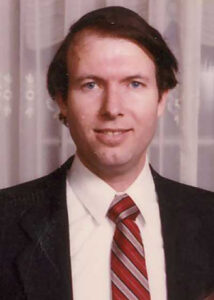 When my uncle started driving us to school, I was terrified of going back because I knew that the girls would ask me questions I couldn’t answer. I was scared about how my classmates would react and a little embarrassed by the story. My father was missing. What was I supposed to tell my friends? I didn’t know that there were rumors going around about what happened. Some people said that he ran away. Others said he was involved in bad things and was probably killed.
Unbeknownst to me, the girls in school had received a lecture from the principal telling them not to say a word. She made an announcement to the effect of, “Something bad is happening and we need to be very sensitive.” But when I walked in it was recess, and all the girls gathered around me and asked, “So where’s your father?” One girl asked, “Is it true that he used to sell guns?” “No,” I replied. “He’s a diamond dealer.” I got weird comments because they’d heard their parents talking about it.
Eventually I asked my mother what was going on, but I was a little girl and she was trying to protect us. She kept saying, “Don’t worry. We’re uncovering clues and we’re going to find him.” I was very hopeful. One of the mekubalim my mother went to told her, “He was kidnapped, but he’s going to come home.” My mother shared that with me and I fully believed it. I don’t think I let my mind go anywhere else. I assumed we were going to find him.
Right before my birthday, I asked my mother if she was going to make me a party. “Michali, we can’t make a party this year,” she said. “Why not?” I asked. “Because of what we’re going through. It’s not the right time.” I cried so hard. I couldn’t believe it. I still expected life could go on as usual.
A few months passed. I knew that something terrible had happened, but I didn’t know how to process it. I also didn’t have any therapy and felt all alone. My mother wasn’t talking to me about it, my teachers weren’t allowed to talk to me about it, and neither were my friends.
I was in the fourth grade that year. My teacher would give out tokens that could be exchanged for prizes. She had a little “prize store” during recess where you could buy things. One day she pulled out a leatherbound pink diary covered with sparkly stickers; it was gorgeous. I had never written in a diary before, but when I saw that, I needed to have it at any cost. The problem was that I wasn’t the best-behaved kid in the world, so I didn’t have a lot of tokens. I think I had three and the diary cost 22 of them. I knew that if I didn’t get it that day someone else would and I’d lose out, so I had to be creative.
I spotted one of the biggest goody-goodies in the class who I knew had a lot of tokens, and asked her to lend me 19 of them. When she wanted to know why, I told her the reason wasn’t important but that I was planning on being good, and I would give her tokens every day until the end of the year. I didn’t want to tell her which prize I wanted, but she forced it out of me. When she heard it was the diary, she said, ‘Oh, that stupid thing?” But I didn’t care, because she lent me the 19 tokens. I went straight to my teacher and plopped down 22 tokens on the desk. She looked at me like, “Where on Earth did that come from?” But she handed over the diary and it changed my life, because from that day on I started writing in it every single day about whatever was going through my mind. No one else was listening to me, but at least I had my diary.
I have over 37 diaries and journals from my childhood, teenage, and young adult years because it became a habit that I just couldn’t stop. Today they give me so much insight into what I was going through. My mother always says, “The good thing about your diary is that it saved you. The bad thing is that you recorded everything, because some things are better left forgotten.” That included the fact that I felt like I was raising myself.
Aside from all the usual arguments there was the religious struggle I was going through, which caused a lot of issues with my mother. On some level, I think I was keeping those diaries because I knew the story was so insane that it would eventually become a book.
My diary was my best friend. It even gave me advice, which of course was really coming from me. It helped me because I would flesh out all my thoughts and emotions: fear, hatred, anger and everything else. Then I would give myself a pep talk and say, “I know I’m going through a really hard time right now, but I also know that…” Then I would write some positive things like, “I’ll get through this,” or “I’ll be out of the house soon enough. Only a few more years, and then I’m going to make a different life for myself.” Then I’d write about my dreams and aspirations. I was very busy just trying to survive.
Today a child like me would be taken to therapy, but it wasn’t so available then, and even if it had been, my mother didn’t have money for it.
Things were very hard for her and she was taken advantage of many times. She would go from job to job or invest the little money she had and lose it. It was one disaster after another. We lost our home when I was 15. I believe it went into foreclosure, and then we sold it for a low price just to get out. Losing the house was traumatic.
After that we moved several more times, which was also traumatic. Just going from a big, beautiful house to something tiny in a not great area was distressing. At some point we had to use the services of Tomchei Shabbos, for which I am forever grateful. But when you used to have money and you’re suddenly getting a box delivered on Thursday night in front of your house, it’s humiliating. I remember my mother bouncing a check at the grocery and the electricity being turned off. Our car was repossessed.
My mother didn’t explain the situation to me at first, but when I turned 12 she filled me in, telling me what she believed occurred, to the extent she thought I could handle. By then I knew that my father wasn’t coming back.
She told me the basics of the story: “Abba traveled a lot, and a business associate in the diamond industry by the name of so-and-so asked him to do him a favor and drop off some bearer bonds in England during one of his trips. When Abba returned, he was stopped by the FBI. They informed him that the bonds were stolen, and they wanted to know who had given them to him.
“Your father was in a dilemma, because the FBI was pressuring him to be a witness and entrap his associate. So he consulted with a big rav and asked for his advice. Not knowing how dangerous the situation was, the rav told him, ‘You’re never allowed to masser on another Jew. You should tell him what happened and get him to cooperate.’ Abba tried to do that, but by then the associate had freaked out and told someone else, and that person told Burt Kaplan, a Jewish mobster who was involved in the bond scheme, and he took things from there.”
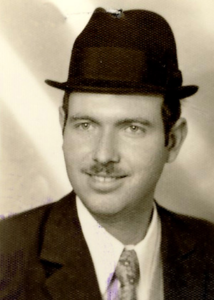
She didn’t actually tell me all of that then. What she did say was that she thought my father’s business associate got scared and probably killed Abba. You have to understand that my mother didn’t know anyone else who was involved with bonds. We didn’t find out the rest of the story until 19 years later.
What really happened was that the business associate did get scared and went to Kaplan, who hired people to kill my father. But at the time, all we knew was that my father didn’t want to be a witness, so he told his associate what happened and the associate was somehow involved in killing him.
The end result is that for decades I thought a frum man had killed my father, which made me very angry. I felt that it was such hypocrisy, and it was probably one of the reasons why I was becoming a little rebellious. I certainly wanted to be less observant than my family expected me to be.
Even after my mother told me the real story, a tiny part of me refused to believe it. After we lost our house I remember asking her, “How is Abba going to find us if he comes home?” I mean, what proof did we really have? His body had never been found. What if it wasn’t true?
As I grew older, my mother would revise the story and say, “He was probably killed by the Mafia because his business associate was working for them.” That was also humiliating, because I thought the whole world would then say that he was involved in the Mafia, even though I knew he wasn’t.
My mother insisted that he was innocent. Then again, she might have been saying that to protect him. I knew that he was a good person who was charitable and kind, but I also didn’t know what to think. A lot of people were skeptical.
The most hurtful thing was the possibility that my father was a criminal. It was a very disturbing thought. I prayed with all my heart that he was innocent. Later, when we miraculously learned the whole story of what happened, his innocence was finally confirmed.
We were in a no-man’s land. There was no shivah, no life insurance, no Social Security payments, nothing. Instead, there was shame and the thought that a frum person could have killed my father. If someone like that could do something like this, why should I believe anything the rabbis said?
I wasn’t doing well in school anyway because I was so distracted; school wasn’t exactly a priority. I was kicked out three times during my high school years, which was really hurtful. The first time it happened was in the middle of the ninth grade. We weren’t paying full tuition, as you can imagine, so I assumed that I just didn’t count. At some point the principal told me, “You don’t belong here. Don’t come back.” It was a devastating blow to my already low self-esteem.
I wasn’t into anything really bad, although I was talking to boys. I was a little disruptive because I liked getting negative attention and I sometimes cut classes. But I wasn’t the only one who was kicked out that year; the principal was cleaning house.
I wanted to go to a coed school, but that was out of the question, as we were more of a black-hat family. The truth is that by then I was wearing pants behind my mother’s back and I was involved in coed programs at NCSY, so I probably did belong in a more modern school. But my mother wasn’t ready for that.
I was home for about a month. I was very depressed and wondering why Hashem was doing this to me. I felt like Iyov, what with one thing after another. The elementary school I had gone to didn’t accept me for high school, so this was my second rejection in six months.
I ended up going to a school in Boro Park that was very frum. I told my mother, “I may be modern, but if you send me to a place like that, I will definitely become less religious.” But I was forced to go there anyway.
I just didn’t belong in such a school. When I walked in, the principal sat me down and said, “Right now you are a piece of coal, and our job is to turn you into a diamond. And the only way to do that is to put a lot of pressure on you.” Then she handed me a rule book.
I took it very badly because all I heard was the part about the coal. I lasted only one semester before I was kicked out.
That summer, I was sent to my relatives in Israel for a couple of weeks. They knew that I’d already been kicked out of two schools, so my great-uncle offered to adopt me. He said that he would put me in a school and set me straight because he knew that I was a difficult child who was giving my mother a hard time. Well, a month later I was back in New York. I missed my friends and my American life. When I got back, one of the schools that had expelled me had a new principal, and I somehow convinced them to take me back. I started the year late, but I remained there for the 10th and 11th grades. They didn’t let me return for my senior year, though.
By then, I was running with a faster crowd. We hated school and were definitely not model students. I never did anything bad, but those girls were my best friends. I loved them and they loved me. I was attracted to that crowd because of my horrible life; they all came from really complicated homes. We were all each other’s sisters; we saved each other in many ways. But the new principal didn’t like us, and after our junior year he told most of us not to bother coming back. One of the girls who was kicked out with me was allowed back in after her family made a $10,000 donation to the school, which only made me feel worse.
At that point, someone told me that I had to call Rabbi Zakutinsky in Queens. I was told, “He helps people like you.” The first thing he told me was, “Don’t worry. You don’t need to go back to school. I’m going to get you into a seminary in Israel.” “But what about my diploma?” I asked him. “You’ll get a GED,” he said.
That was a real turning point in my life, and from that day on I forged a new path for myself. I was determined to get out of the rut of constant failure. I was determined to succeed. I knew that I had to get my act together.
Israel turned me back on to Yiddishkeit. After that I wanted to go to Stern College, but my application was rejected because of my horrible high school record, so I went to Touro instead. I did very well there, and later ended up transferring to Stern. I lived in the city and worked to support myself in a lot of different jobs. I graduated with honors.
I majored in advertising and communications, because I’d always been creative. I was an artist and knew how to draw, and I was also attracted to business and marketing. I got a job working as a secretary for a very big fashion designer and was promoted several times. The next thing I knew I was working in public relations.
Needless to say, my diaries accompanied me wherever I went, documenting everything I went through, including a broken engagement and my strained relationship with my mother. There was a lot of pain that wasn’t necessarily her fault; all in all, ours was a very stressful household. I was angry that people were cheating her and blamed the victim. I was a very difficult daughter, and my mother couldn’t help me because she herself was suffering. She acknowledges that now. She says, “I was young, I was lost, I was scared, and I didn’t know what to do.”
My father had left numerous bank accounts and safety deposit boxes, but my mother had zero clue where they were, so she couldn’t access them. I was furious that she didn’t know anything about my father’s finances and that we were left with nothing.
These days I have a much better understanding of my mother, and I also realize that most people would have been just as lost as she was. She had no support. My grandparents didn’t have money. She was very alone financially and the community wasn’t very supportive.
My sister wasn’t doing too well either. She wasn’t kicked out, but she also had an unstable school situation and hopped around from school to school.
All three of us were basically on our own. Our family was destroyed in so many ways. My mother had the burden of supporting us, but she wasn’t able to do it.
Then, in 2005, something incredible happened. Someone knocked on my mother’s door. It was the FBI. My mother asked how she could help them. They said, “We believe that we have found your husband’s body. It’s a big story; it’s going to be in the news. Here’s our business card. We need a DNA sample from one of your daughters to confirm it, but we wanted to give you a heads up.”
When my mother called me to tell me what happened, I didn’t believe her. She’d entertained all kinds of theories over the years, and at some point I started rolling my eyes. “Ima, today is April Fools’ Day. Someone is pulling your leg. It’s not true.” Then I added, “Let me put my kids to sleep and then I’ll do a little research online. Give me some of the information they gave you.”
I went on Google and typed in a couple of keywords. All of a sudden an article from Newsday popped up with the headline, “Body of Missing Diamond Dealer Found.” He had been missing since 1986, the article reported, and allegedly had been killed by rogue cops. I immediately called my mother and said, “Do you remember how you always suspected that the detectives who were investigating Abba’s case were corrupt? You always thought that something was off, and we always thought you were a crazy conspiracy theorist. Guess what? Apparently, it was the cops who killed him.” It was the shock of all shocks.
I was 29 years old, married with two kids and expecting my third child. I was living in Woodmere, in a cute little starter house. We were building a life for ourselves in the Five Towns, making friends and starting to become established. This story wasn’t something I talked about; no one needed to know the skeleton in my closet. If someone asked me what happened to my father, I would try to change the subject.
When this came out, I had to accept that everyone was going to hear about it. It was surreal, but it was truly a gift—not only was my father’s body found, but his name was cleared. Thanks to all of the eyewitnesses, it was obvious that he was innocent.
At that point everything moved quickly. Once the DNA test confirmed my father’s identity, there was no reason to withhold the body. I was in the beginning of my ninth month, but I got permission from my doctor to fly to Israel, and we buried him there. It was a very moving funeral. Because the story was all over the Israeli news, all our relatives and my father’s old friends from Chevron Yeshivah were there. It was very emotional. Standing in front of his body, which was now wrapped in a tallis, all I could think of was the last time he had hugged me.
My father was buried in the Segulah cemetery in Petach Tikvah. Shivah was only one day and it felt very strange. So many people from my past reached out to me. But the trial hadn’t happened yet, so people still didn’t know the whole story. All they knew was that my father was killed by corrupt cops. We ourselves still didn’t know everything.
There were several trials, which took place in Manhattan. Over the next two years, I attended every trial with my mother, my sister, my mother-in-law and my husband. It was front page news. The two cops charged with my father’s murder were named Louis Eppolito and Stephen Caracappa. Burt Kaplan, the Jewish mobster, had been paying them a monthly retainer to keep the mob informed of developments behind the scenes, as well as to kill people when necessary. The cops were working for the Mafia while they were working for the City of New York, so they had access to all the files of Mafia-related cases. They were able to warn Kaplan about upcoming raids, or that someone was about to turn witness and needed to be eliminated. In addition to their monthly salary, they also got bonuses for those hits.
As soon as they had my father’s name and the make of his car, they found him, followed him and pulled him over on the Belt Parkway. They claimed someone was accusing my father of a hit and run, so they had to take him down to the station for questioning. My father got into their car; they drove him to a towing company garage in Brooklyn and murdered him there. Then they dug a hole, buried his body and covered it with cement.
The story of how my father’s body was discovered is truly miraculous. When the detectives were investigating the case, they needed to find a specific crime with which to accuse the cops. They knew that the cops were dirty and that they’d done a lot of bad things, but they needed proof in order to bring it to court. They were already aware that the cops had a relationship with Kaplan, who was in jail for another reason. So they told Kaplan, “If you don’t want to die in prison, tell us about the crimes you committed with the cops and we’ll set you free.”
It took a whole year, but they finally turned Kaplan, and the first thing he admitted was hiring them to kill my father, even though he didn’t know his name. Don’t forget that Kaplan had nothing to do with my father. What he said was, “I hired the cops to kill a Jewish diamond dealer in 1986.” When asked where he was killed, he replied, “I don’t know, but I was told it was in a garage somewhere in Brooklyn, and they buried him there.” That was the only information they had.
But there are a million garages in Brooklyn. How could they find out which one it was? They certainly weren’t going to dig up the whole city. So they asked Kaplan who else was with the cops when he was killed, and he replied, “It was the two cops and [Eppolito’s] cousin Frankie.” The problem was that Frankie was dead, but since he had a criminal record, someone thought to look through his files. They found Frankie’s phone book. One of the numbers in there was for Pete’s Towing, and they decided to give it a shot. The number was still in service, but when they called and said they were investigating a murder from 19 years ago, the person who answered said he didn’t know anything about it and hung up.
That man immediately contacted a lawyer and said, “I witnessed a murder in 1986. The police are now calling me about it. What should I do?” The lawyer told him, “You have to talk, because if you don’t, they’ll find the body anyway and you’ll be blamed.”
This man became the star witness and was given protection. He testified that he had seen Louis Eppolito, Stephen Caracappa and Frank Santora shoot a guy with a kippah, and he was forced to bury him. He was told, “If you don’t bury him, you’ll be buried with him, and so will your whole family.” He’d kept the secret for 19 years, but now he told them exactly where the body was located. If not for that phone book, they would never have found my father.
The two rogue cops were in their 70s when they were arrested. They were charged with eight murders, several attempted murders, and a number of other crimes. They were sentenced to life in prison and both ended up dying of cancer behind bars. They denied everything till the end.
Most of the murder victims were mob associates who were killed because they did something wrong. There was only one other innocent victim besides my father, a guy named Nick Guido who was killed because of mistaken identity. They killed the wrong Nick Guido.
The story my mother told me was now officially corroborated. She knew only part of the story: my father traveled, dropped off the bonds, was stopped by the FBI, and was asked to be a witness. What we didn’t know before the trial was that the business associate had gone to Kaplan. We thought that he had either killed my father himself or gotten a Mafia guy to do it for him. We didn’t know that Kaplan was the middleman or that the actual murderers were cops.
If my father had testified, it would have led to the top. He was the lowest man on the totem pole, nothing more than a mule. But it could have potentially cracked open the entire multimillion dollar bond scheme racket that was run by Anthony Casso, a Lucchese crime underboss. Kaplan was working for Lucchese, as were my father’s business associates who were also involved. If my father testified against his associate, he would have been forced to also testify against Kaplan, who had already been in jail several times and would possibly have cut a deal to avoid going back.
Having been told by the rav that he wasn’t allowed to masser on his associate, my father was planning on moving back to Israel to avoid the whole thing. But the bad guys believed that there was no way that he wouldn’t testify.
The story we have is he was just doing a favor for his associate. He traveled all the time and had a relationship with an English bank, so his associate asked him to deposit the bonds because they’re like cash. Did his associate give him money for doing it? I don’t know. My father was a businessman, so it’s possible there was some kind of business transaction, but he had no clue that the bonds were stolen.
I believe he knew that his life was in danger because my mother says he was very frightened for a month before he disappeared. He had told my mother, “If anything happens to me, call the FBI. They’ll know what happened.”
The FBI was pressuring my father to testify, but when the rogue cops killed him, it interfered with their investigation. They had leads because my mother had given them information, including the name of my father’s associate, but their efforts were sabotaged and the case went cold because the rogue cops were able to erase the proof and threaten people into silence.
Kaplan was the star witness, and he was very good; he remembered every detail. He was already in his 70s, but his brain was sharper than anyone you ever met. He knew everything, and he was almost enjoying himself when talking about all the crimes he committed.
Several books have been written about the corrupt cops, but my father is essentially just a footnote in them. No one has ever told my father’s story. That’s why I’m going to write my book. Throughout all those years of keeping journals, I had a feeling I should record everything because one day I would write about it. Of course, I could never have predicted the story’s ending. It was crazier than anything I could have imagined.
When I read my journals, I’m very proud of how I was able to overcome my challenges. What happened to my father was tragic, but it also made me who I am today. For some reason, Hashem wanted it to happen.
Before Covid, I was living a life I never dreamed I’d have: four healthy kids, a beautiful house in Hewlett Neck, and a thriving business. I’m a graphic designer, but I had also opened a party planning business and a store on Central Avenue in the Five Towns called Events 360. I was also the founder of Couture for a Cause, a non-profit I ran with a well-known Jewish influencer with whom I’d gone to high school. We organized huge events with hundreds of women to raise money for organizations like Sharsheret and Renewal.
Then the pandemic hit, and everything changed. When you’ve survived trauma, you develop instincts. I felt that things were off in the way the authorities were handling everything: the mandates, the shutdowns and the inconsistencies. The hypocrisy bothered me. Target and Costco were open, but small businesses were forced to close. I didn’t trust the CDC or Dr. Fauci, and the more research I did, the more it seemed the narrative didn’t hold up. I started talking about it on social media, where I already had a big following from my business.
Facebook and Instagram kept shutting me down, but each time I came back within days. Some people thought I was crazy; others admired me for speaking out. I knew I was risking my reputation but I couldn’t stay silent. The BLM riots, the cultural shifts and then the 2020 election made me feel America was heading in a dangerous direction. I told my husband we had to move to Florida, where life felt more normal. By then he had discovered he could work fully online and I could still do graphic design remotely, so we moved.
Two of our kids were already in Israel, so only two were uprooted. But after a couple of years in Florida, I felt pulled toward Israel. We already owned a beautiful apartment in Jerusalem, so after spending the summer of 2023 there, we decided to stay. It was the best decision we ever made.
Today we live in Israel. We live more simply but we’re happier. My husband tells me every day how fortunate he feels to be able to live here. Especially given what’s happening in New York politically, he thinks we escaped just in time.
I’d always feared that no one from a “normal” family would want me because of my background. I was working as an assistant director of admissions at YU—ironically, the school system that had once rejected me—when Rabbi Benzion Scheinfeld introduced me to my husband, Jonathan. I was nervous about how he’d react to my story and the fact that my mother couldn’t contribute financially to a wedding. But his family immediately understood the situation and assured me that my mother didn’t owe them anything.
In the end, I truly believe my family experienced a miracle. Hashem gave us a yeshuah—the closure I thought we would never have. Even the fact that it was policemen who killed my father ended up being a blessing, because if it had been a mob hit, we wouldn’t have been able to sue the city, which we did. In a way it felt as if my father, who couldn’t provide for us after his death, was giving us a financial gift. My sister and I married good people and built stable lives. The settlement my mother received from the city helped her get back on her feet and buy a house.
Up until the trials, I hadn’t realized how much shame I was still carrying. When everything went public, something shifted inside of me, and I felt determined to make a difference in the world. When Ari Fuld was murdered, his story affected me very deeply; I understood what his family was going through. I drew something, posted it—and it went viral. That drawing became Ari’s symbol—the Lion of Zion—and it raised a tremendous amount of money for his family. Handing that massive check to his wife was one of the greatest moments of my life. I kept thinking about how I had once been the girl no one helped, and now I was giving $100,000 to a widow.
My father’s vindication gave me a new lease on life and deepened my emunah. I saw firsthand that there is such a thing as justice in the world. You may not see it right away, but eventually Hashem always comes through.
To read more, subscribe to Ami